
Data On The 1982 Mecham Racing Trans Am Production
(Rendered From The Information Collected From Archive Photos)
(50 Cars Currently On File. 20% Of 1982 Production)
(Roughly 250 Cars Produced In Reality . 2500 Planned, 500 commonly Quoted)
(Cars Pictured In 1982: The Cars)
Cars By Color
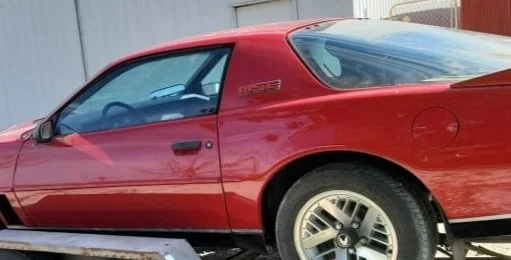
13 Red Cars On File (#3, #17, #27, #34, #36, #40, #41, #43, #47, #48, #67, #79,#95)
34 White Cars On file (#14, #24, #33, #41, #47, #49, #50, #55, #66, #70, #76, #84 #93, #97, #121, #127 #131, #138, #139, #140, #148, #150, #153, #162, #167,#168, #183, #184, #189, #195, #200, #203, #205, #207)
3 “Other” Color Cars On File (2 War Paint, 1 Repaint Black)
Cars By Roof
43 Hard Top Cars On File (#3, #14, #17, #24, #27, #33, #34, #36, #40, #41, #41R, #47, #47R, #48, #49, #50, #53, #55, #64, #66, #67, #70, #76, #79, #84, #93 #95, #97,#127, #131, #139, #140, #148, #150, #153, #167, #183, #184, #189, #195, #203, #205, #207)
2 Targa Tops (#121, #138)
2 No Data (#43, #162) Parted Before I Got To Them
3 T-Tops (#42, #200,#168)
Mecham Made Duplicate Numbered Cars in 1982
In 1982, Mecham produced duplicate cars carrying the same number. These are the only known examples so far.
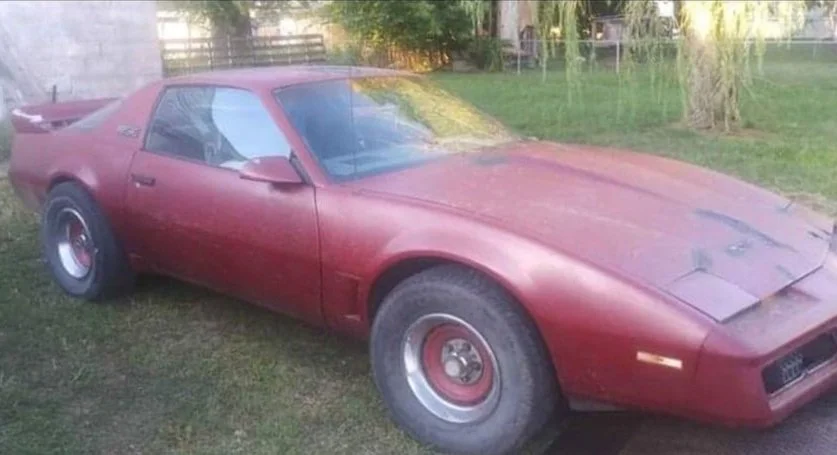
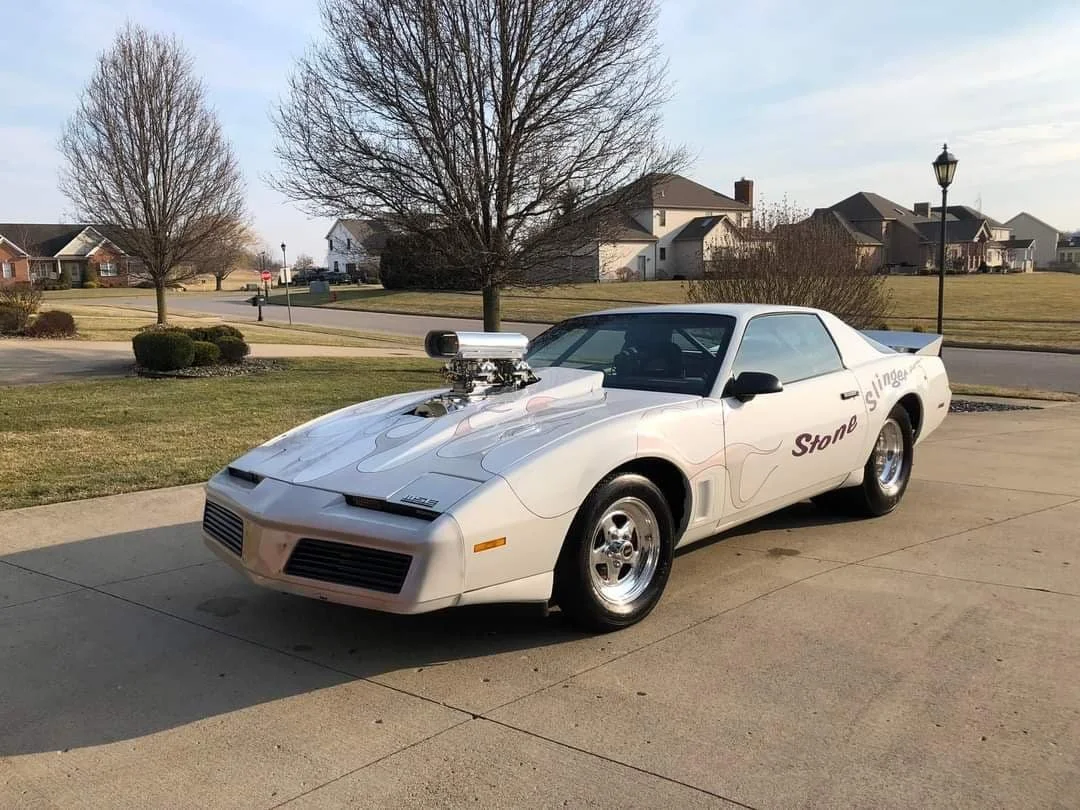
There were two #41 cars built that year. One was red, while the other was white. Both #41 cars can be seen below.
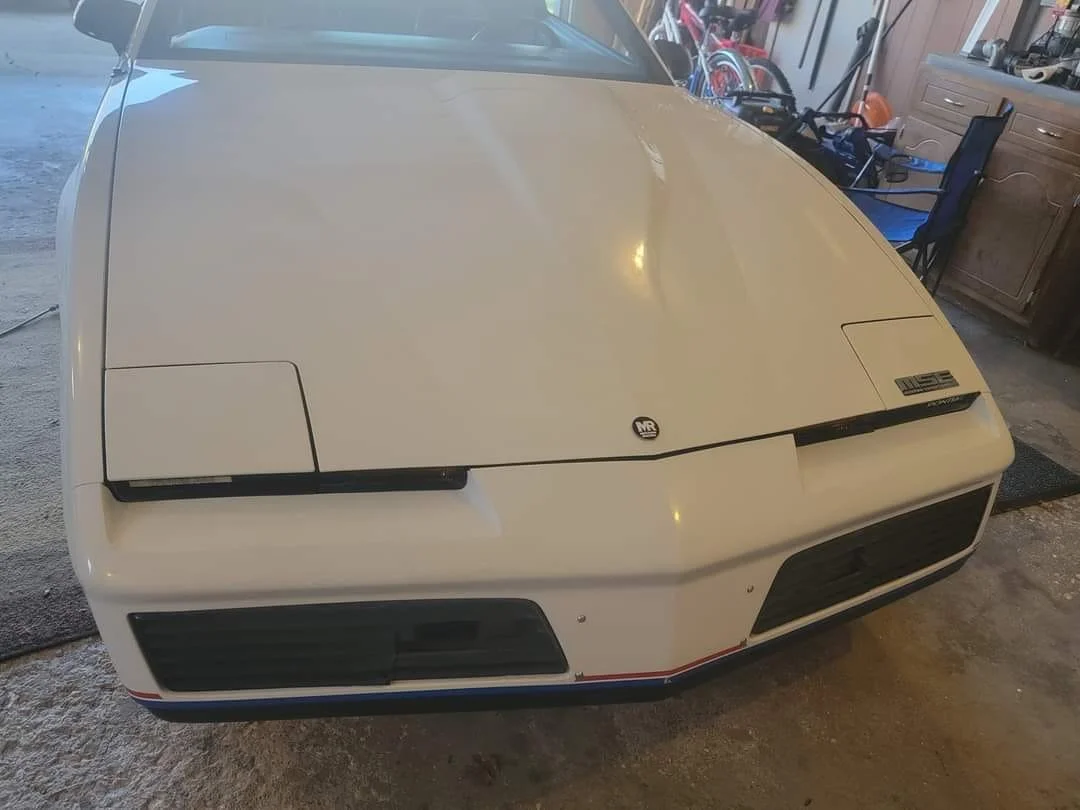
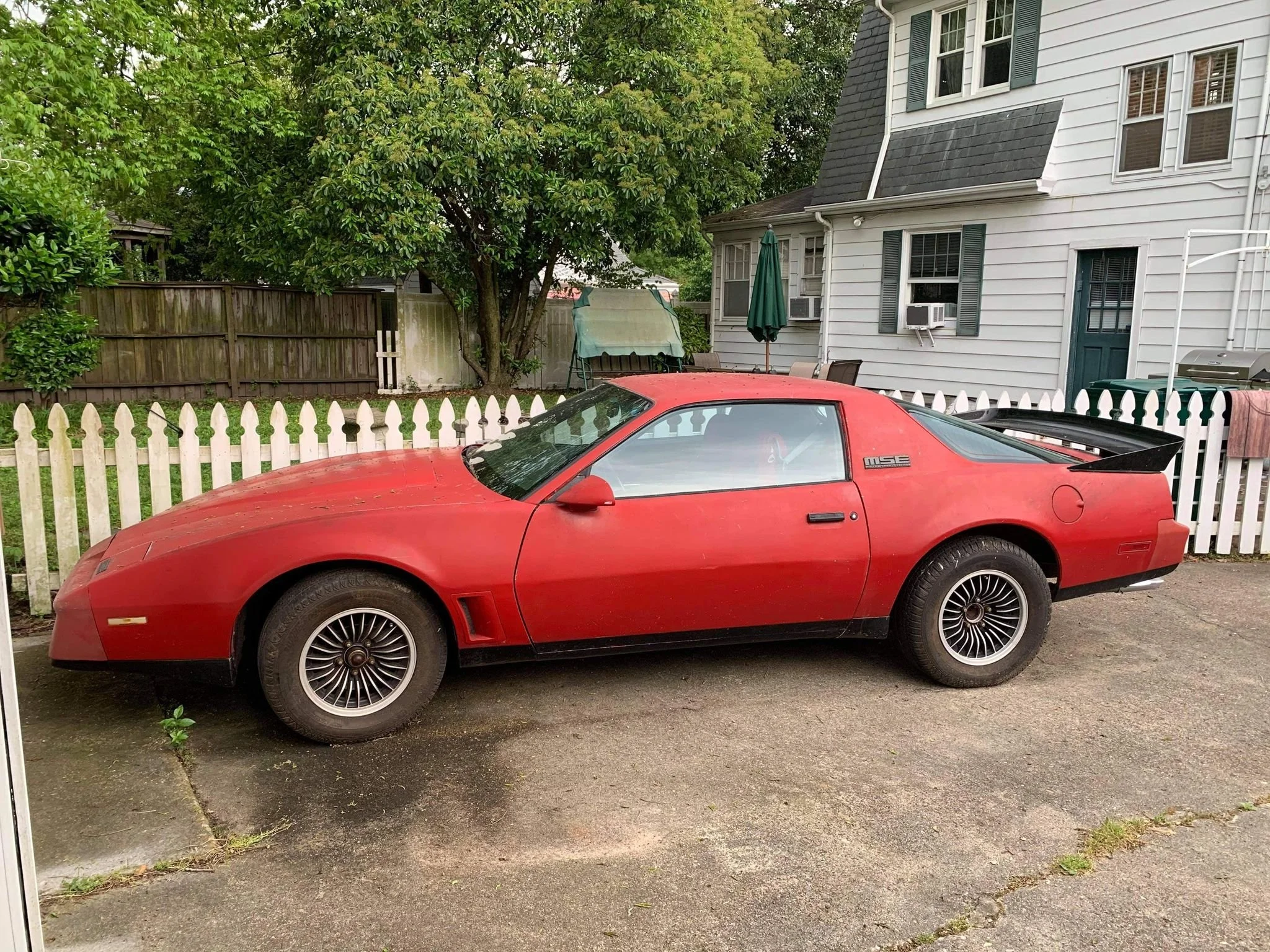
There were also two #47 cars built in 1982.
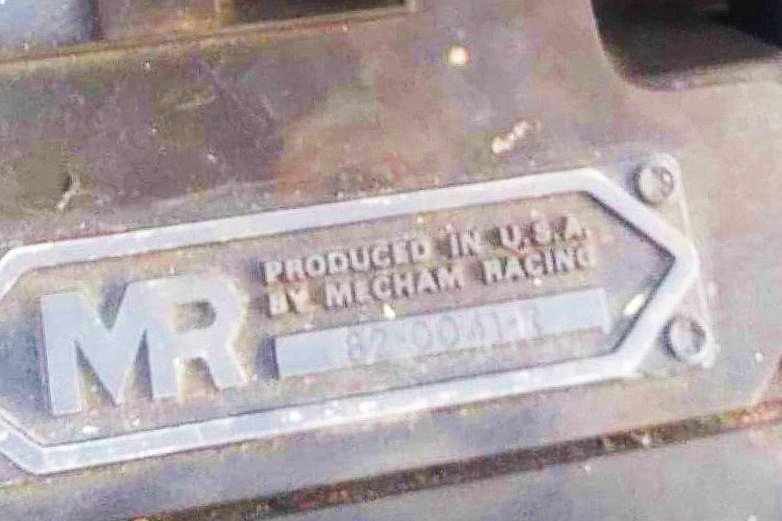
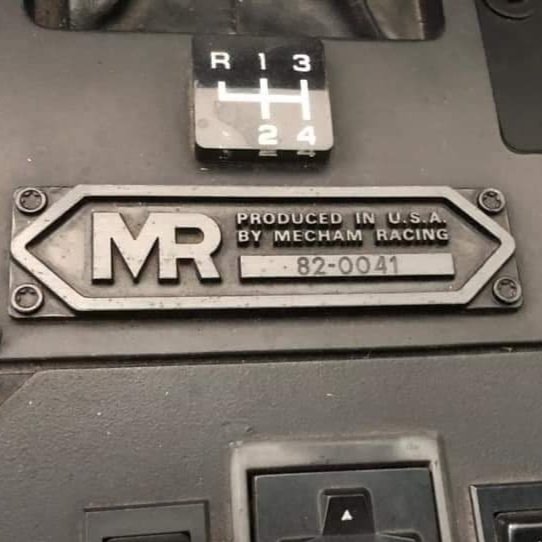
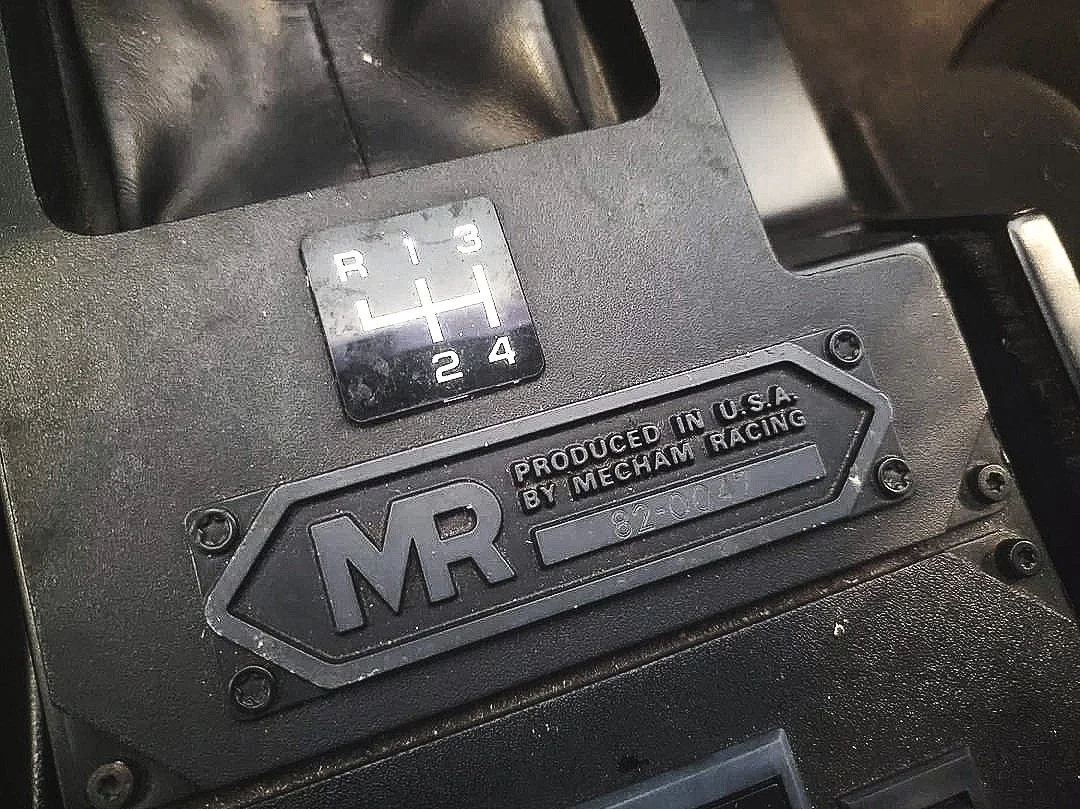
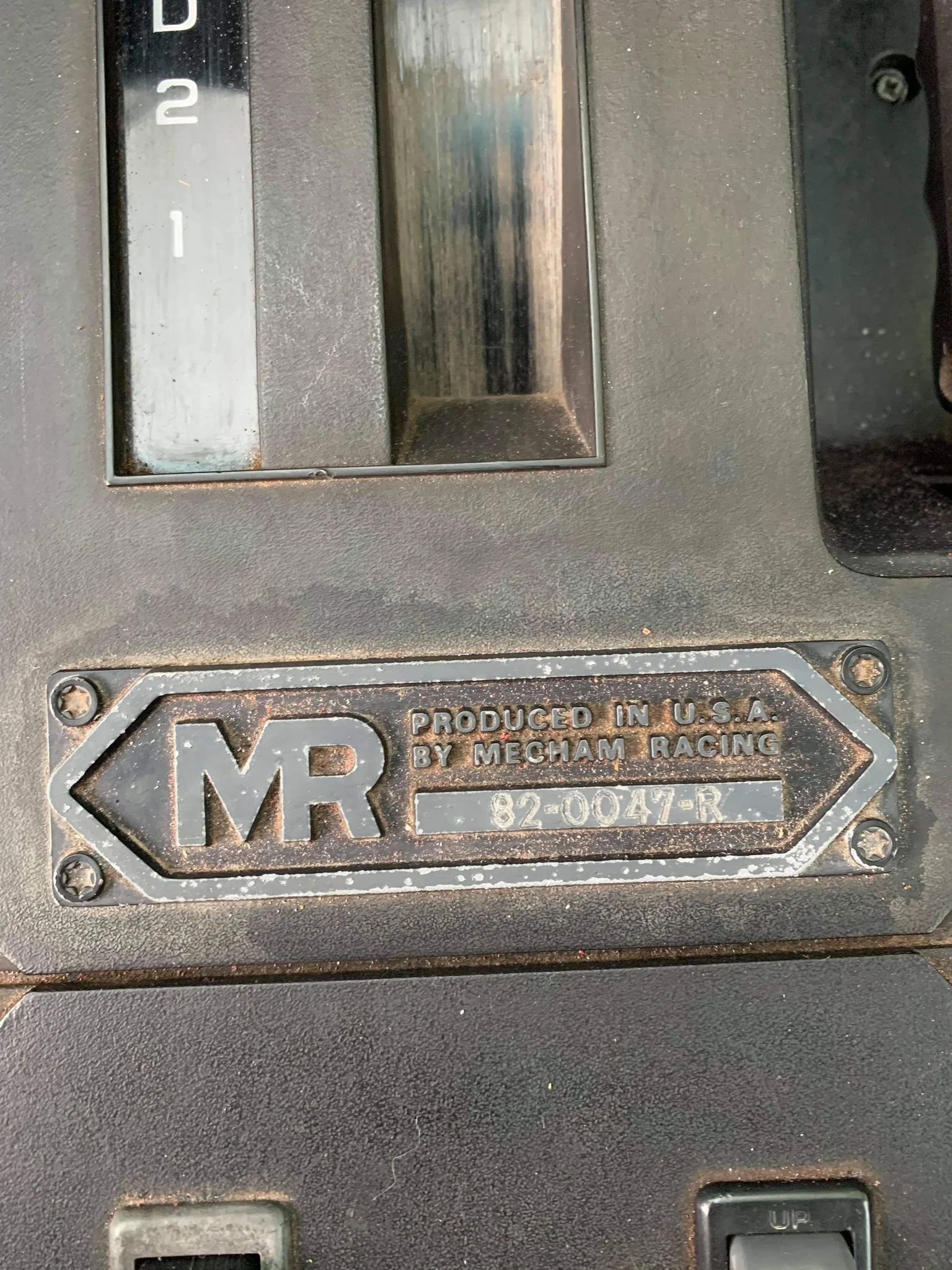
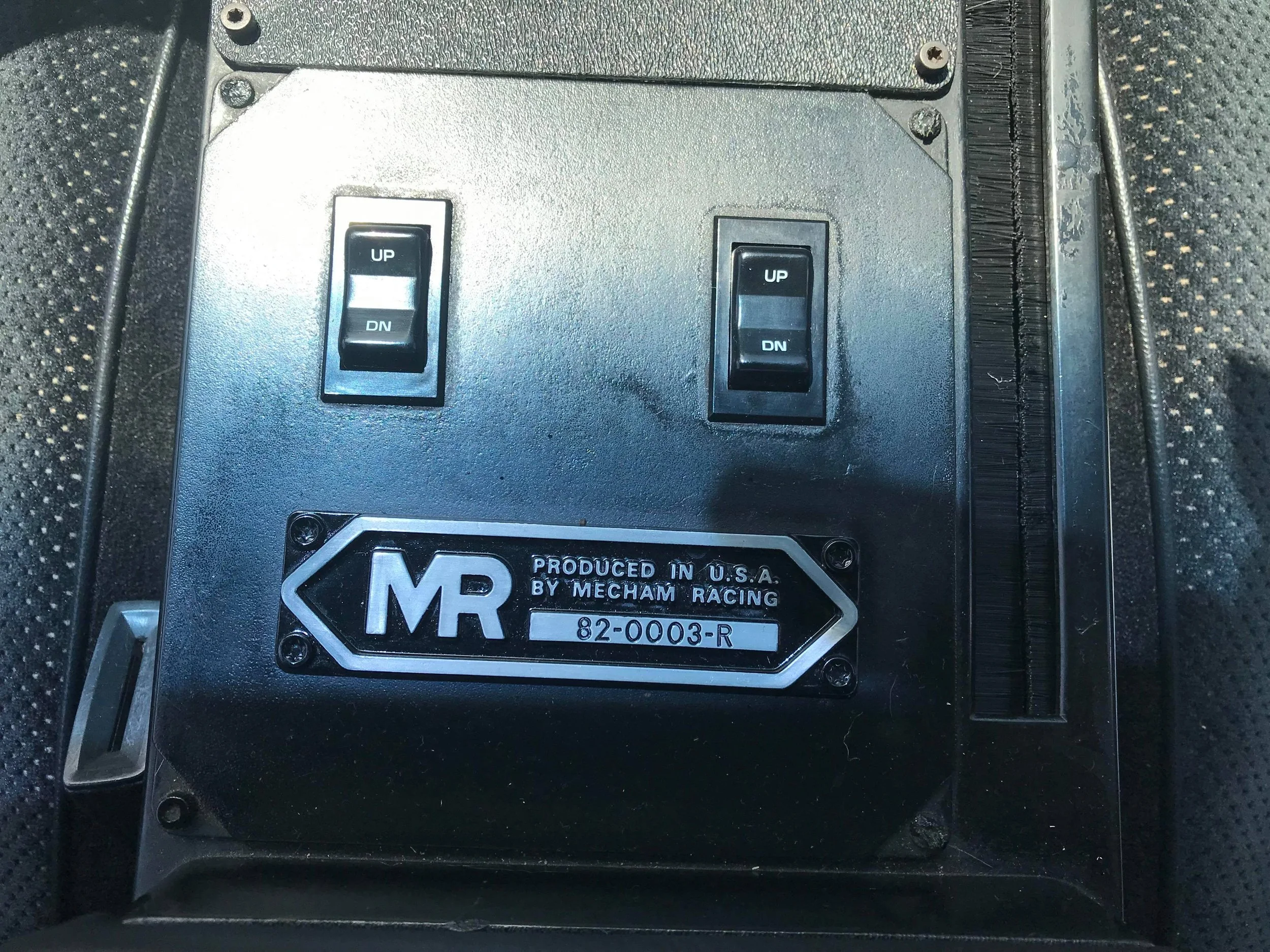
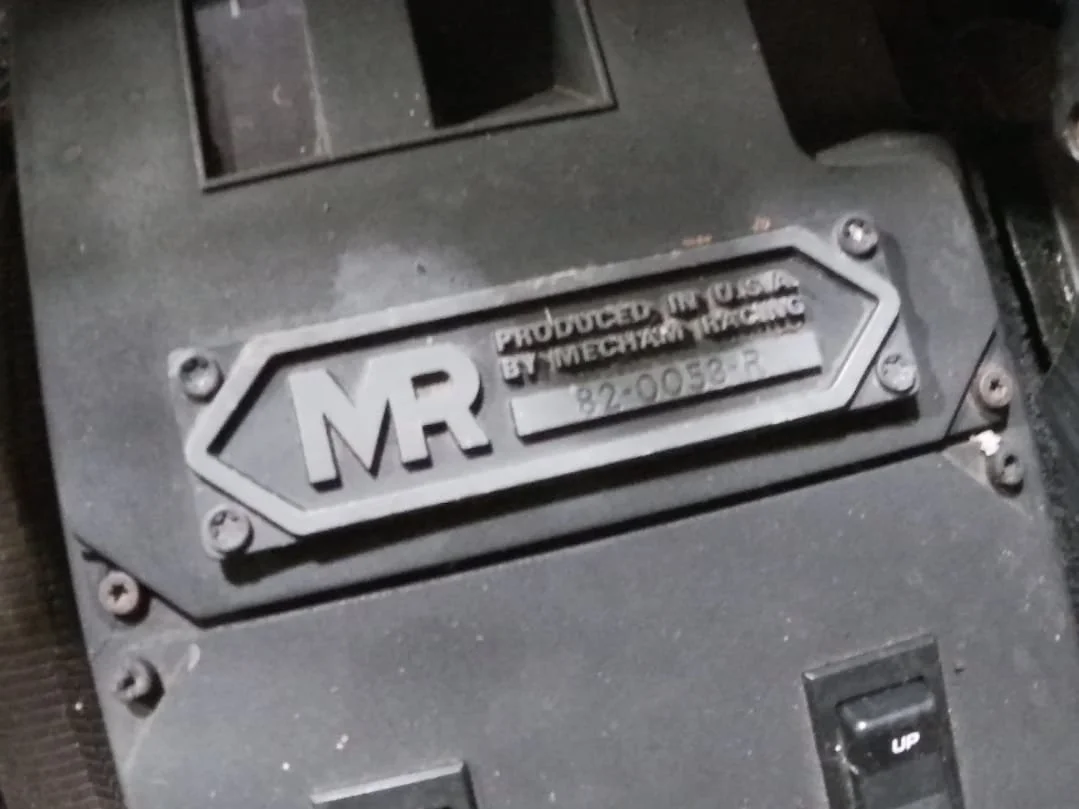
QUESTION: The “R” Indication On The Center Console Plaque?:
The **“R” does NOT mean “Race,” nor does it indicate that the car was more powerful or had any performance-related advantage in any shape or form. It simply meant that the car was red.
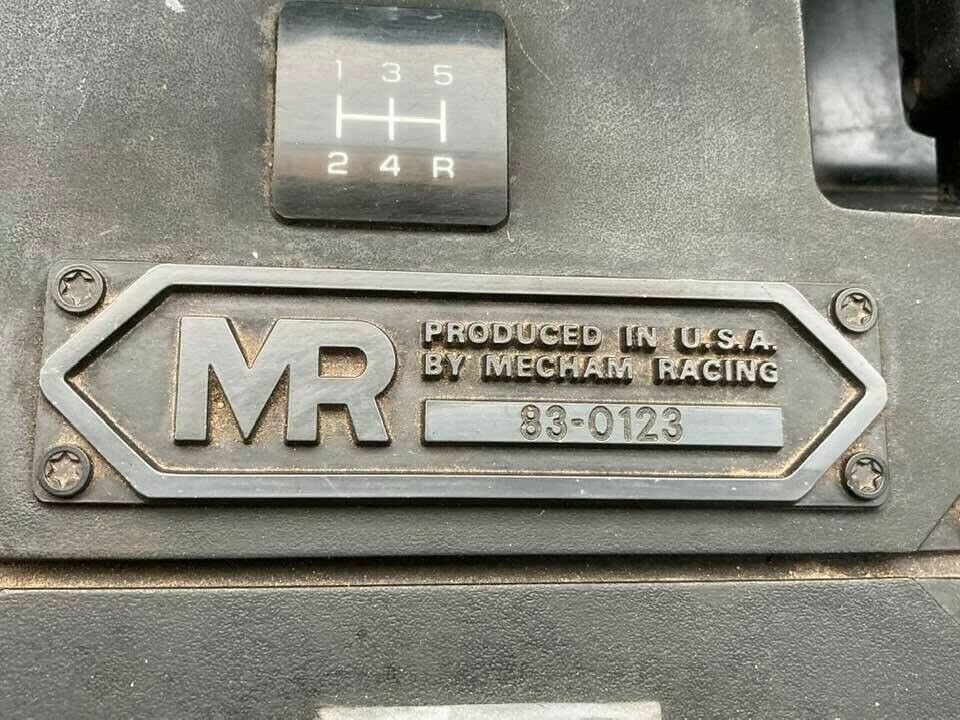
Mecham stopped putting the “R” on the plaques after the 1982 production year. Why? The change appears to be related to the introduction of the two-tone “War Paint” scheme becoming standard. War Paint is now known to have been produced in 1982, although it was not openly advertised at the time.
The “R” cars were originally intended to be “Replica” cars. The whole concept of the MSE street cars was, in spirit, to create copies of the race cars, which were white. This is illustrated in the tri-fold brochure for the red car—a replica of a replica.
As time went on, however, there was no longer much reason to continue using the “R” designation. Mecham was selling cars that were already fully modified, rather than simply offering street versions that needed to be identified as replicas.
So, the “R” should be understood as a designation for the red replica cars, not as an indication of racing specifications, increased power, or enhanced performance.
Here is a 1982 Center Console Plaque With The “R” Indication
Here is a 1983 Center Console Plaque Without The “R” Indication. This is a Red/Sliver “War Paint” Car
The T-Tops? :
The 2 Cars That Are Not Hard Top Or Targa Top In 1982 Are #200 And #42
#42 is equipped with Cars and Concepts T-Tops, an aftermarket T-Top system from the company well known for its “pop-up” T-Tops and for producing the T-Top systems used on Fox Body Mustangs.
These T-Tops were more than likely installed well after the car’s initial production, rather than being part of its original Mecham configuration.
Cars and Concepts T-Tops can be easily identified by their distinctive “beauty” trim, which is located both forward of and behind the T-Tops.
The same T-Top design can be seen across Fox Body Mustangs, providing a useful visual reference for identifying the Cars and Concepts system fitted to #42.
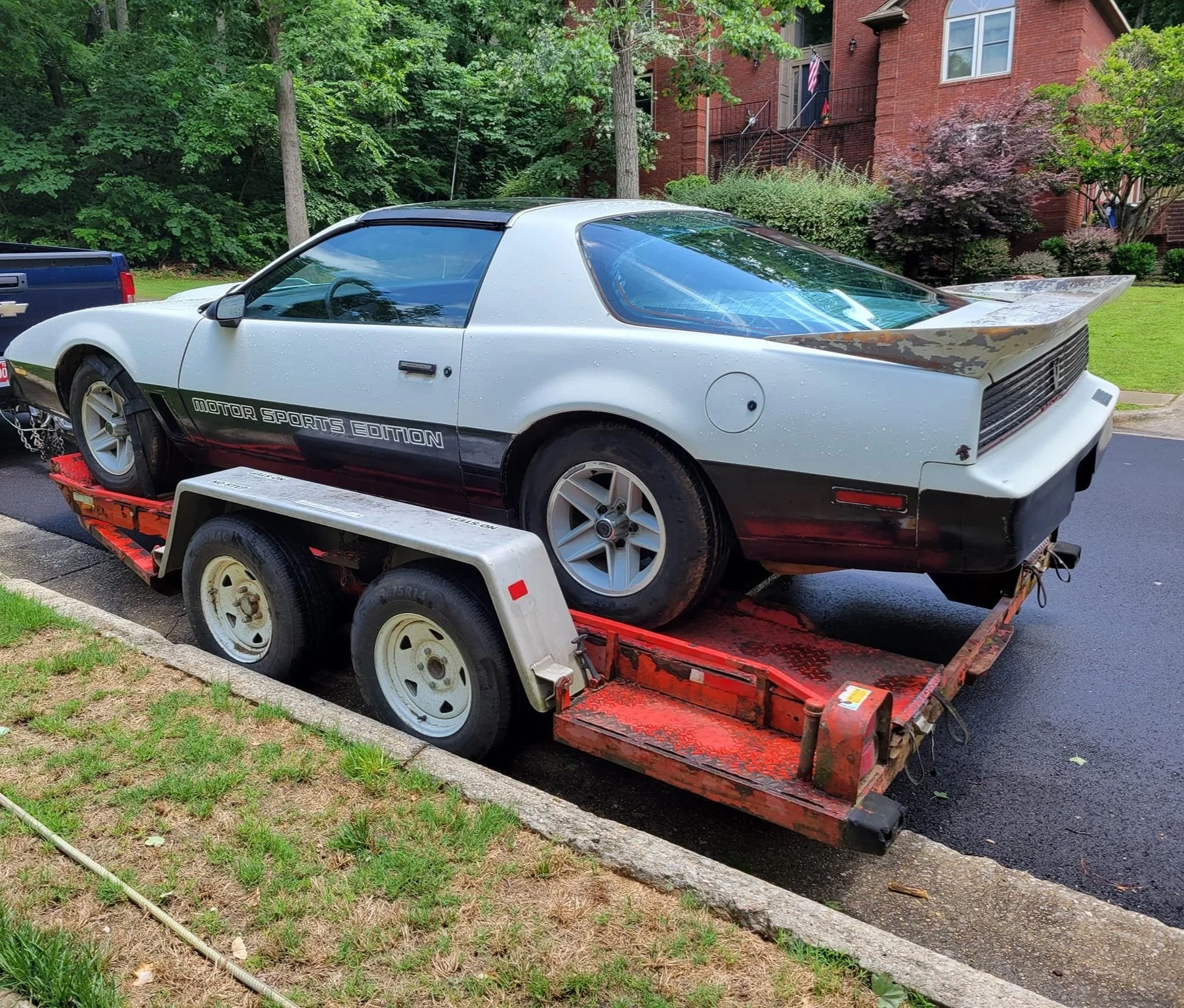
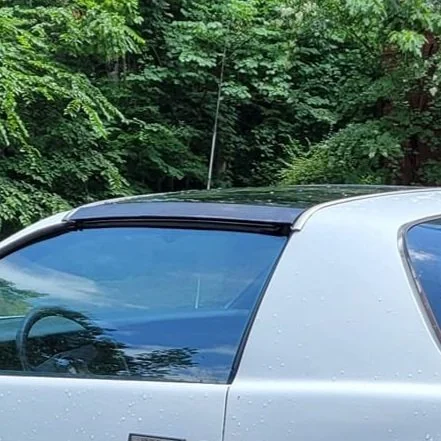
#200 is a highly modified car and is now far removed from its original modified configuration as it left Mecham Racing.
The car currently features an 1985–1992 Trans Am hood, the 1983–1984 Trans Am W62 Aero Package, and 1986–1992 PW7 cross-lace wheels. These are all later components and do not represent the car’s original Mecham configuration.
The car does, however, appear to retain OEM T-Tops. At this time, I cannot definitively confirm that they are original to the car without supporting documentation such as the SPID label or the original build sheet.
This is particularly significant because #200 is currently believed to be the only documented GM-built 1982 Mecham Trans Am. Until the SPID or build-sheet documentation can be located, however, the originality of specific factory equipment should be considered unconfirmed.

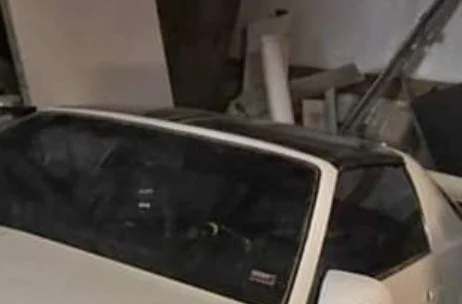
The Mecham Targa Trans Am
1982 Only Option
Only 2 Produced (Not Confirmed, Commonly Accepted Theory)
All Still Exist. #121 Is Foretold To Be A Clone
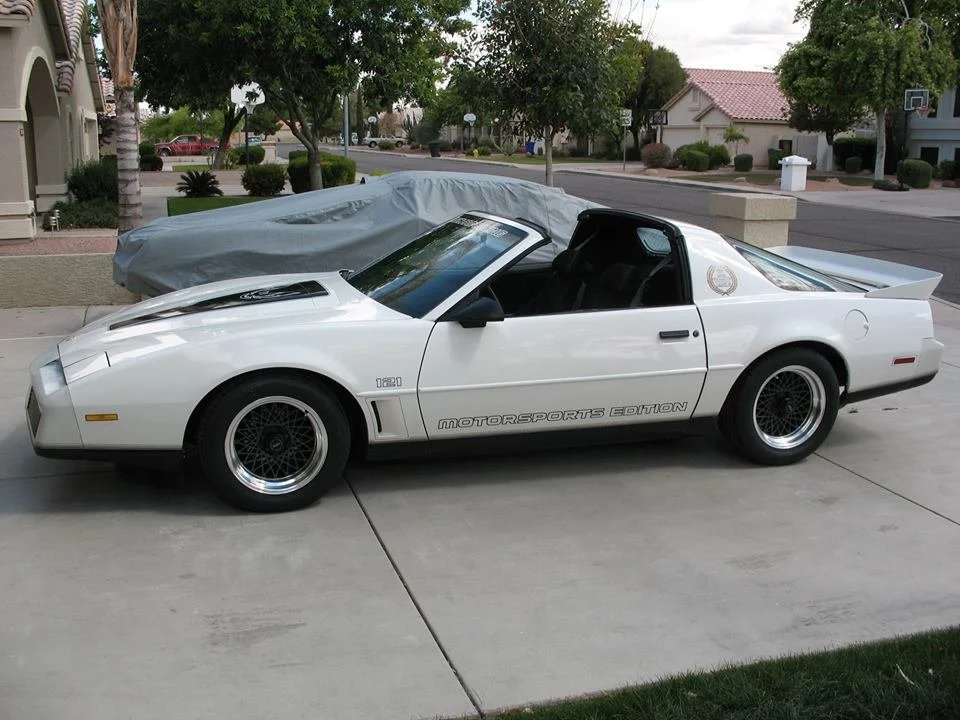

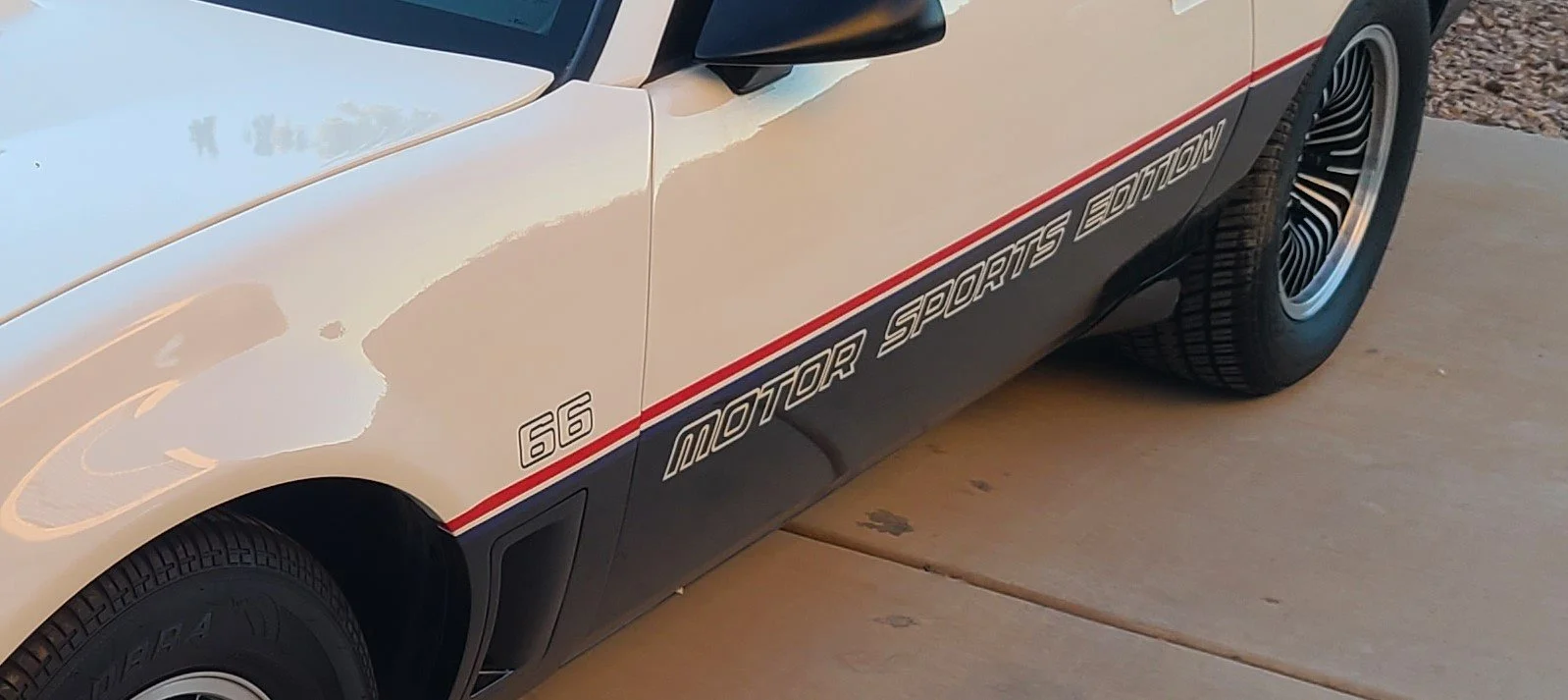
The First 1983 Duel Pin Stripe “War Paint” Mecham Trans Am (Found So Far)
Working with the current owner of 1982 Mecham Trans Am #42, we were able to confirm that the car was indeed modified by MSE (Mecham Special Edition). The evidence supporting this conclusion is as follows:
As seen here, red and blue pinstripes were added to the car by MSE. The overall color scheme is very similar to the #12 Escort car raced by Steve Saleen. However, that particular car was raced in 1983 and carried the #1 number on the fender.
What makes #42 especially interesting is that its graphics appear to represent an early version of what would become the “War Paint” design.
Unlike the 1983 War Paint design, which utilized a single-stripe layout, #42 features a dual pin-stripe design. This makes the car particularly significant from a production-history standpoint.
Based on the evidence currently available, #42 appears to be the earliest known Mecham production car to feature a War Paint-style design by production number.
This could make #42 an important transitional example in the development of the War Paint graphics, showing how the design evolved from the earlier dual-stripe treatment into the more recognizable single-stripe design used in 1983.
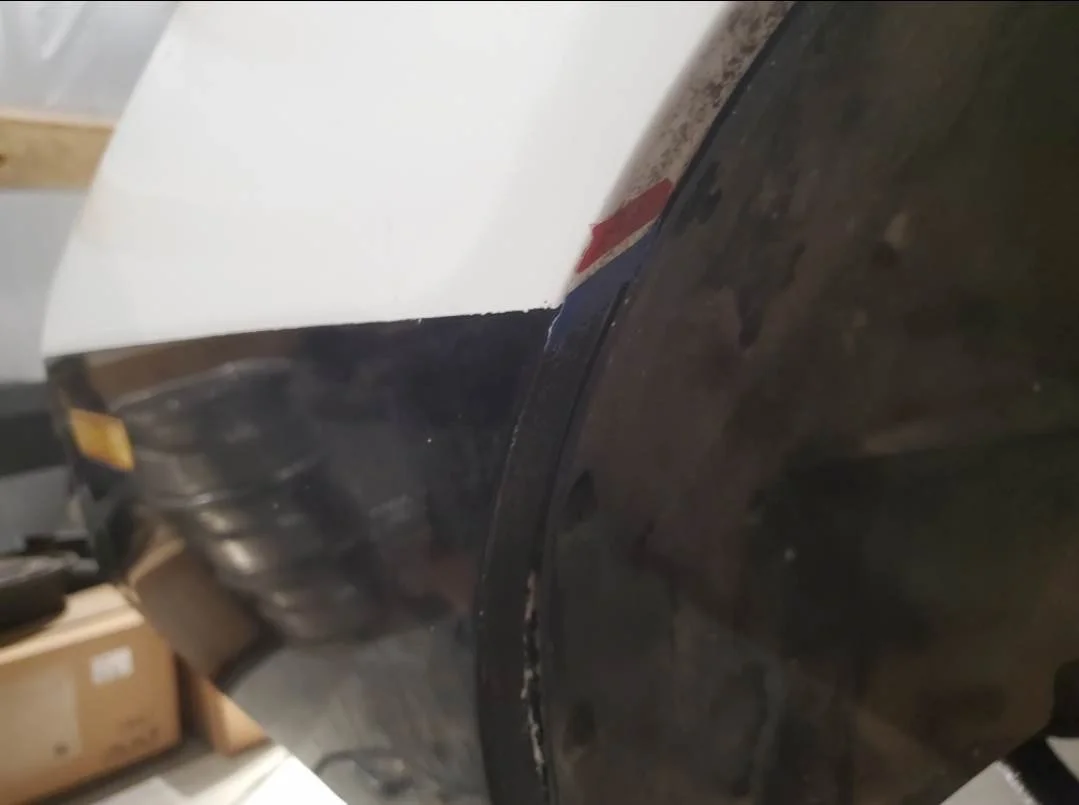
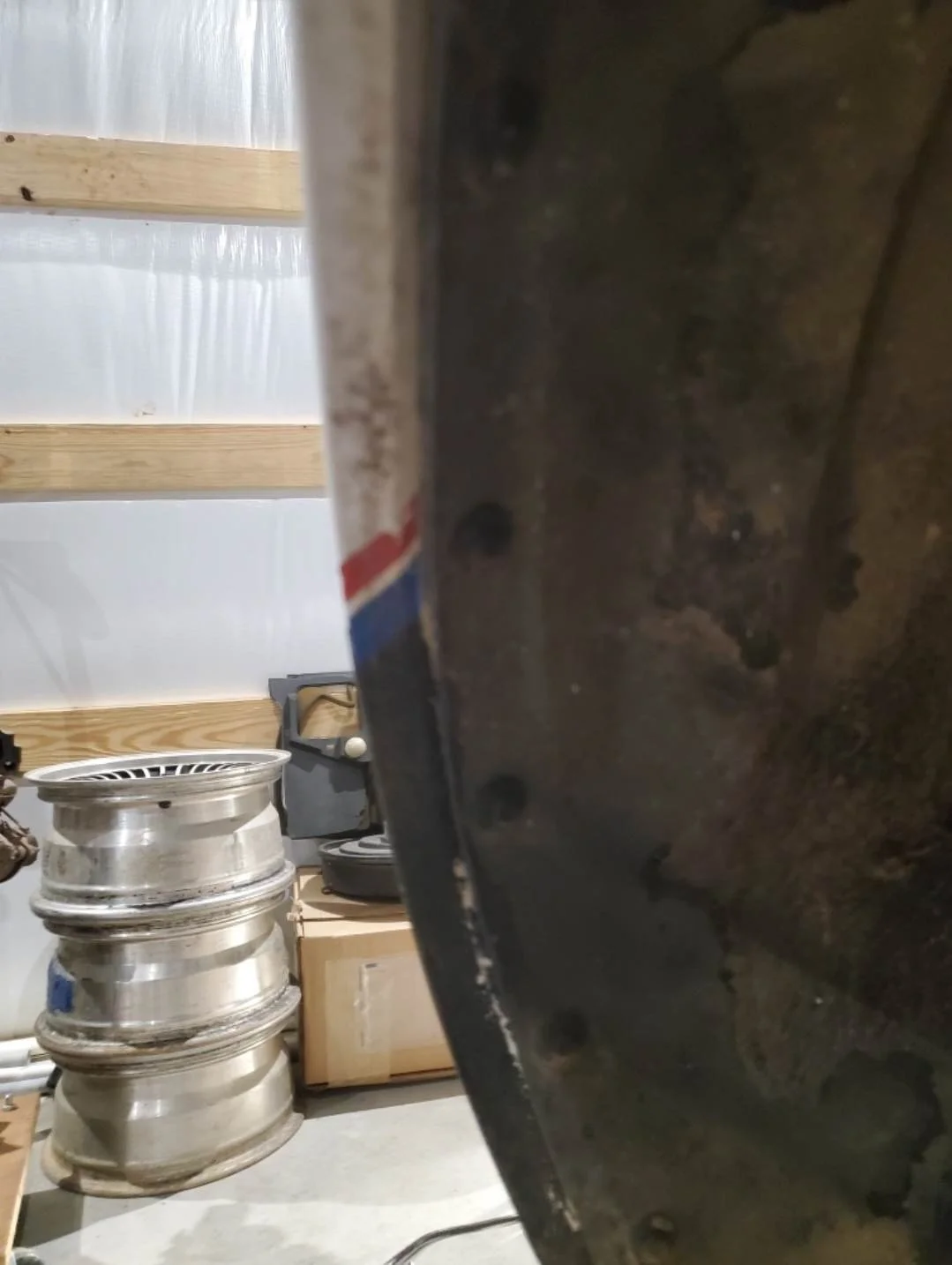
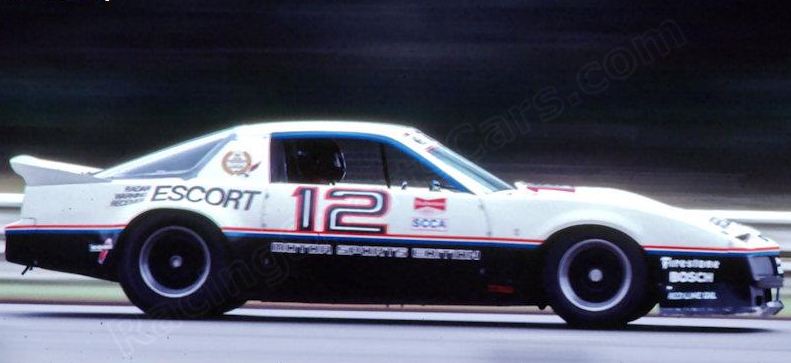
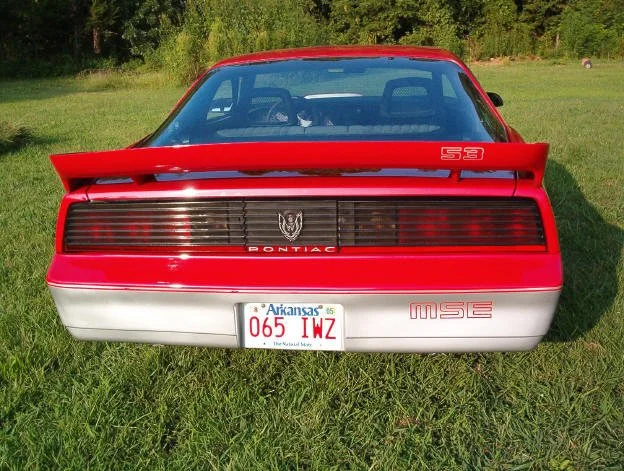
The First 1983 Painted Single Stripe Style “War Paint” Mecham Trans Am (Found So Far)
At first, this car was listed as a 1983, for fairly obvious reasons. However, after a detailed conversation with the current owner, we were able to verify that the car is actually a 1982.
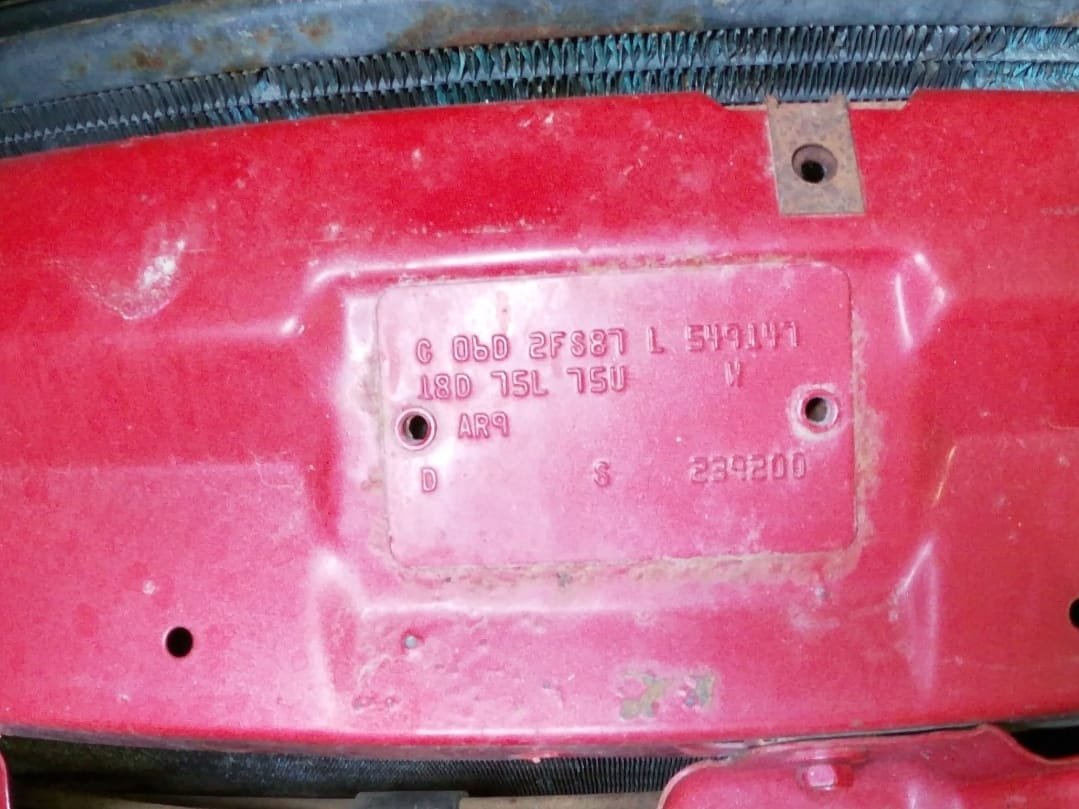
The owner provided documentation and identifying details that confirm the car’s model year, including the MSE window sticker, VIN, and center-console plaque. Together, these provide strong evidence that #53 is a genuine 1982 Mecham Special Edition.
The car is also a Recaro-equipped MSE car, adding another important piece to its history and significance.
With the model year now verified, #53 becomes an especially interesting example of Mecham’s 1982 production, particularly given its early War Paint-style graphics and documented MSE modifications.
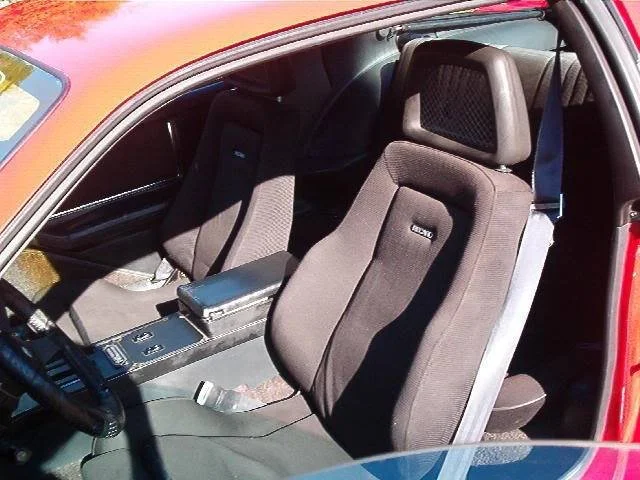
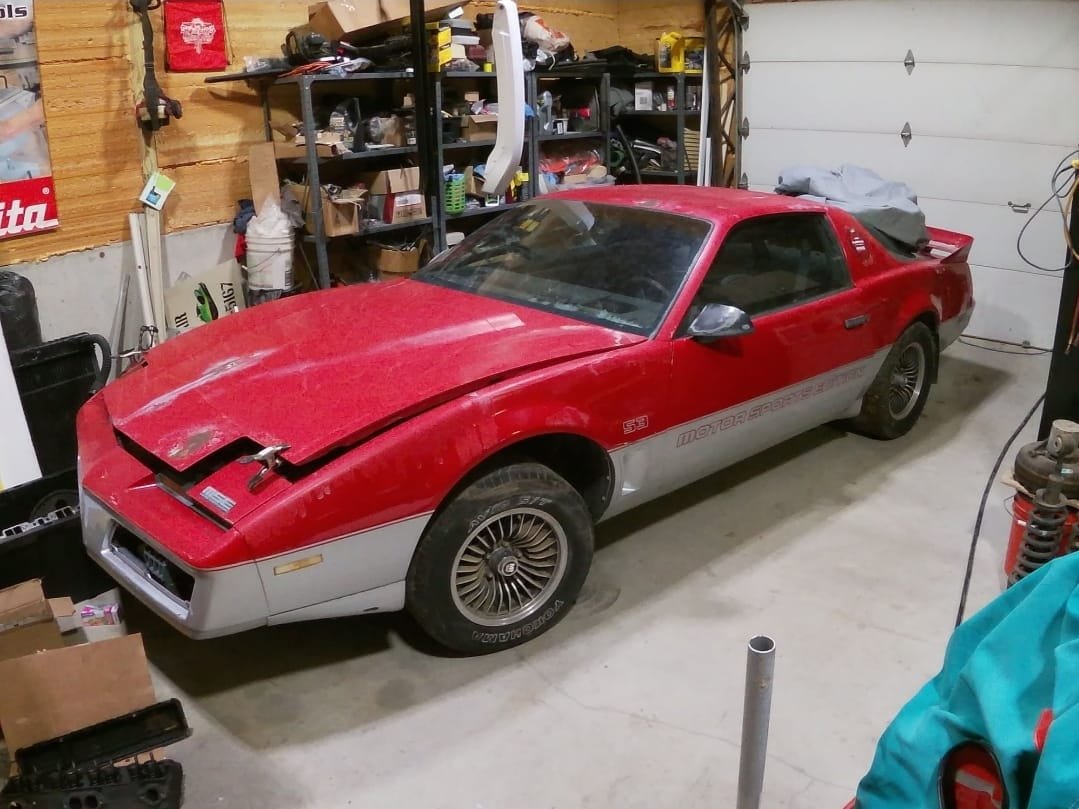

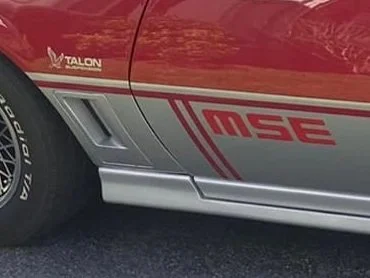
“War Paint” Style Compared
From Left To Right (1983 Duel Pin Stripe, 1983 Painted Single Stripe, 1984 Single Large Stripe With Chevrons)

Production Number Issue
Based on the documentation collected so far, the 1982 production run was reportedly limited to 500 cars.
However, we have already established that duplicate-number cars existed, based on the choice between the red and white versions. This means the production number shown on an individual car does not necessarily correspond to a unique vehicle count.
Looking slightly further ahead to 1984, we also see production numbers that appear to jump considerably. Yet contemporary information indicates that only roughly 50 cars were produced that year. This raises further questions about exactly what Mecham’s production numbers represented and how they were assigned.
But I digress.
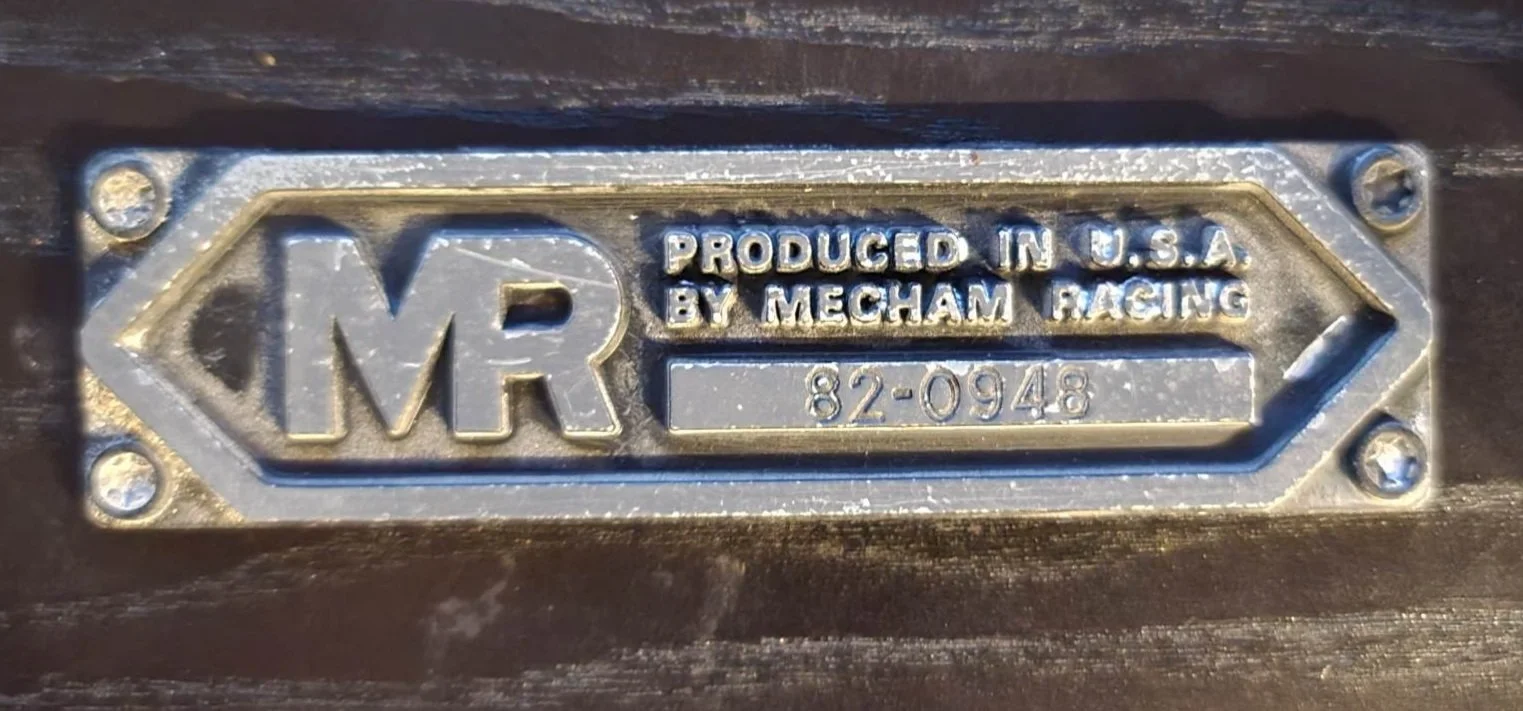
The point of this particular topic is this badge right here: 1982-#948.
If the documented 1982 production figure was only 500 cars, how do we explain a genuine Mecham plaque carrying a production number as high as #948?
This is where the production-number history becomes especially interesting. #948 provides another piece of evidence suggesting that the numbers used by MSE may not represent a simple, sequential count of cars produced during a given model year.
Before We Get Into the Options
Before I get down into the details on the individual options, like I have above with the basic information, I need to get something on the table:
Not all MSE Trans Am cars were the same.
In all honesty, a lot of these cars were little more than basic, run-of-the-mill Trans Ams equipped with the Talon suspension. This is a fact that needs to be acknowledged when trying to understand how these cars were actually built and delivered.
I believe this was largely due to supply-chain issues and pressure on the production team to get these cars out the door. Many cars appear to have been shipped without items that we would now consider key MSE equipment, such as the MR 170 speedometer and MR steering wheel. Other components were simply optional.
More often than not, however, a trend begins to appear: some of the key items that really help define an MSE Trans Am are simply missing from certain cars. The steering wheel and Talon brace, for example, are not consistently found across the cars documented so far.
I will dig into each of these components in much greater detail throughout this section.
That said, there is an important limitation to keep in mind. When it comes to things like the upgraded Talon suspension and GIT kit, unlike color or roof style, I can only provide so much information about what was common and what was not. I only have so many detailed photographs and documented examples to work from.
1982 Production
1982 was the largest production year, with a claimed 500 cars.
So far, I have documentation and records extending through #207. We have also already established that duplicate production numbers existed, apparently based on the red or white color choice.
My current theory is that 250 red and 250 white cars were planned, although I will explore that subject in considerably greater detail in the dedicated Production Numbers section.
The Documentation
Before you simply take my word for what these cars were supposed to have—and, more importantly, what they actually received—I'm going to put the concrete reference documents on the table.
There is going to be a lot of information here.
The goal isn't to tell you what an MSE Trans Am should have been based on assumptions. The goal is to show you what the surviving documentation, cars, photographs, and original equipment can actually tell us.
Anyway, that's my rant on this. Now, let's get into the evidence.
1982 Mecham Racing Trans Am Documentation
“Car And Driver: July 1982, Page 131” Driving is Believing Ad
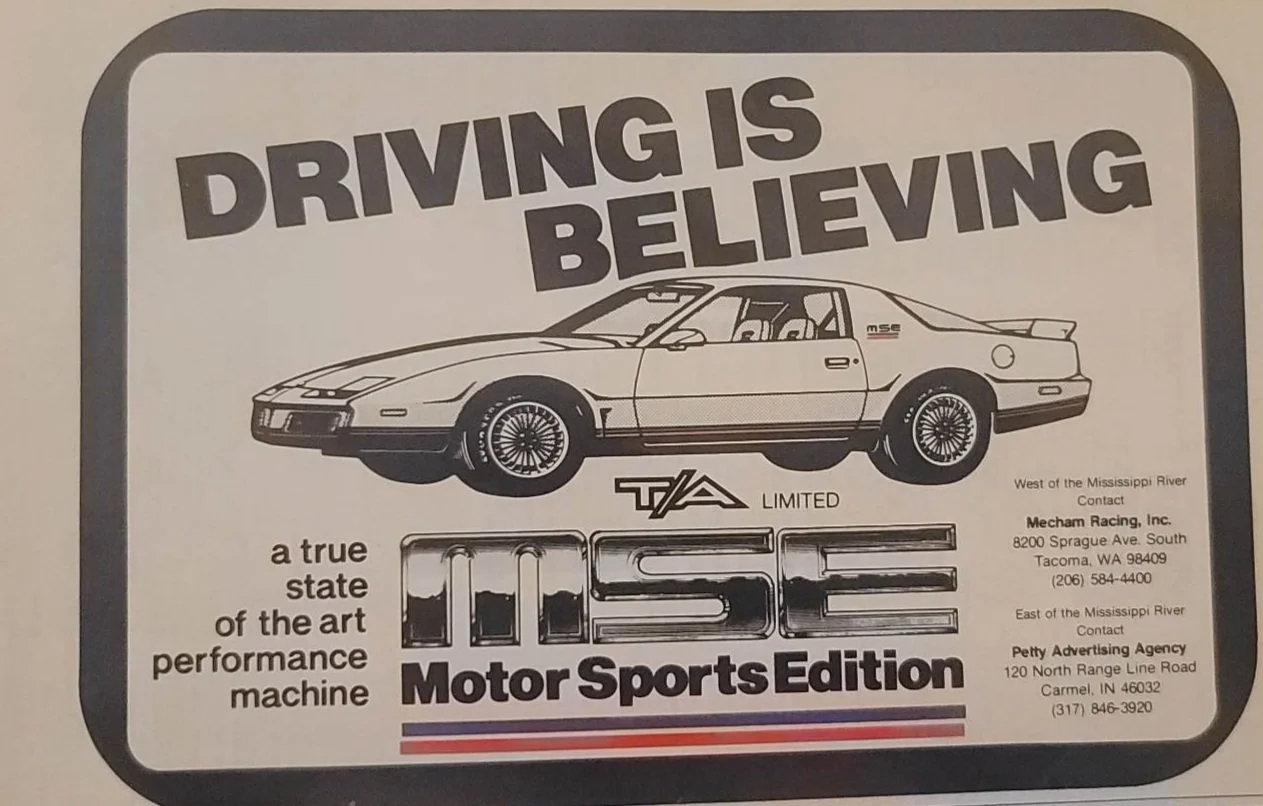
One Of The Small Advertisements Mecham Racing Placed in a Major Publications. Notice The “T/A Limited” Logo. Pontiac Was Initially Going To Call The Firebird “The T/A”. But This Was Scrapped Early 1982. In Some Videos, And Pictures You Can See The Same “T/A” Logo As A Decal On The Fenders Above The Fender Vent. (GM Ads That is)
“Car And Driver: Multiple 1982 Publishing Dates”
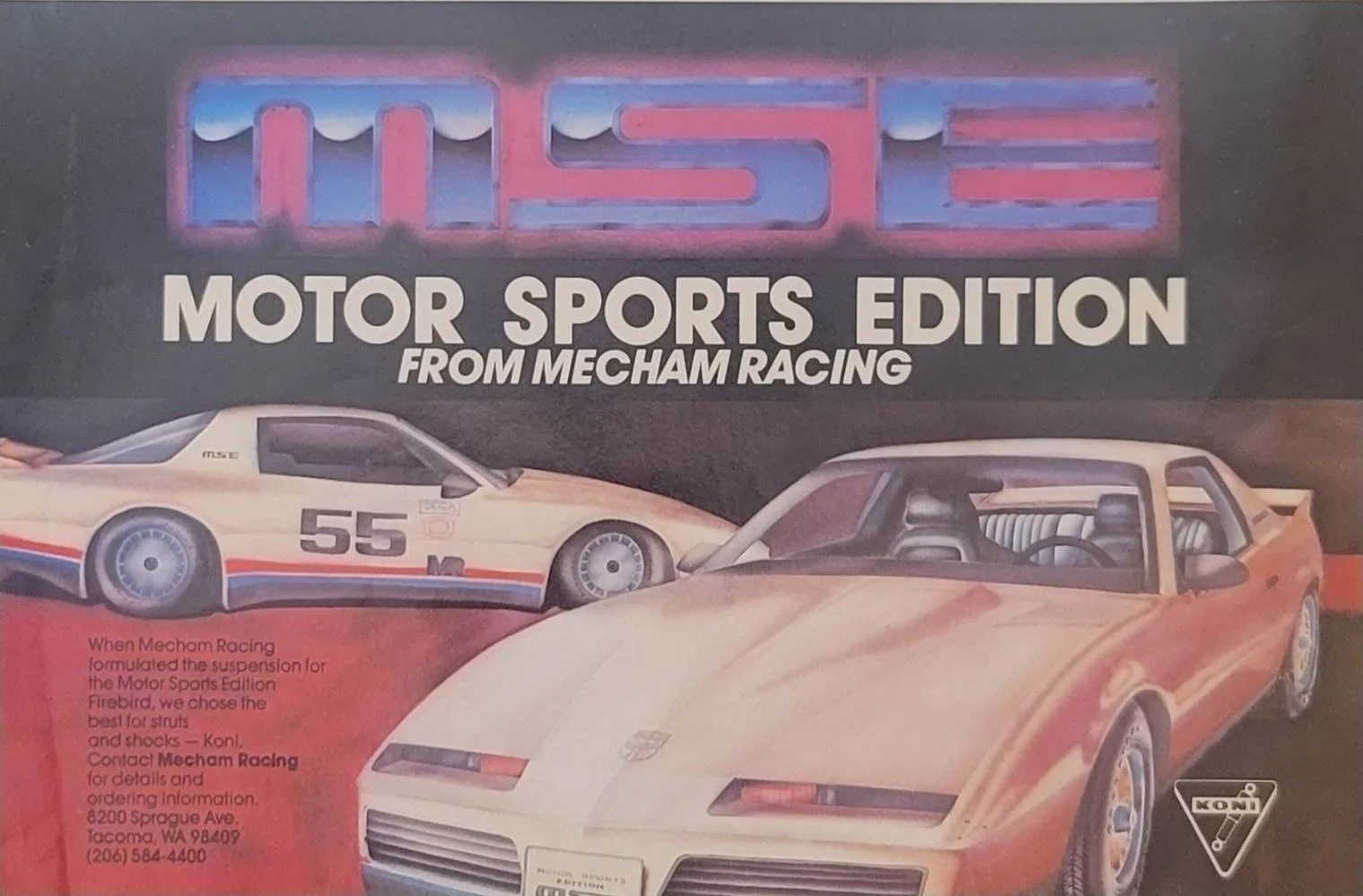
Here Is Another Small Advertisement From Mecham Racing in 1982. Notice Here There Is Also A Koni Shocks Endorsement.
Key Takeaway:
Mecham Racing Used Koni Shocks And Struts
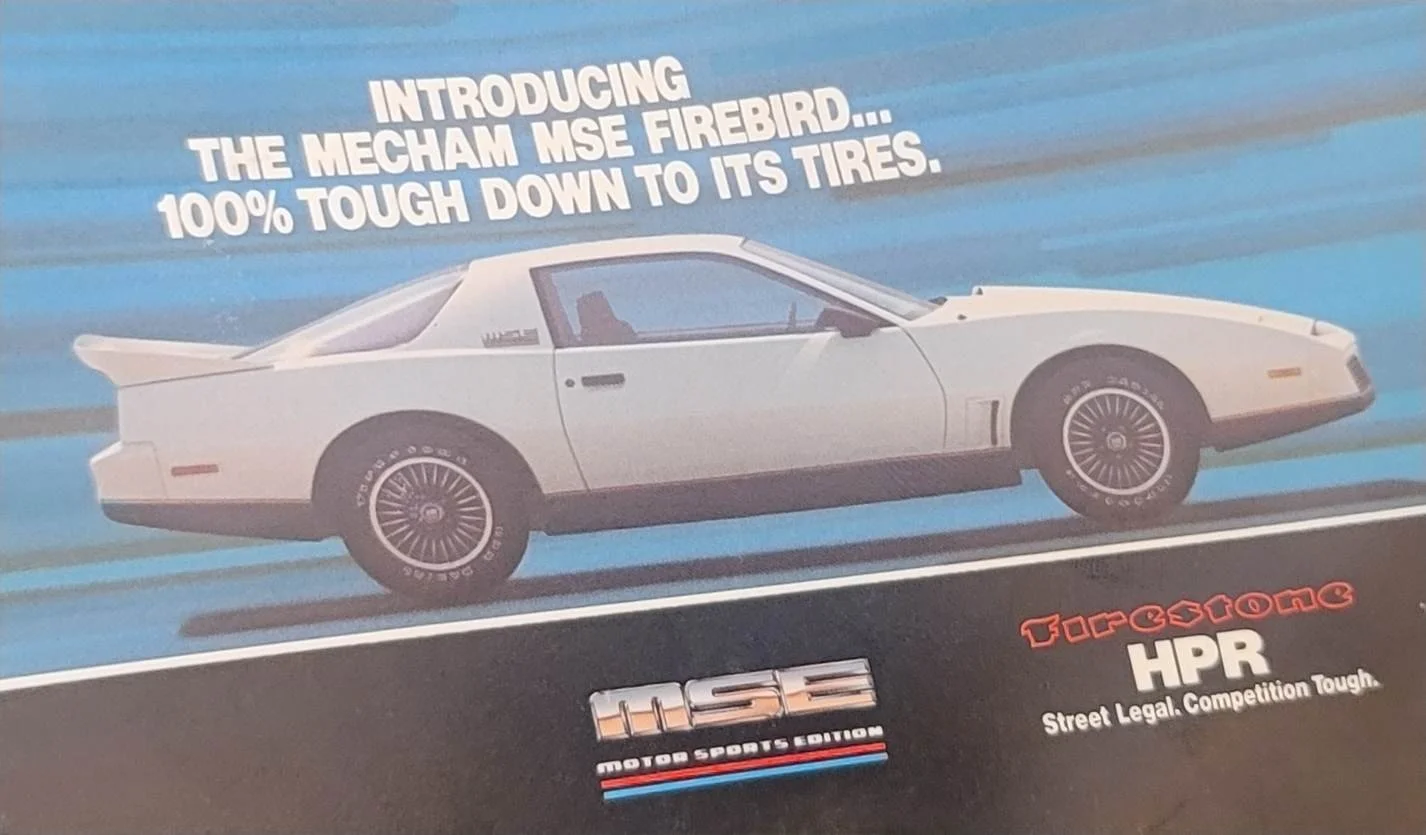
“1982 MSE Post Card (This Is Also Found As A Large Poster)
This 1982 Post Card Is The “Firestone HPR” Tire Endorsement By Mecham Racing
Key Takeaways:
Mecham Racing Used “Firestone HPR” Tires Instead Of GM Supplied Tires.
Use Of Koni Shocks (Koni Reds)
Use Of Urethane Bushings (Red Poly Bushings)
Use Of High Rate Springs (1-Inch Drop Springs)
Use Of Added Crossmember (Talon Brace)
Use Of Droop Limiter Straps (On Rear Lower Control Arms, Stops Rear End Travel Downwards)
A “Customer Installed” Git Kit Which Adds 50-70hp Over Stock
Optional Recaro Seats
Optional ARA Motorola Professional AM/FM Sound System
MSE Trim Package
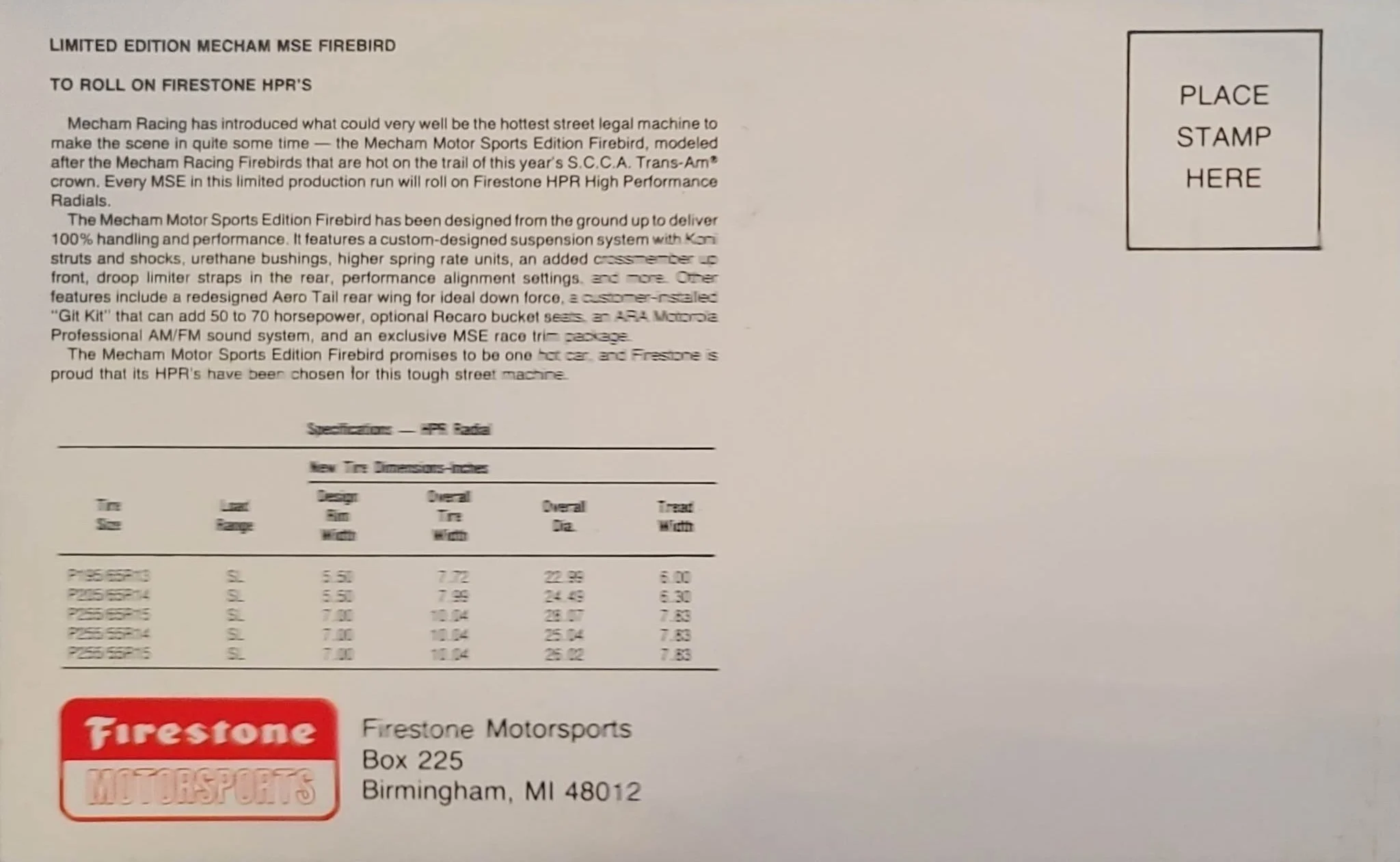
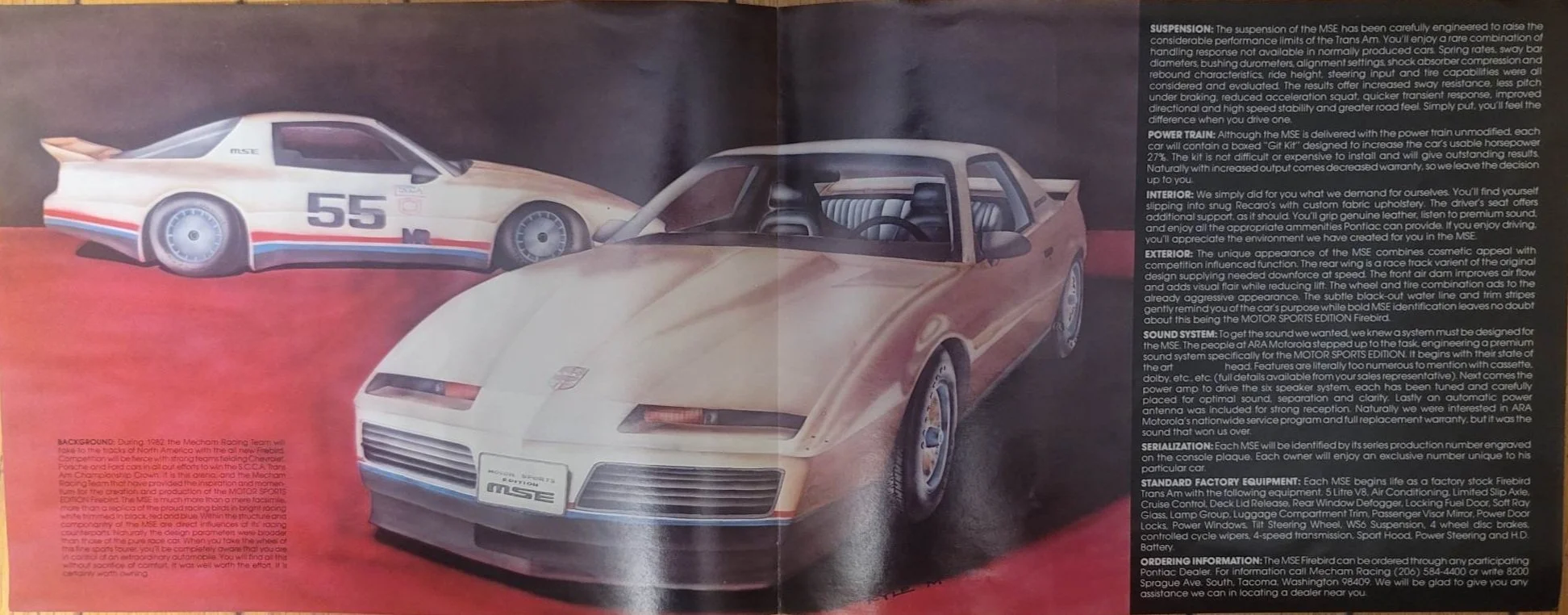
“1982 Mecham Racing 2-Page Fold Open Brochure”
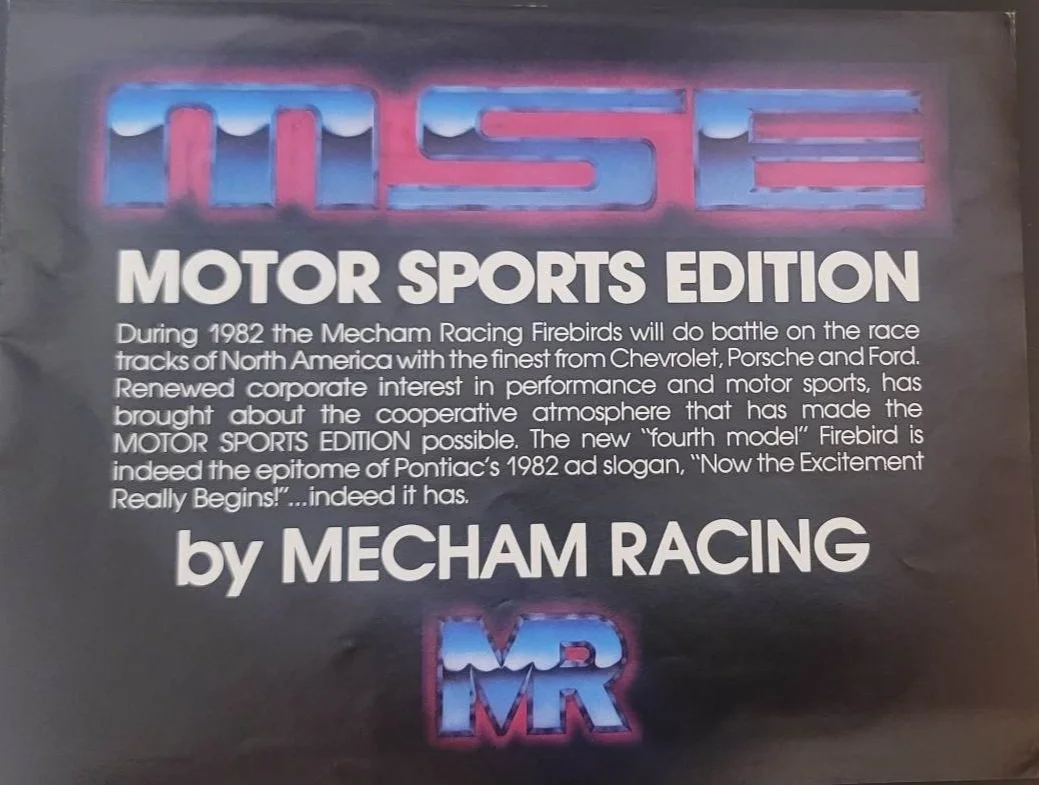
Front Side Of Brochure When Closed (Backside is White)
Key Takeaways:
Git Kit Adds “27 Percent” More Power
First Mention Of A Front Air Dam (Not Seen On Any 1982 Cars In this Record. Seen Plenty In 1983. Mecham Style Was Not OEM.)
Optional Recaro Seats (2nd Mention)
In Depth ARA Motorola Sound System Description (ARA Motorola Head Unit, Power Amp, 6 Speakers, Auto Power Antenna
In Depth Description Of Standard Equipment, A Fully Loaded 1982 Trans Am
THE BIGGEST TAKEAWAY IS ON THE BACK
“1982 Mecham Racing Small Tri-Fold Brochure”

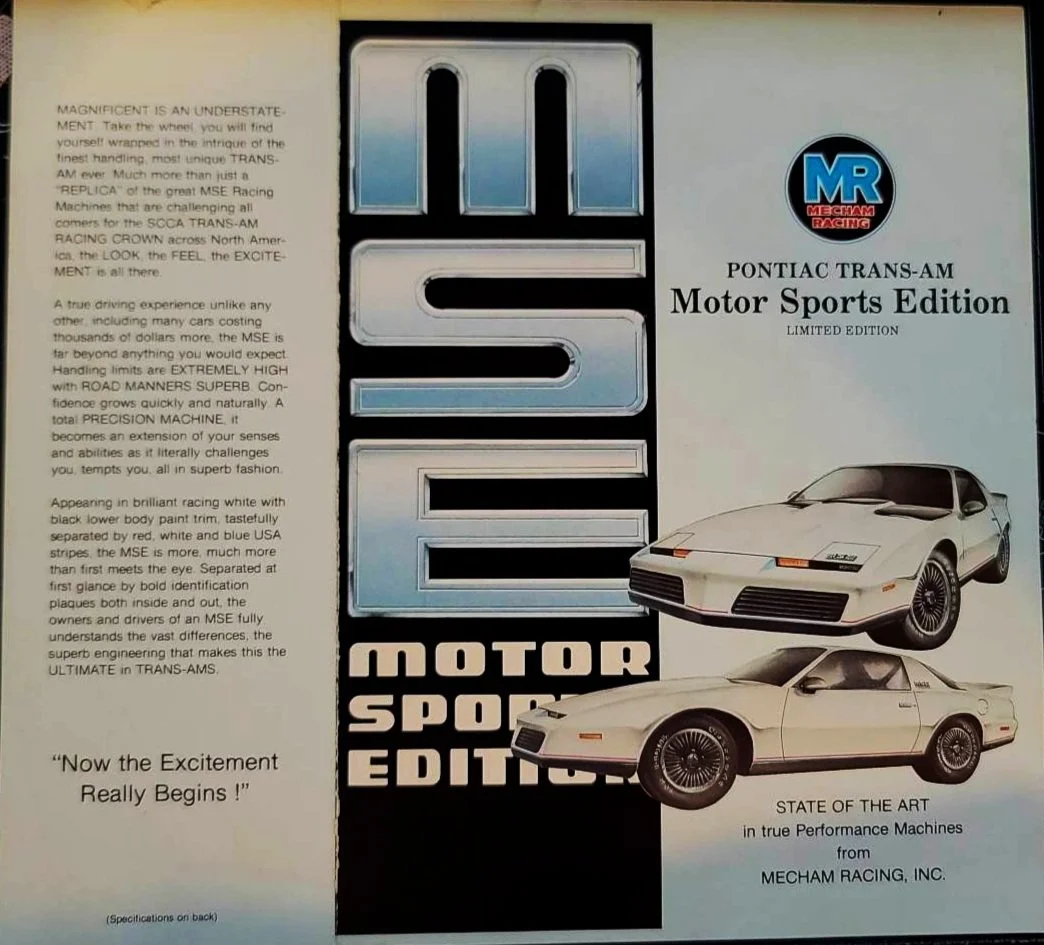
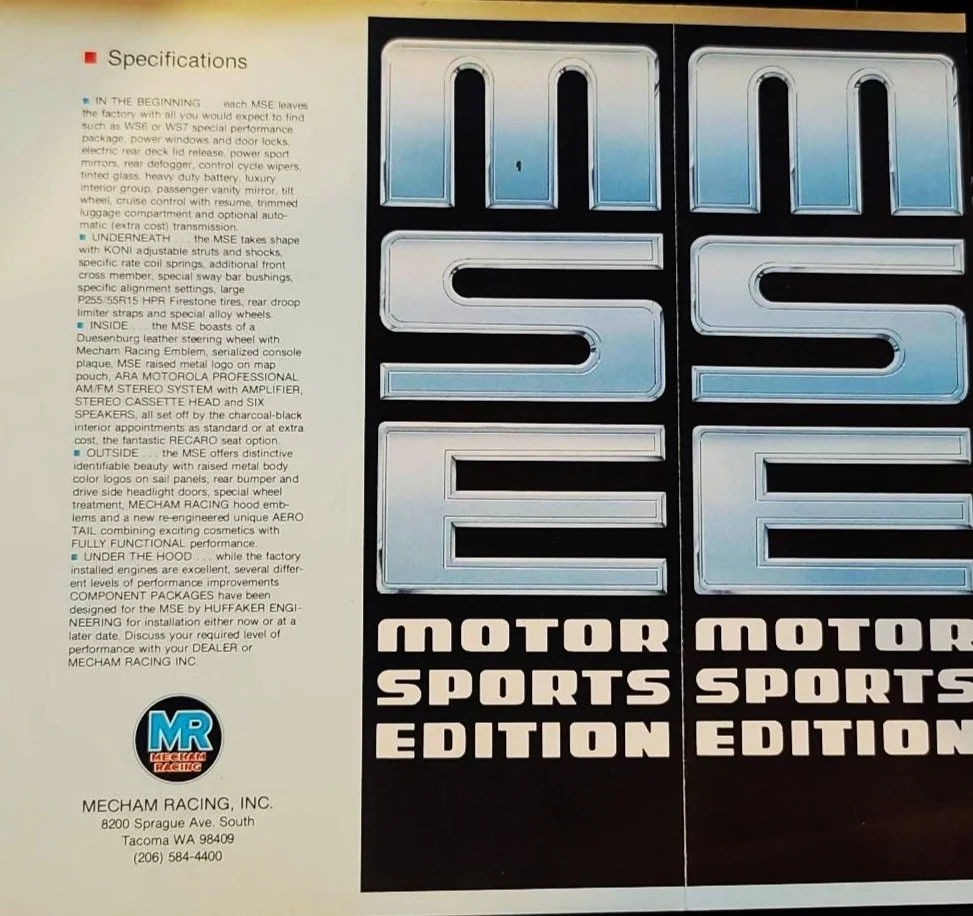
Key Takeaways:
Confirmation That Most MSE Cars Were Meant To Be “ Brilliant Racing White” (Front Side)
Red, White, And Blue Lower Pinstripes On White Cars Was Optional (Front Side)
Change In Previous Advertisement: From All Being WS6 to WS6 or WS7
Change In Previous Advertisement: Extra Cost Automatic Transmission Optional
In-depth Description Of Interior (Duesenberg Steering Wheel With MR logo, Console Plaque, MSE Map Pocket Badge, And Charcoal Black Interior )
In-depth Description Of Exterior (Metal MSE Sail Panel Badges, Rear Bumper MSE Badge, Headlight MSE Badge, Special Wheel Treatment (MR Decals), MR Hood Emblem)
Git Kit Designed By Huffaker Engineering
“AutoWeek: October 4th, 1982. Page 20”
“Trans-Am MSE- Now The Excitement Really Begins”
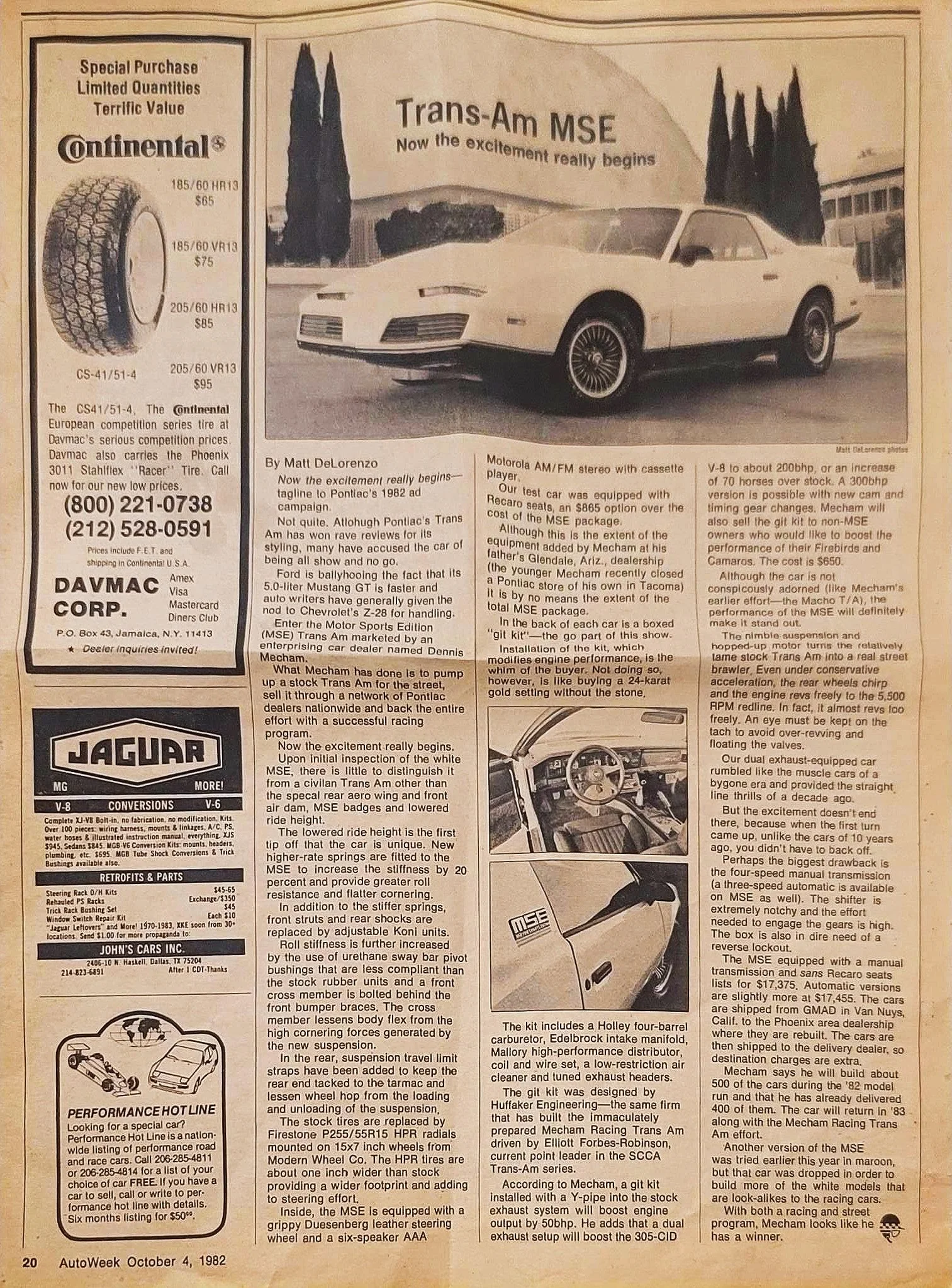
Key Takeaways:
Higher Rate Springs Add “20 Percent Stiffness”
Front Cross Member Is “Bolted Behind The Front Bumper Braces”
Recaro Seats Were A $865 Option ( $2623.24 In 2023)
In-depth Description Of Git-Kit (Holley 4BBL Carburetor, Edelbrock Intake Manifold, Mallory Distributor, Low Restriction Air Cleaner, Tri-Y Headers)
Git Kit Designed By Huffaker Engineering
Git Kit With Factory Exhaust 50 HP Gain (175 HP 305 LG4) (Lets Call This Stage #1)
Git Kit With Duel Exhaust 75 HP Gain (200 HP 305 LG4) (Duel Exhaust Was Optional) (Lets Call This Stage #2)
Git Kit With Everything Plus Cam And Gear Swap 175 HP Gain (300 HP 305 LG4) (Lets Call This Stage #3)
Git Kit Optional As A Side Package Loose Of a Car $650 ($1971.22 In 2023)
Auto Was a 3 Speed (1982 OEM GM)
Planned Production Of 500 Cars, 400 Already Delivered As Of October 4th 1982
1982 Mecham Racing Product Press Kit
“Where It all Comes Together”
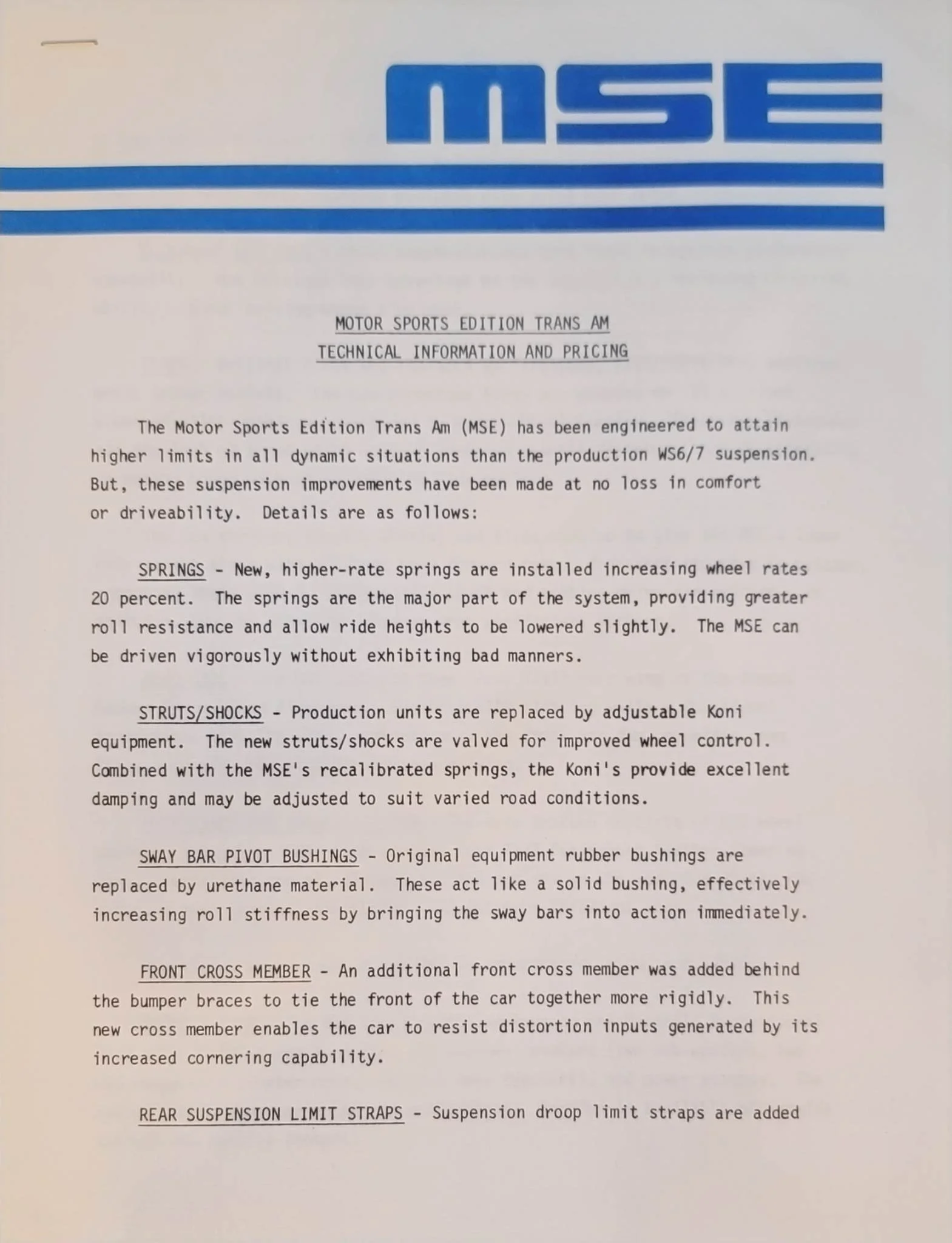
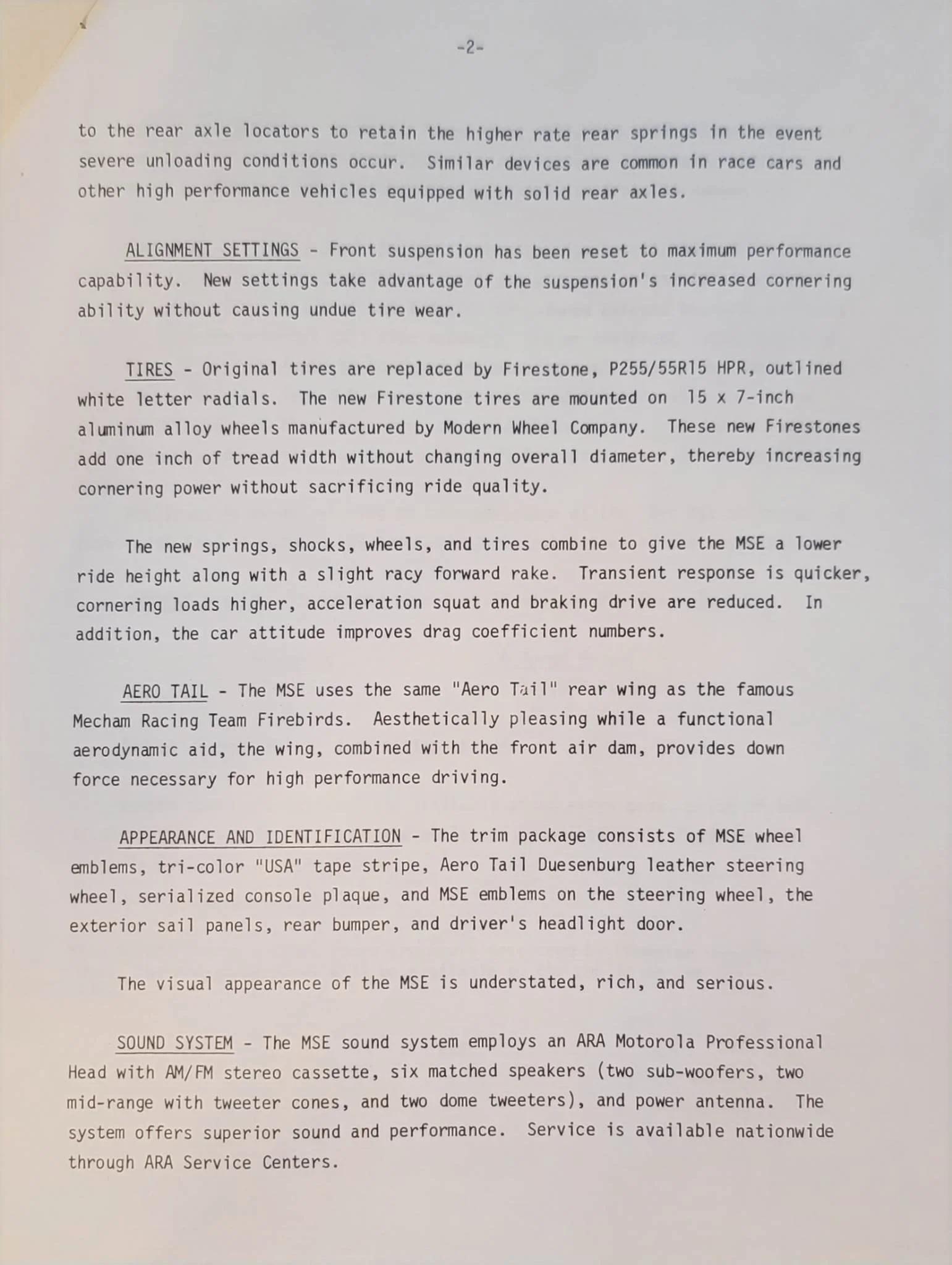
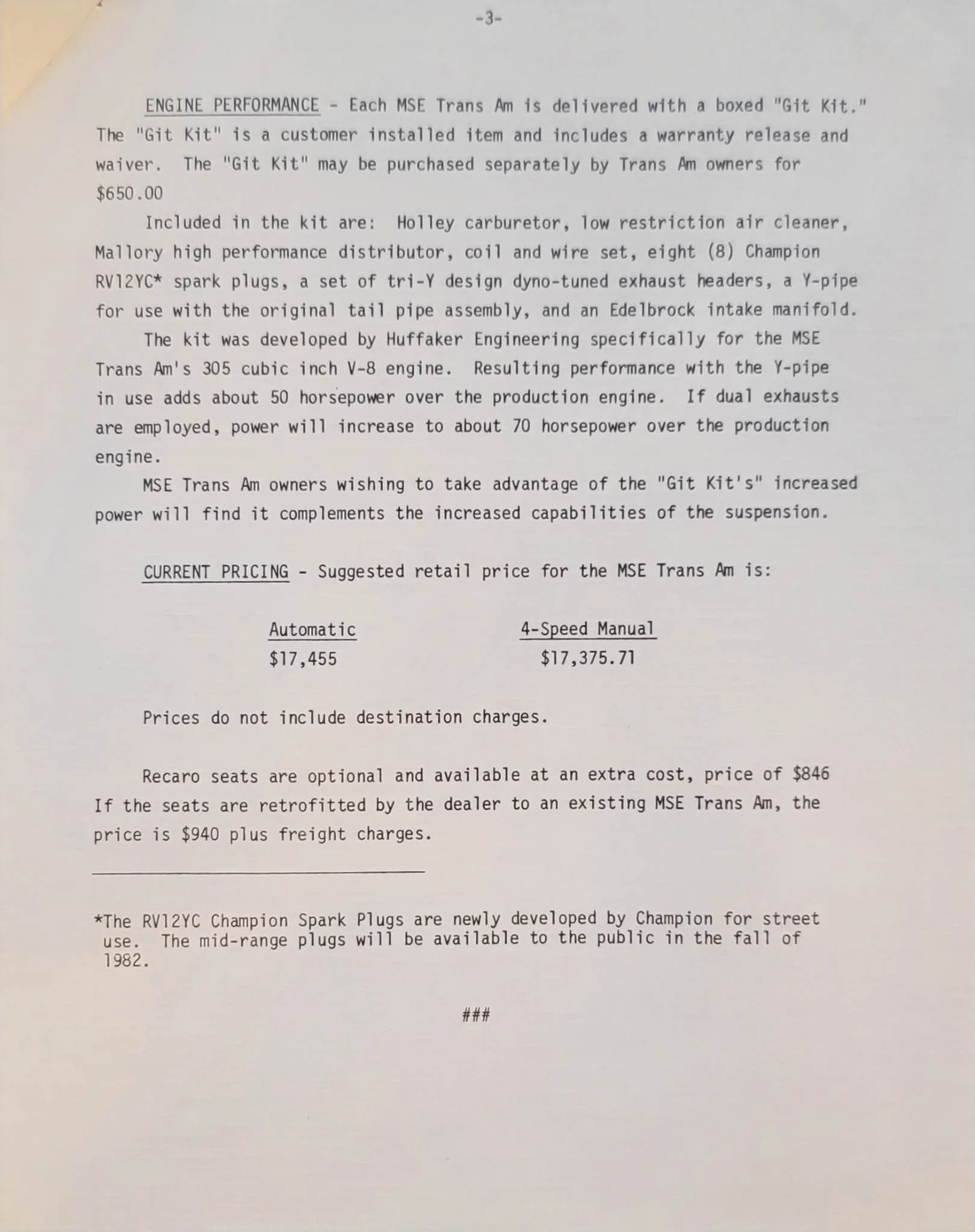
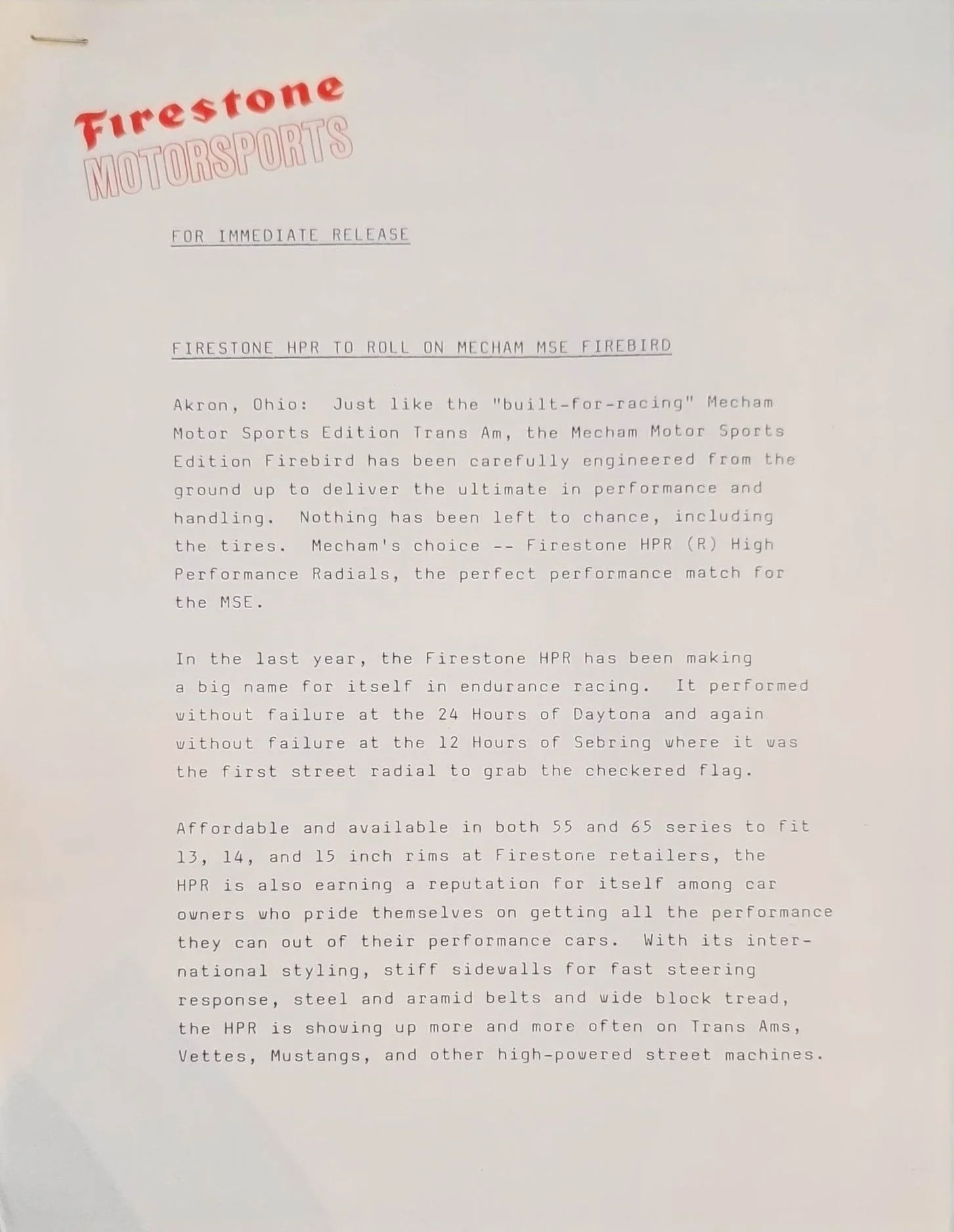
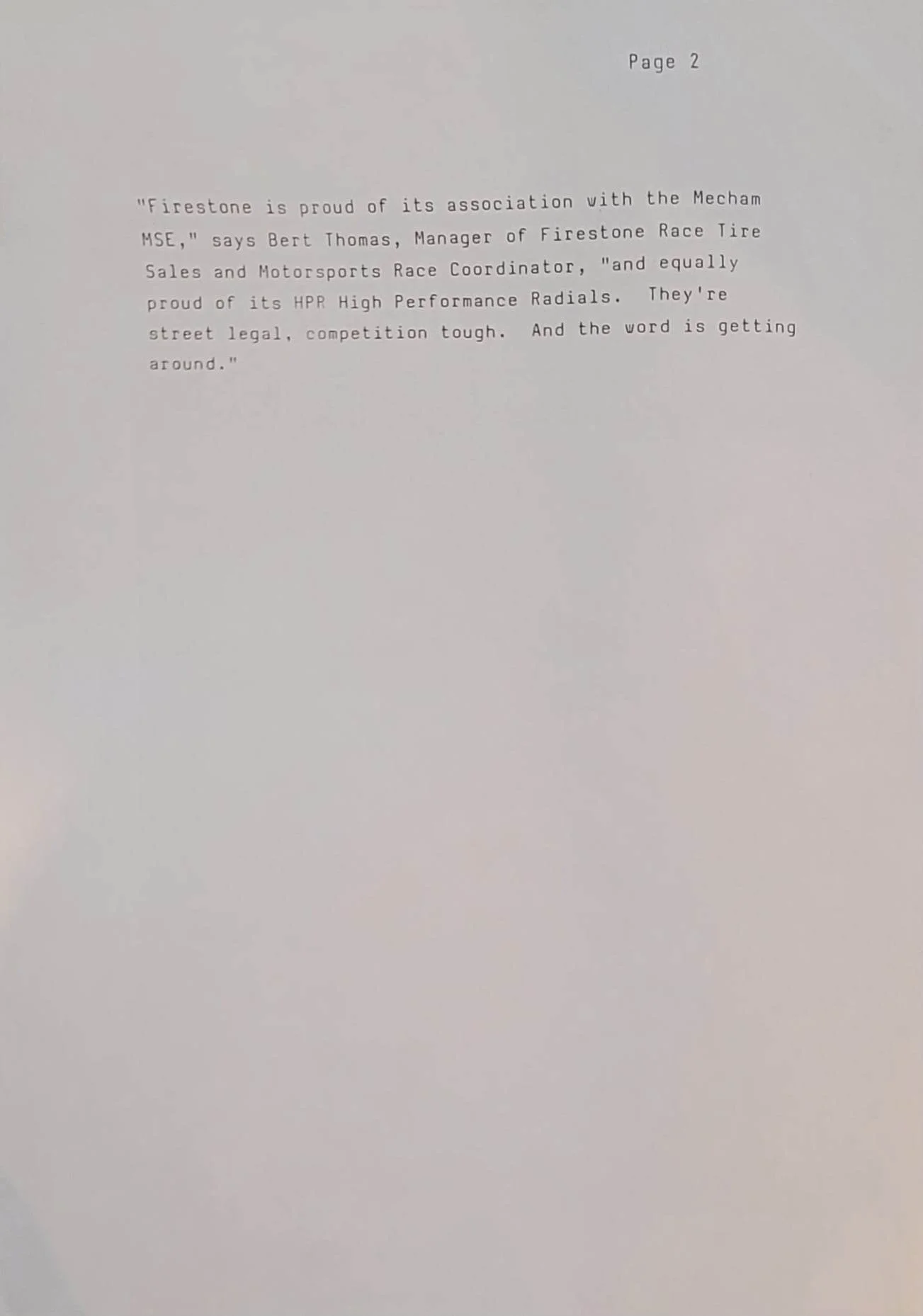
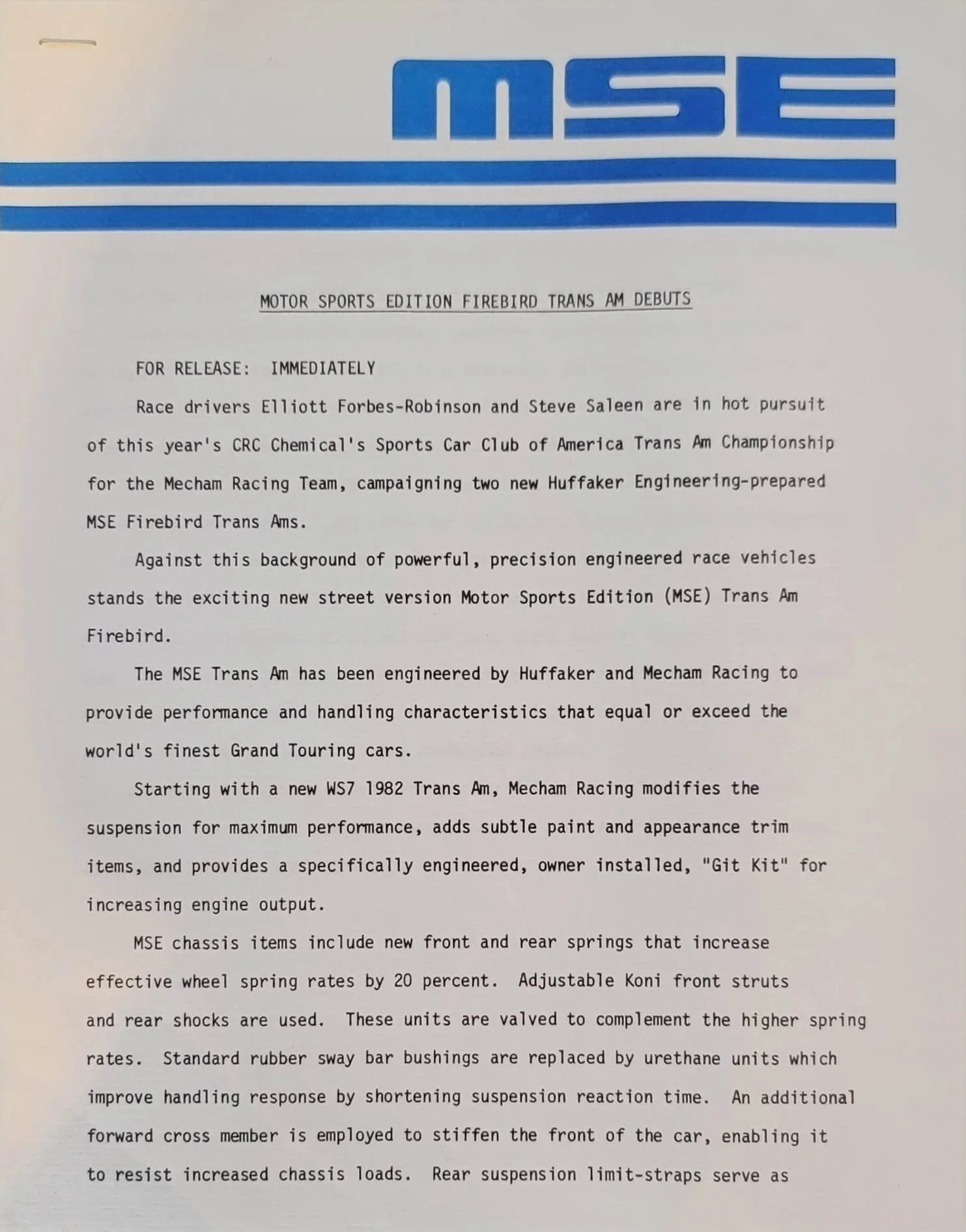


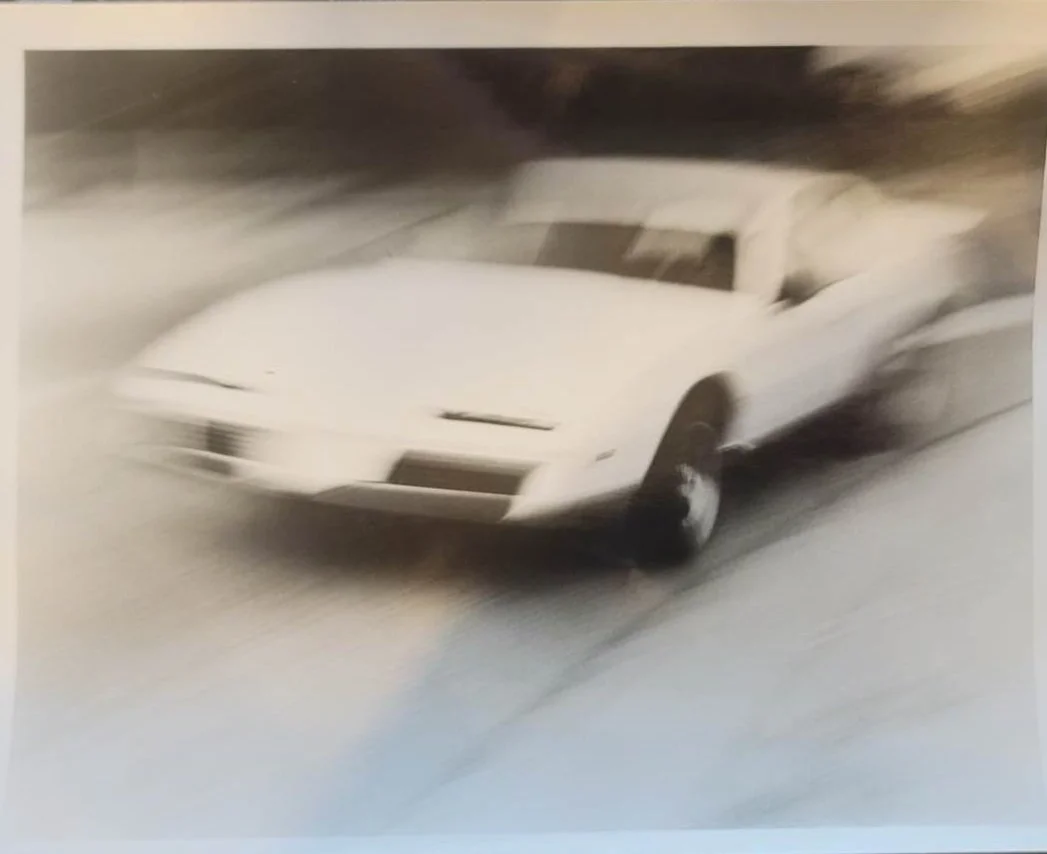
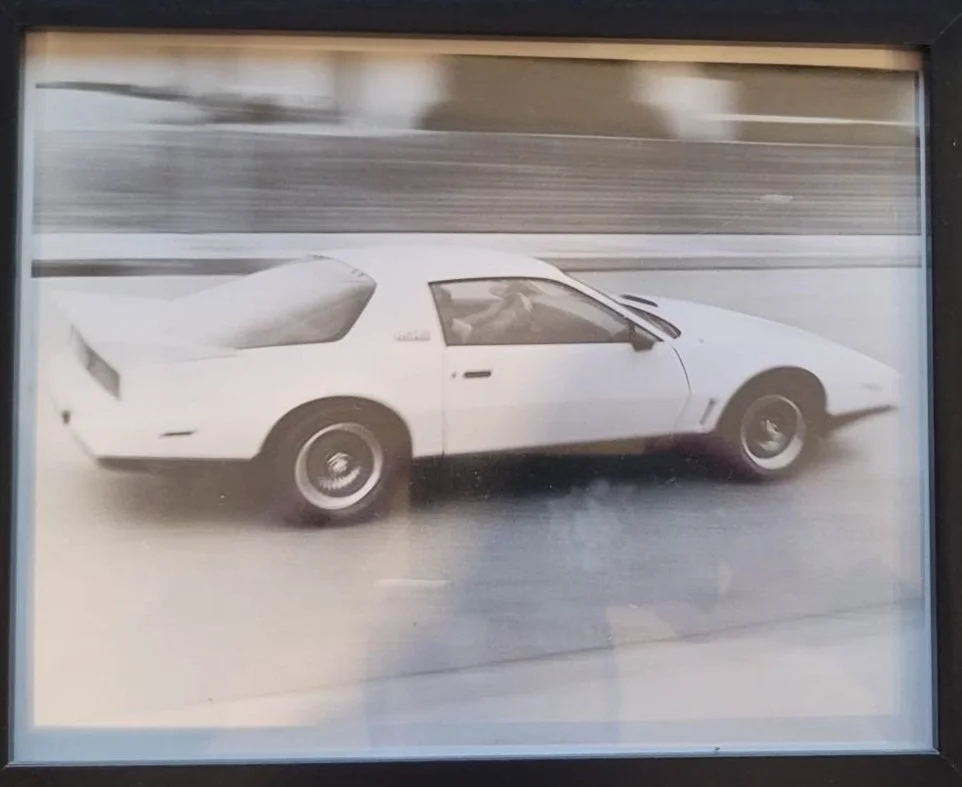
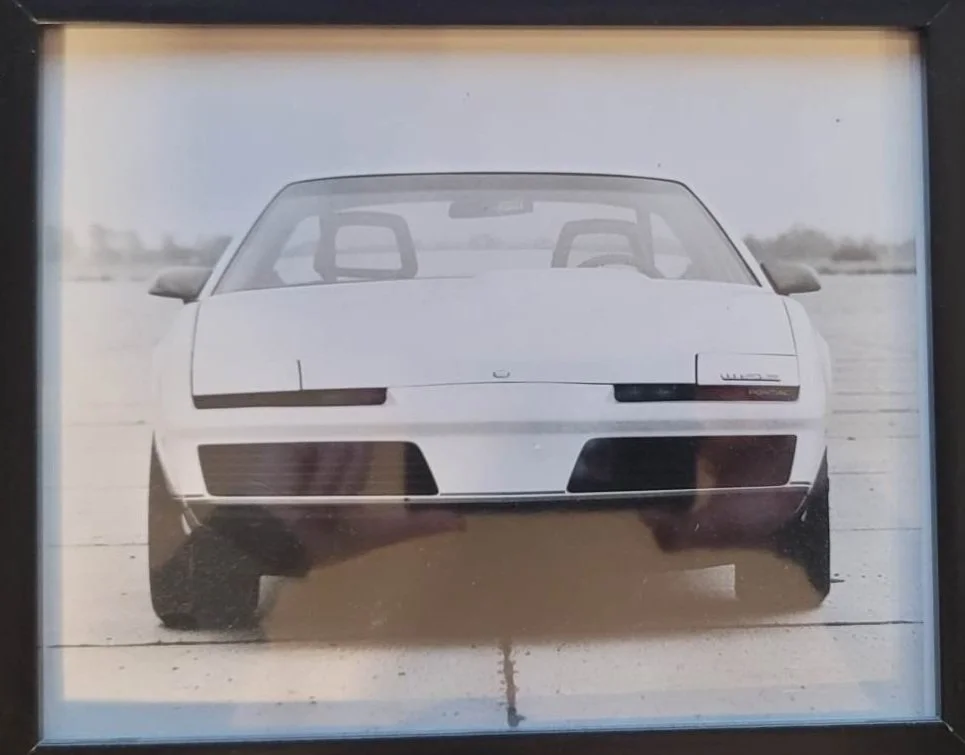
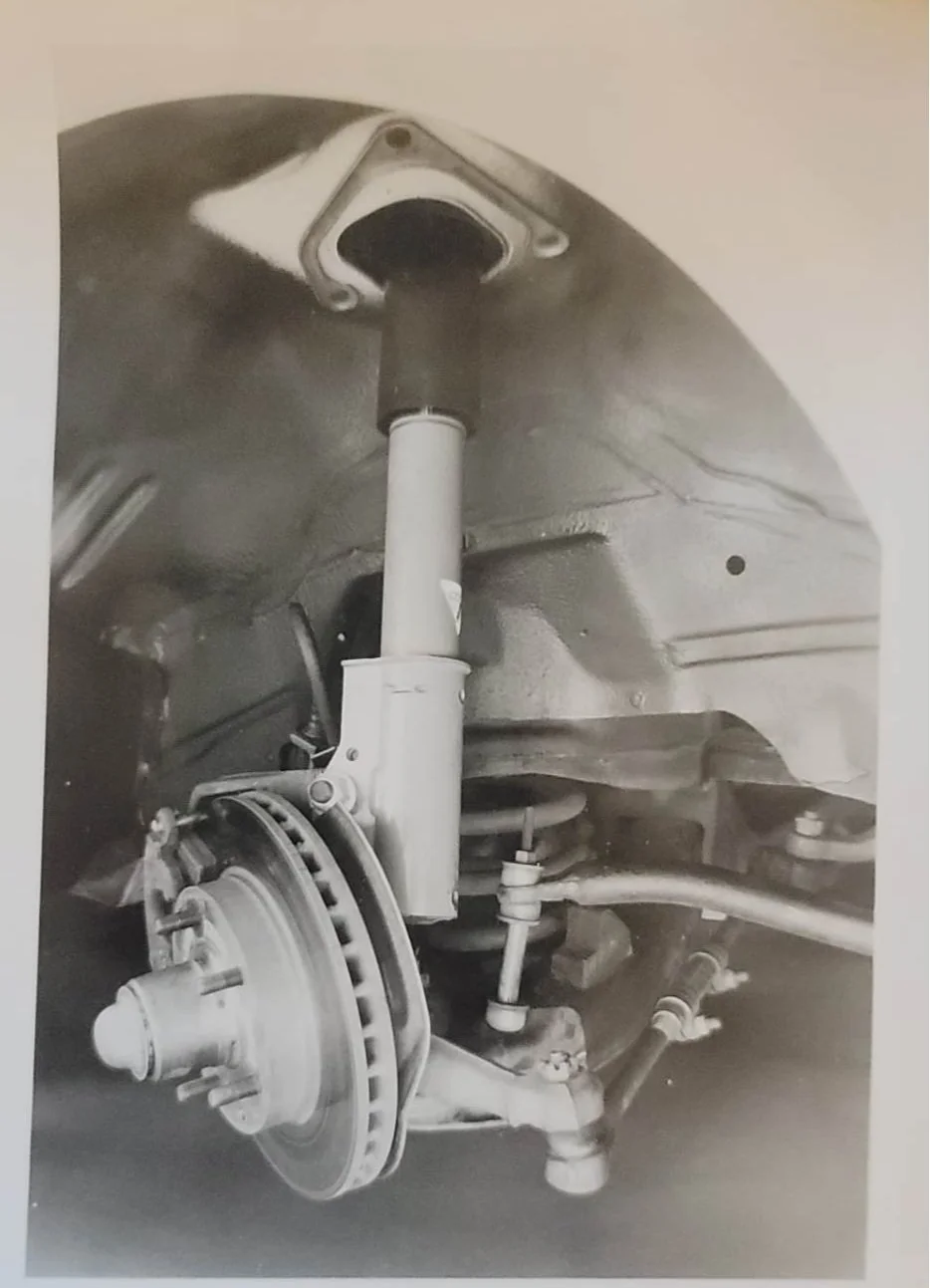
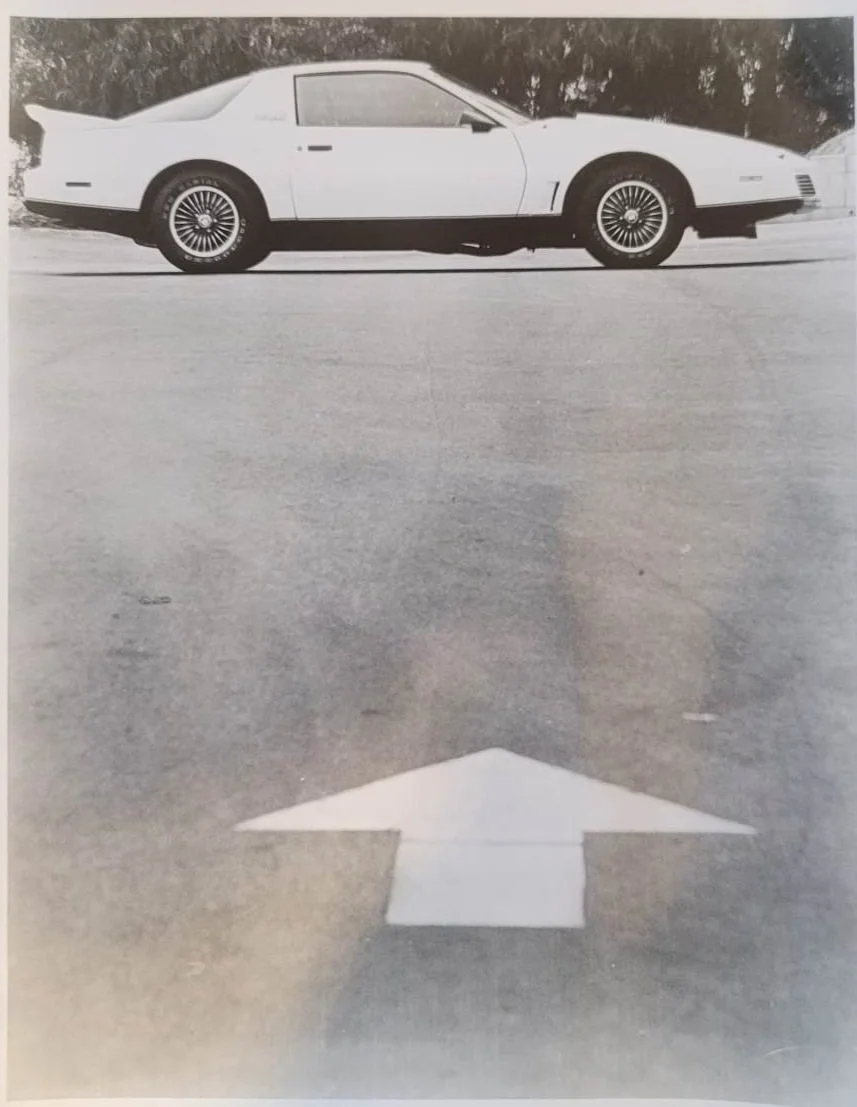
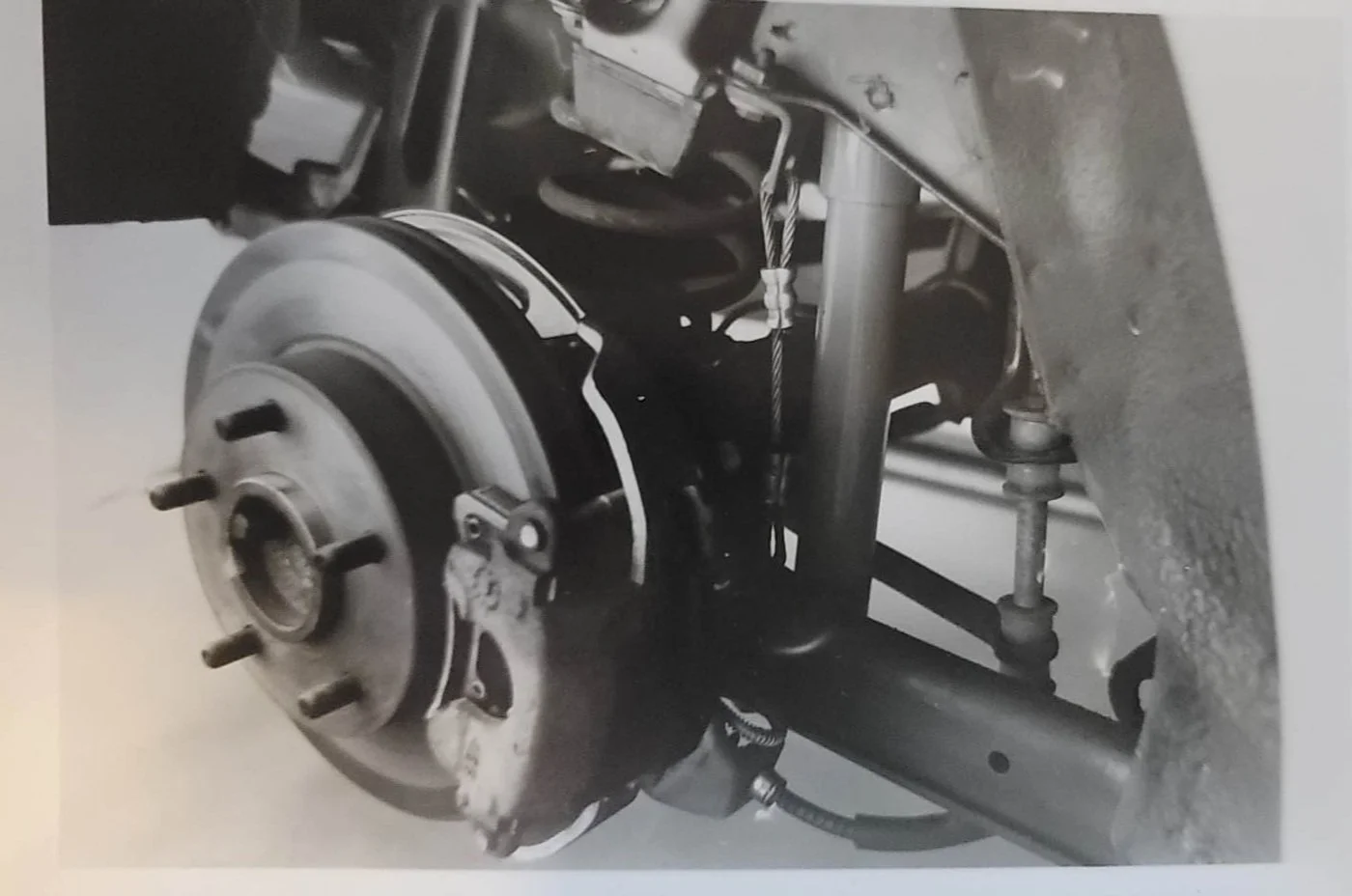
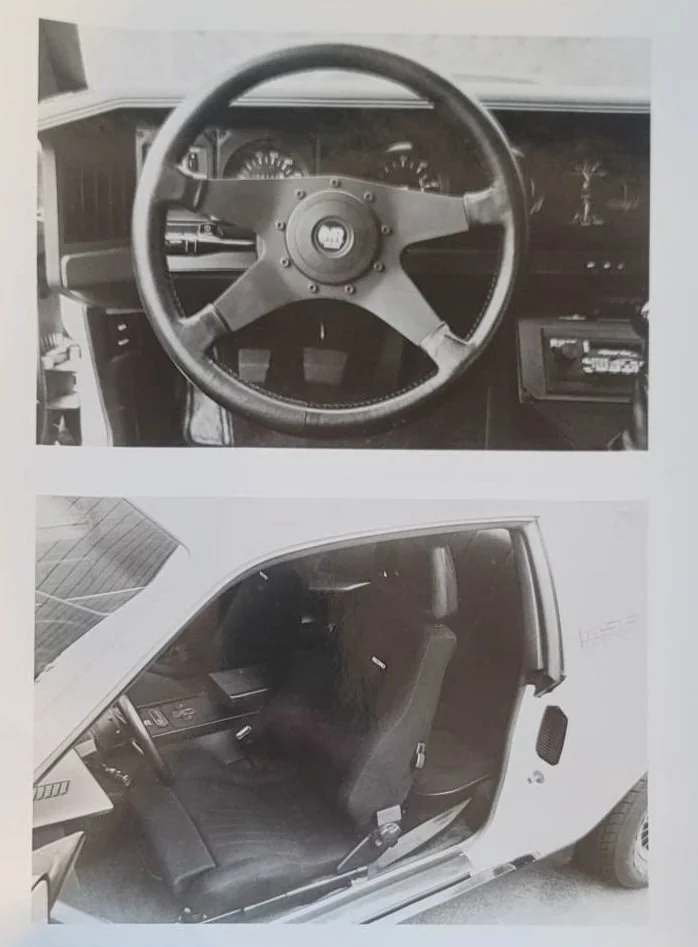
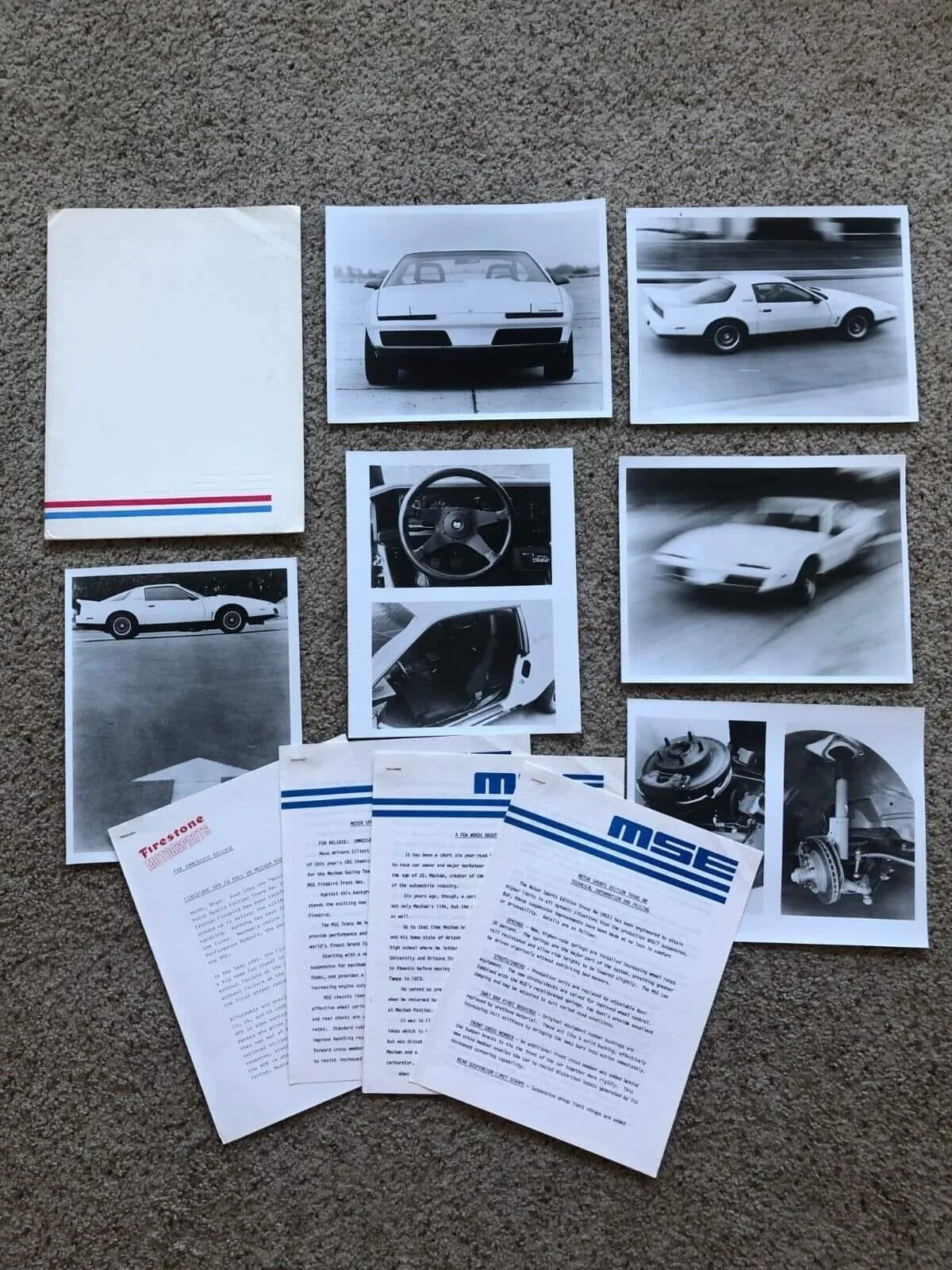
Key Takeaways:
Images Show, For The First Official Time, What A Proper 1982 MSE Trans Am Has To Offer
Image Of Droop Limiter Location, In Description Paper They Are Called Limit Straps
Image Of Koni Red Shocks/Struts, And Poly Bushings
Images Of Recaro Seats, Motorola Head Unit, MSE Steering Wheel, 170 MPH Speedometer
Further Information On Sound System ( 2 Mid Range, 2 Subs, 2 tweeters)
Use of “RV12YC” Spark Plugs
Steve Saleen Drove/Raced For Mecham Racing (Take Note Of This, Foreshadowing)
WS6/WS7 Cars Used
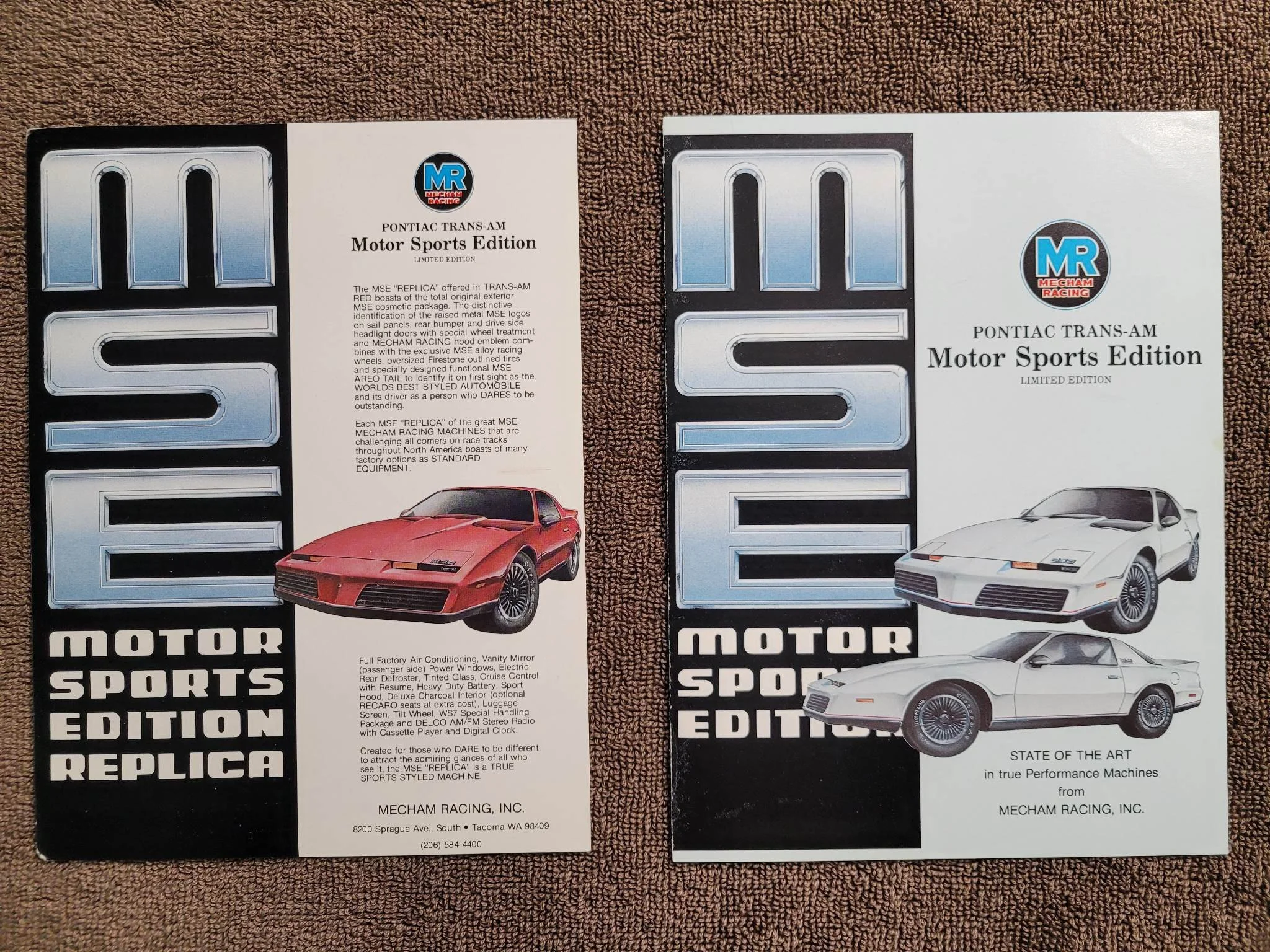
There Is Also A Version Of This Tri-Fold Brochure With A Red MSE Trans Am:
Notice How It States “Motor Sports Edition Replica”. The “R” On The Red Cars Means “Red Car/Replica MSE”
Hot Rod Magazine, August 1982
“The MSE Trans Am”
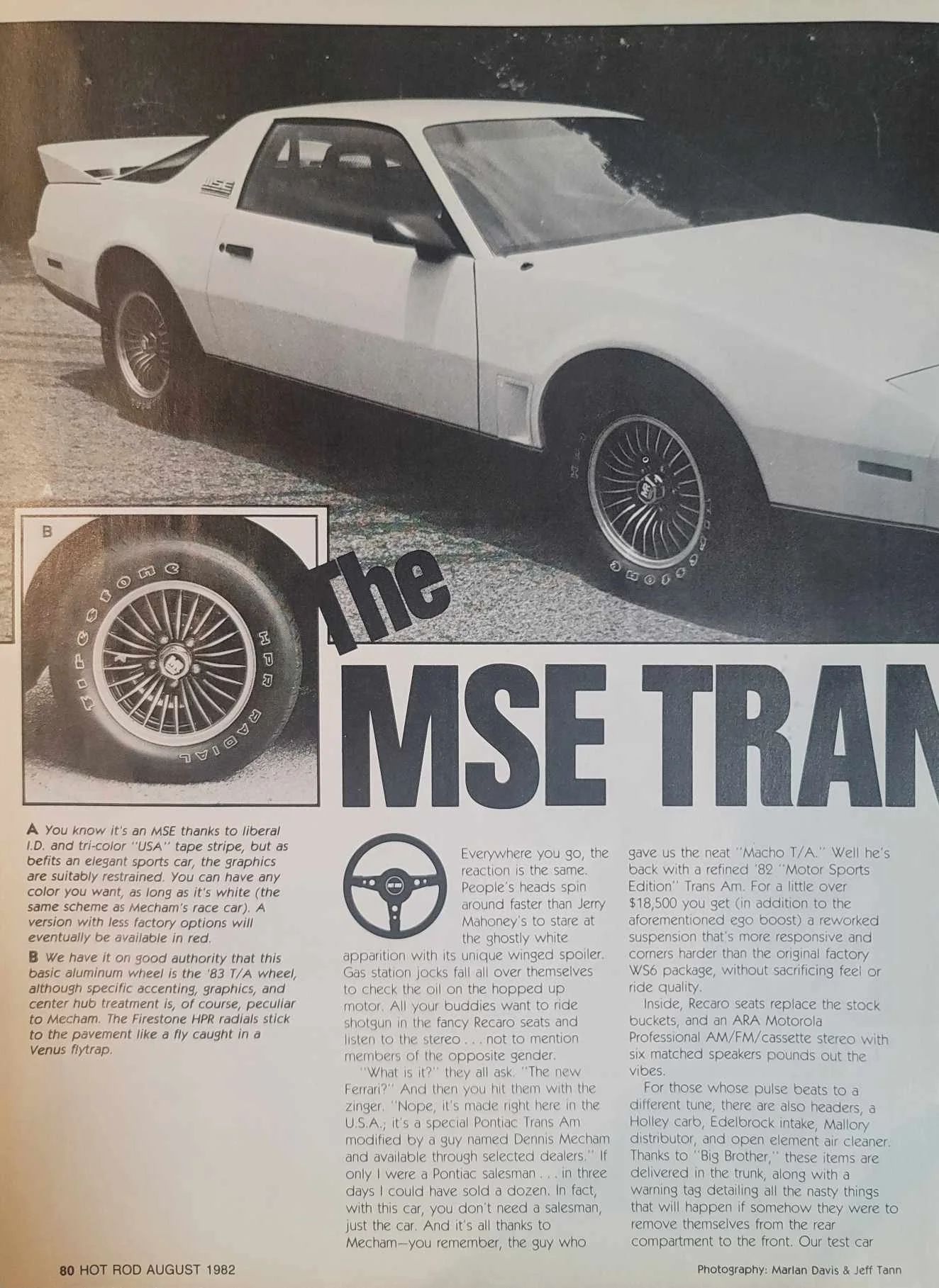
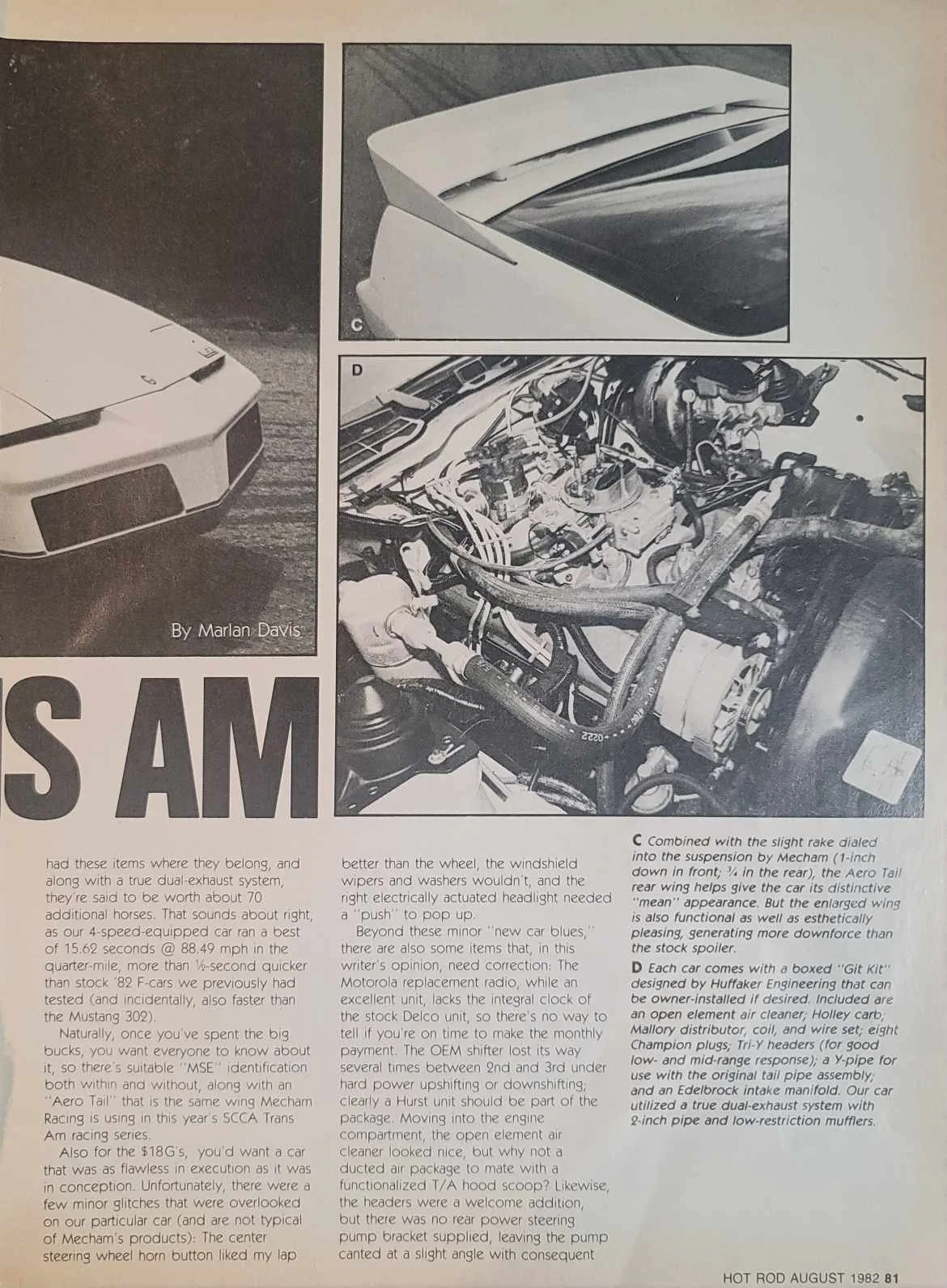
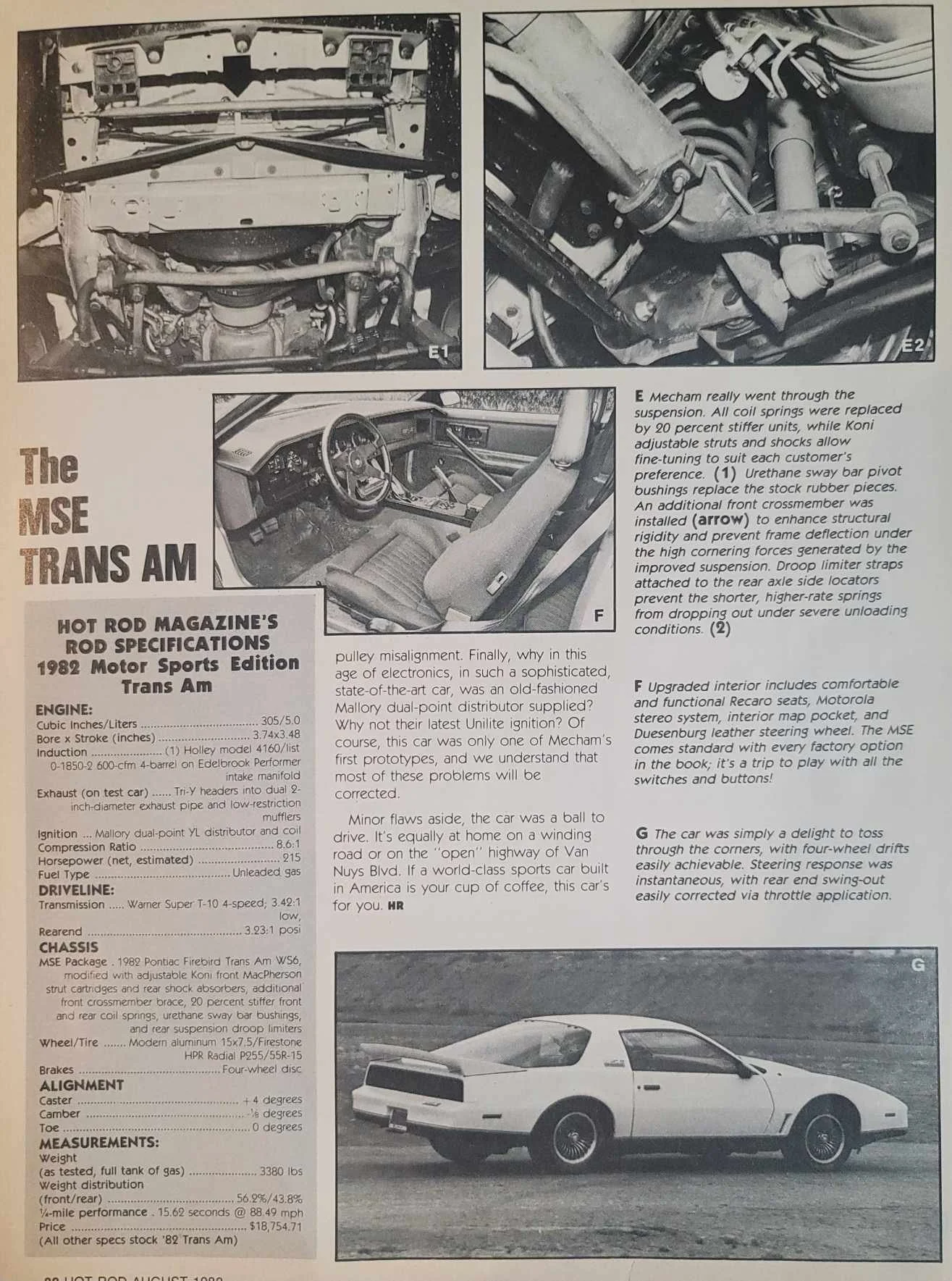
Key Takeaways:
Alignment Settings
Mention Of Red Cars Being Lower Option Cars On Purpose
1/4 Mile Time- 15.62 Seconds (Git Kit LVL 2)
Car And Driver, December 1982
The Specialty File: The MSE Trans Am
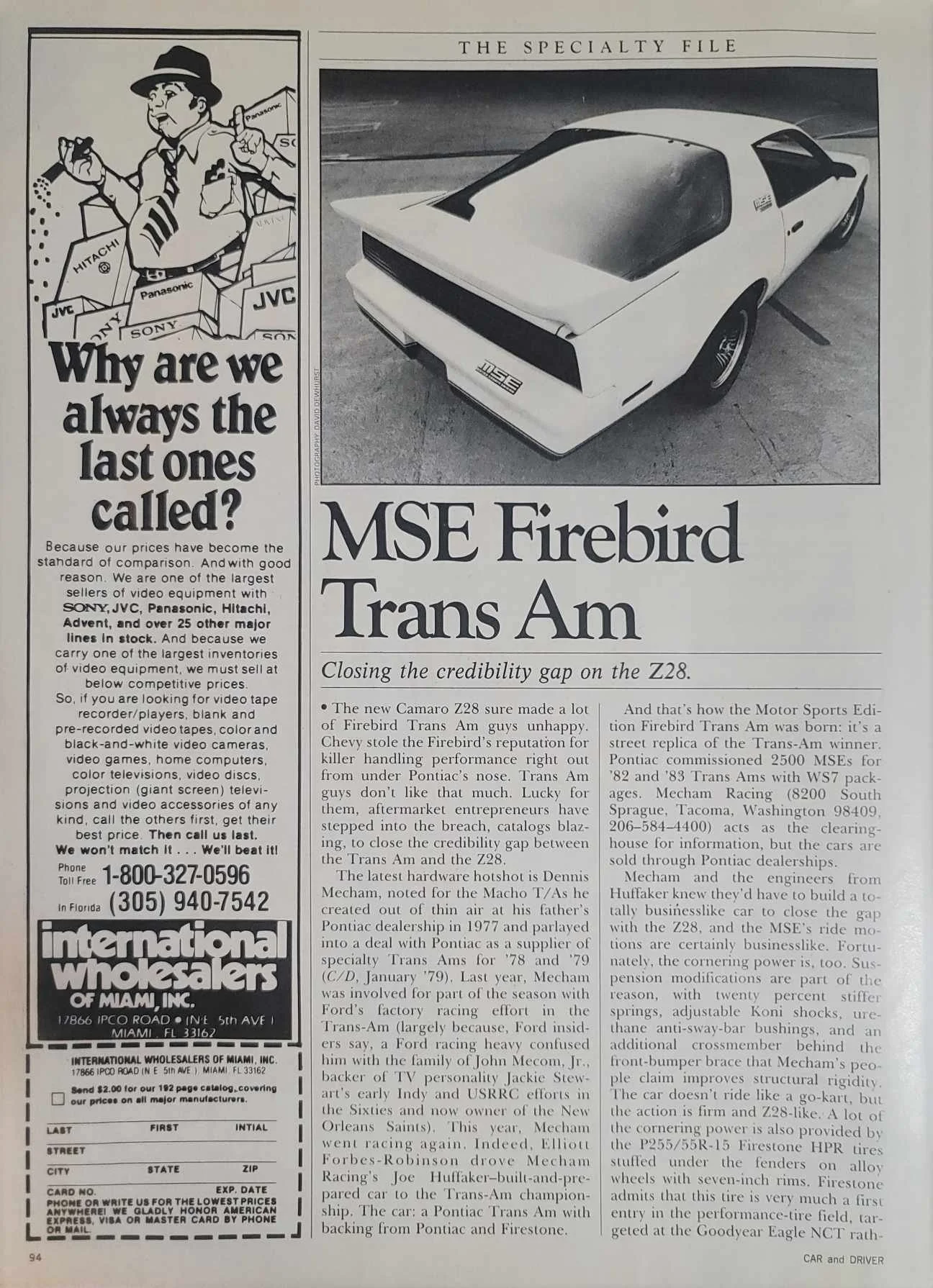
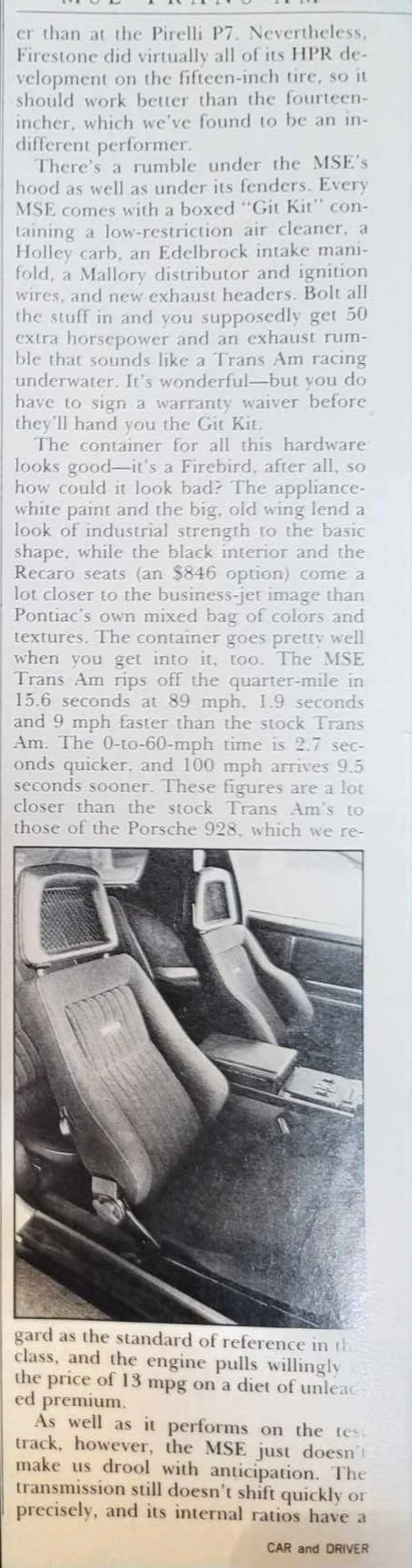
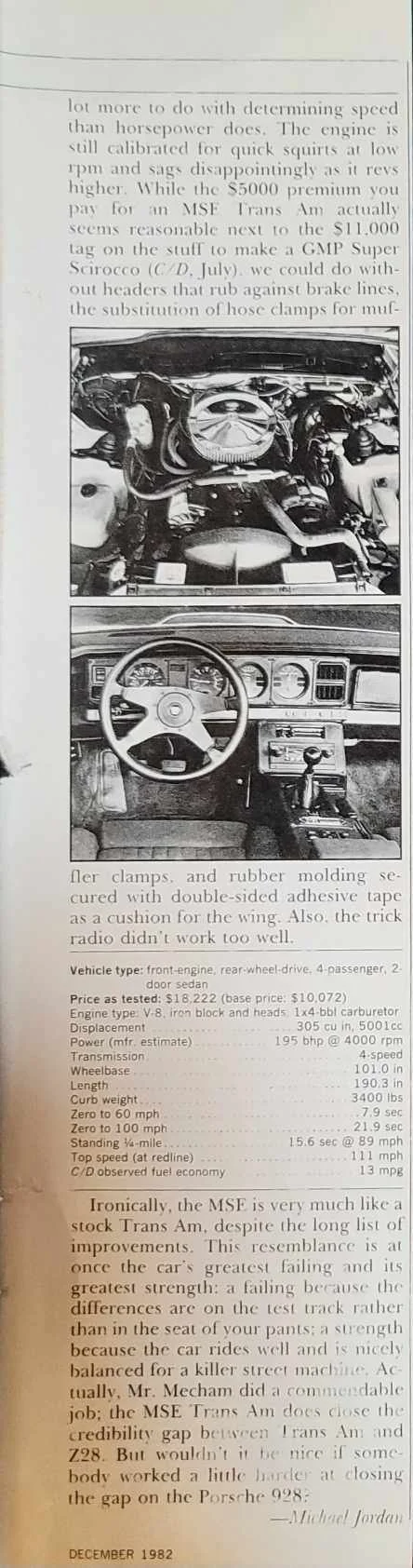
Key Takeaways:
0-60 Time: 7.9 Seconds
1/4 Mile Time: 15.6 Seconds
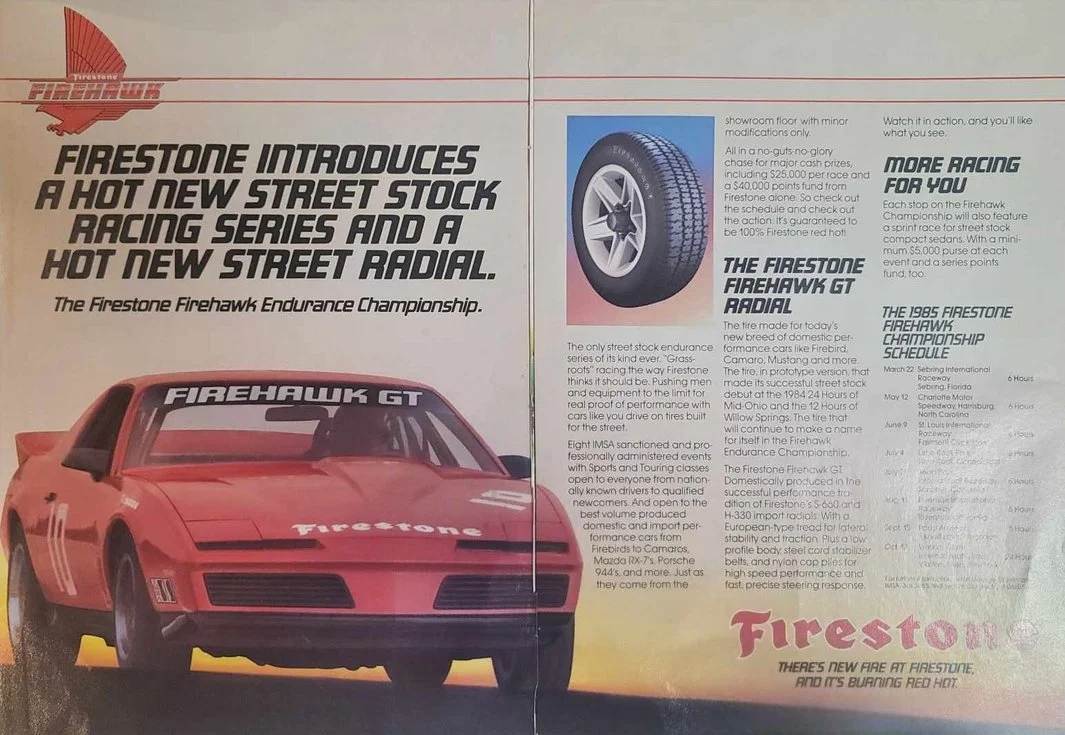
Firestone Firehawk MSE Advertisement
Popular Hot Rodding, September 1982
”The Great Trans Am: MSE Trans Am”
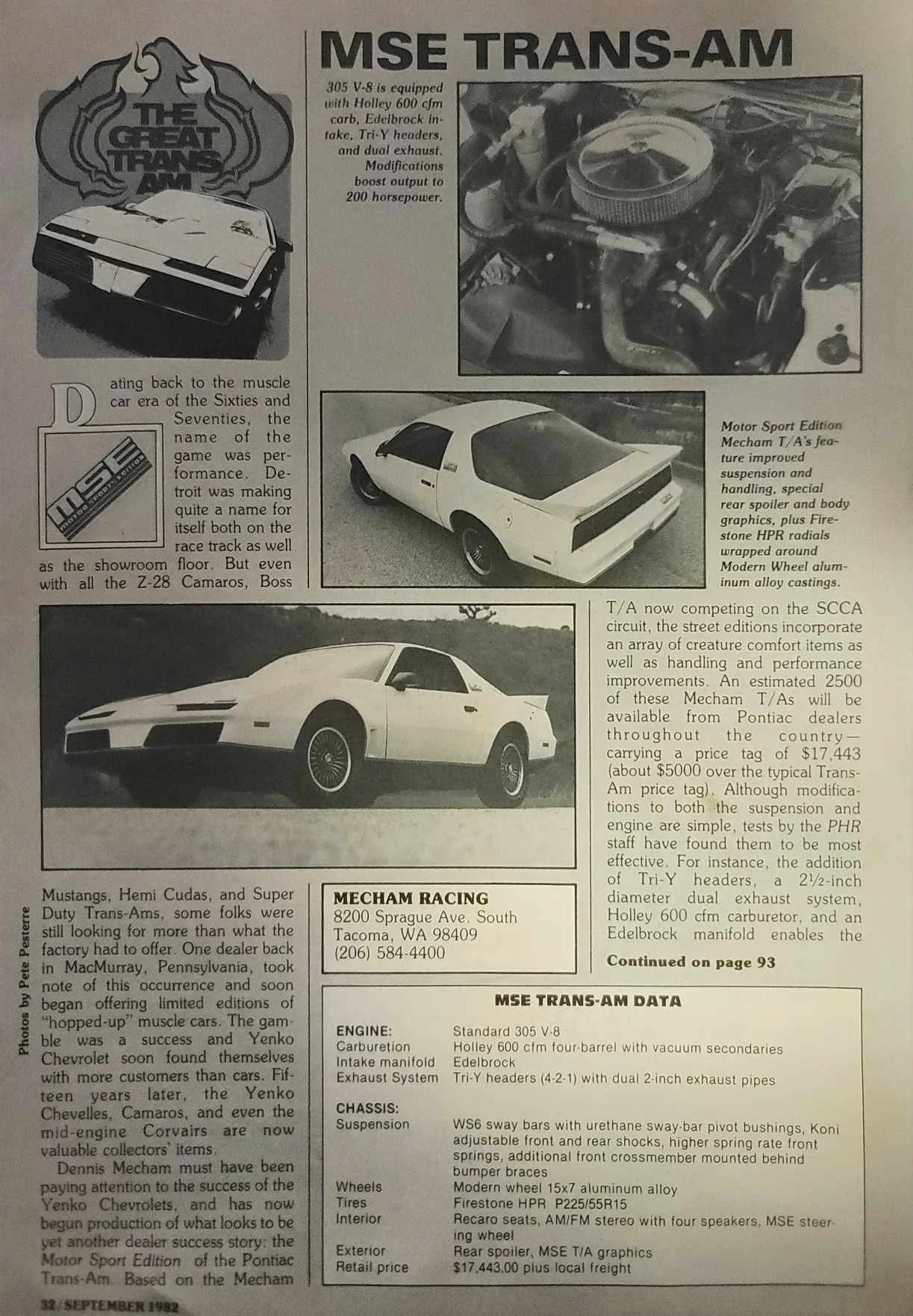
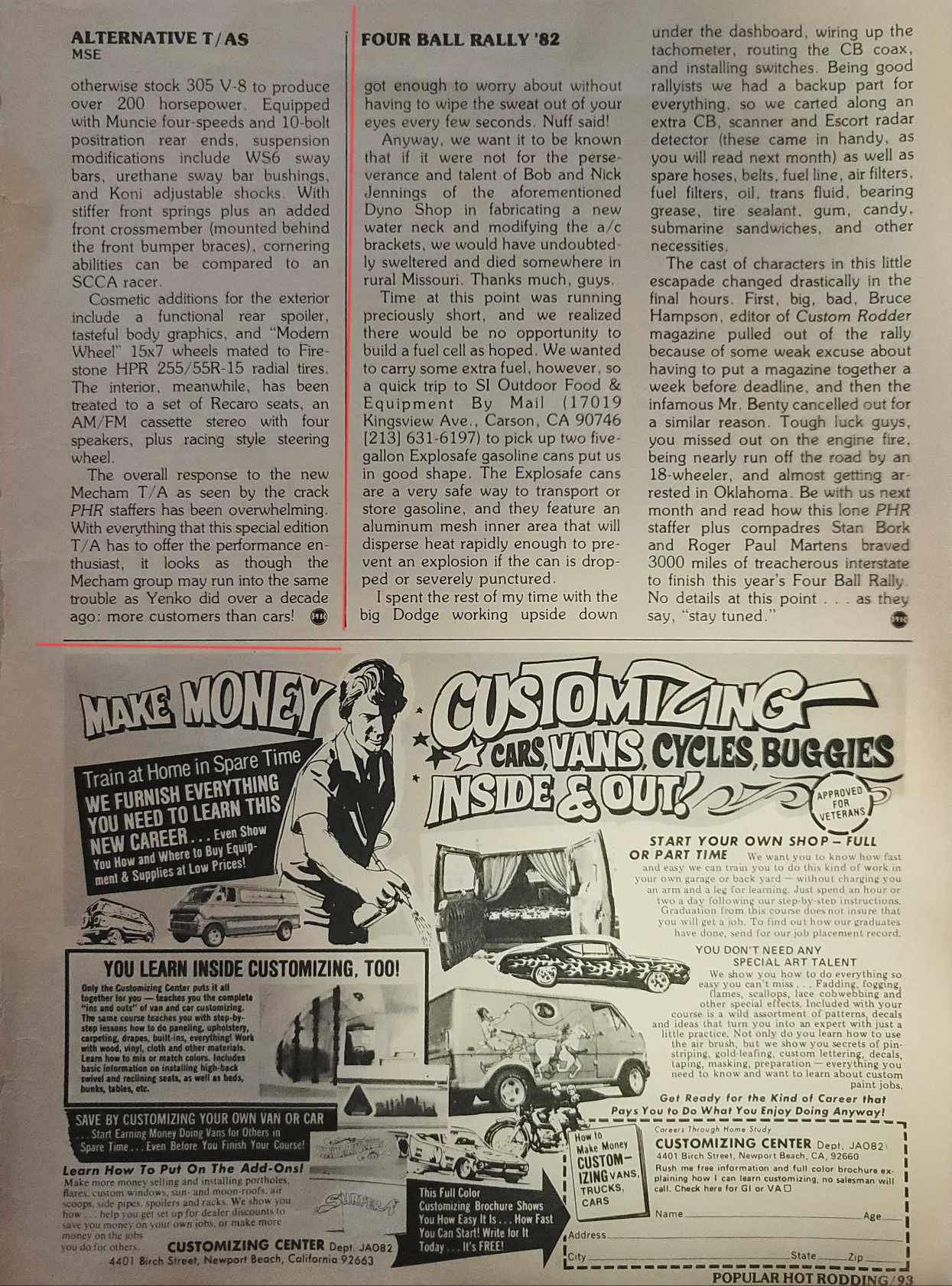
Motor Trend, February 1983
“MSE Firebird Trans Am”
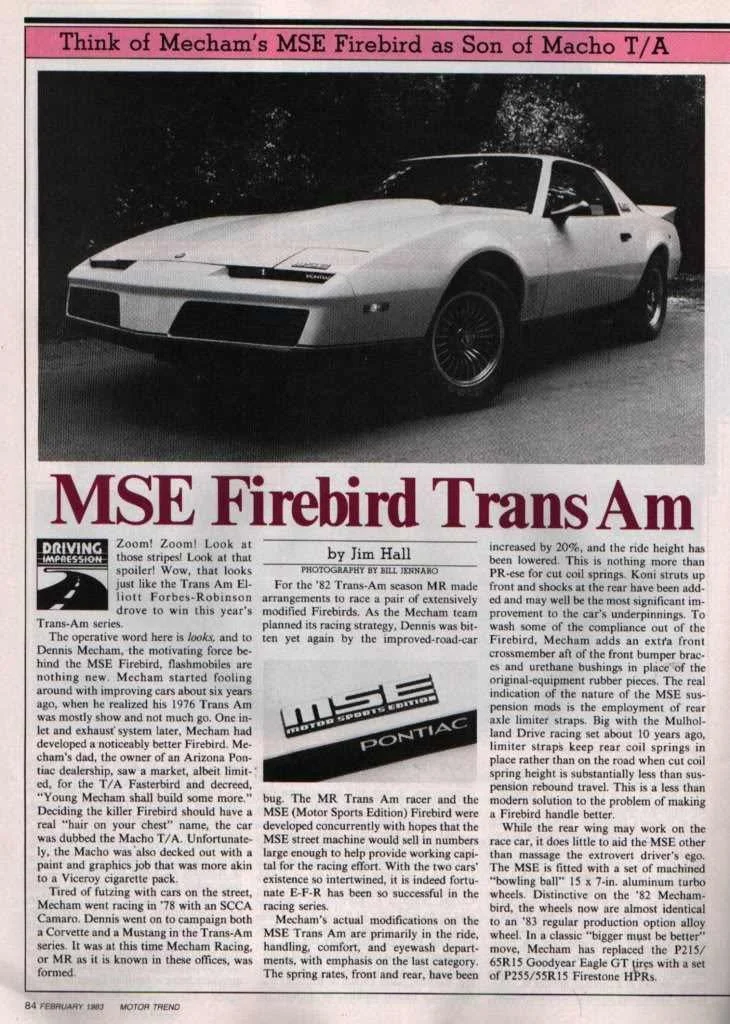
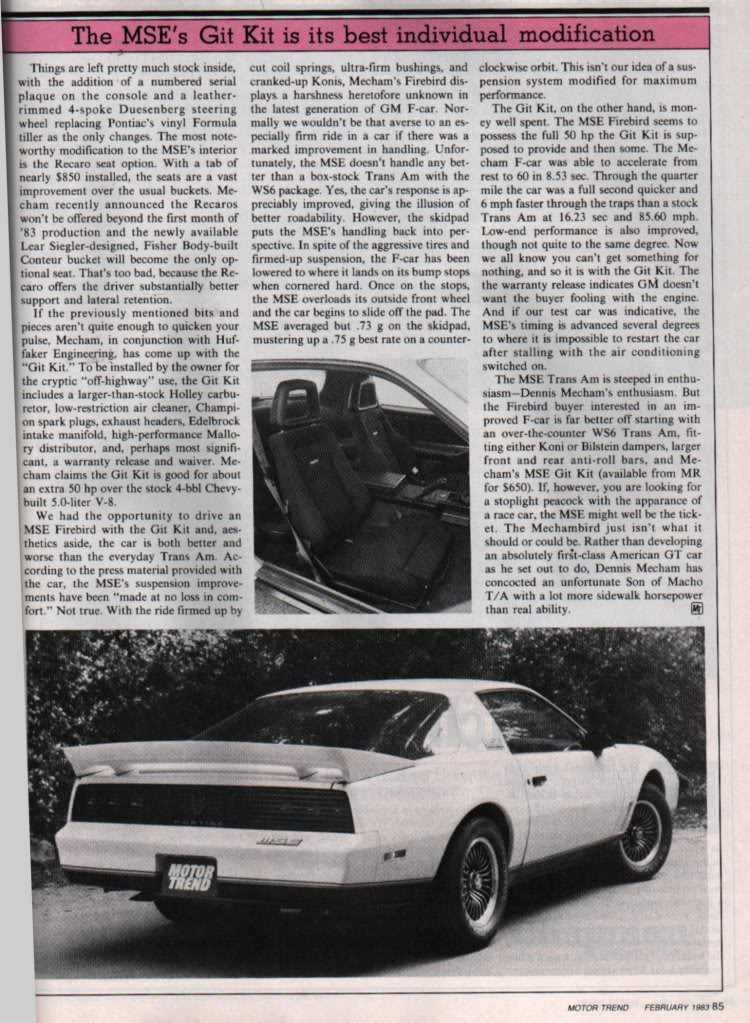
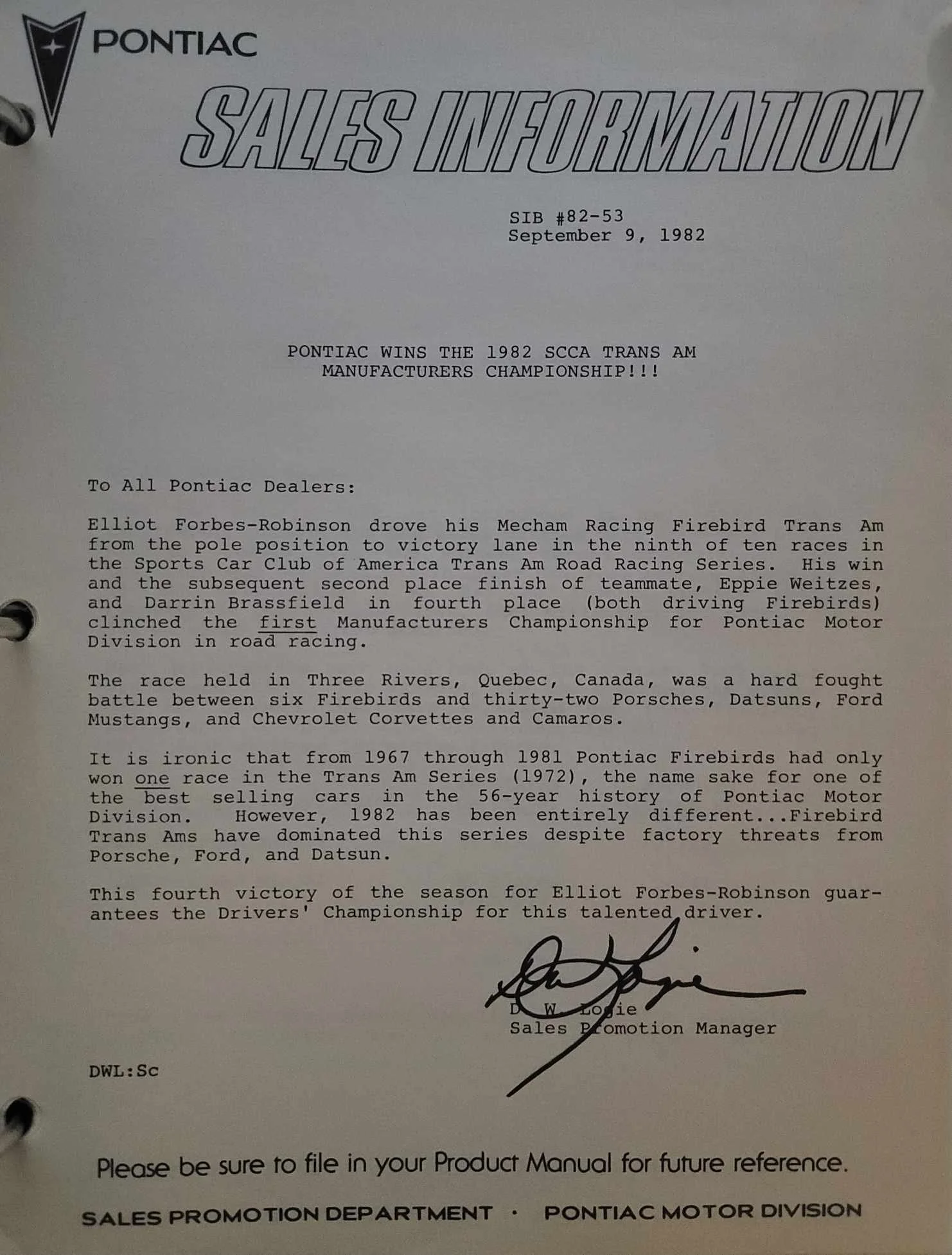
Pontiac Sales Bulletin
September 9th, 1982
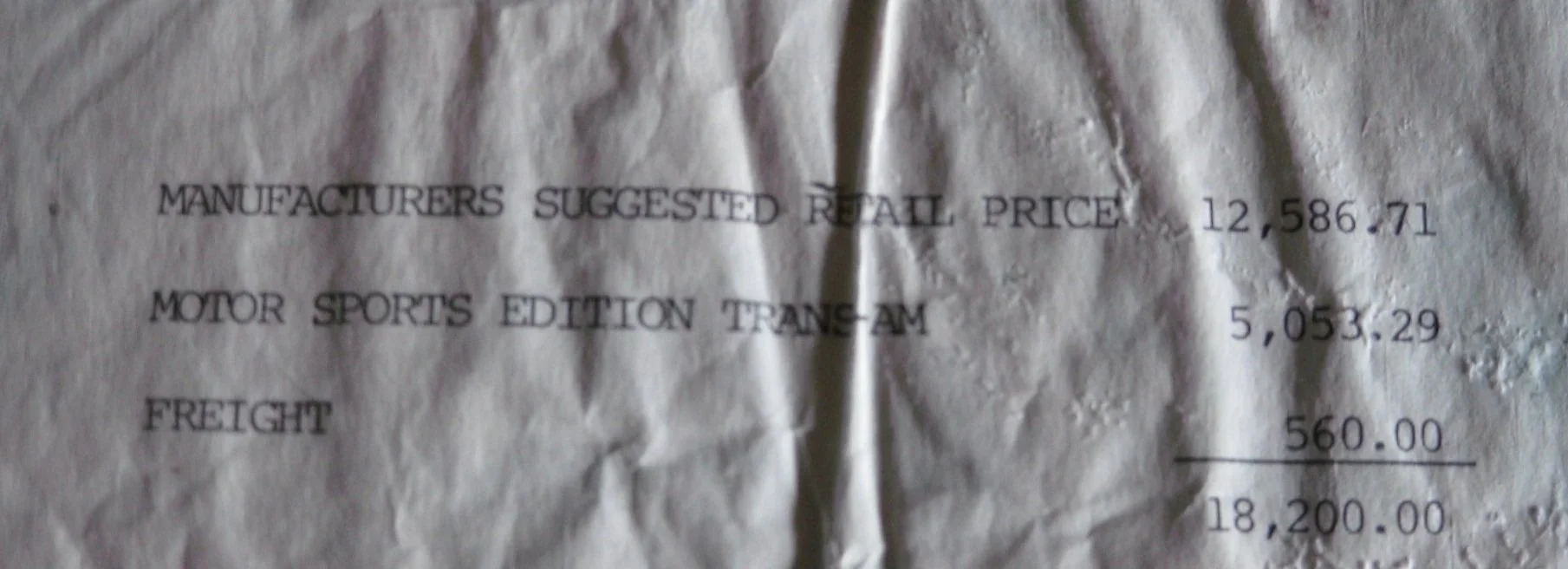
1982 MSE Window Stickers
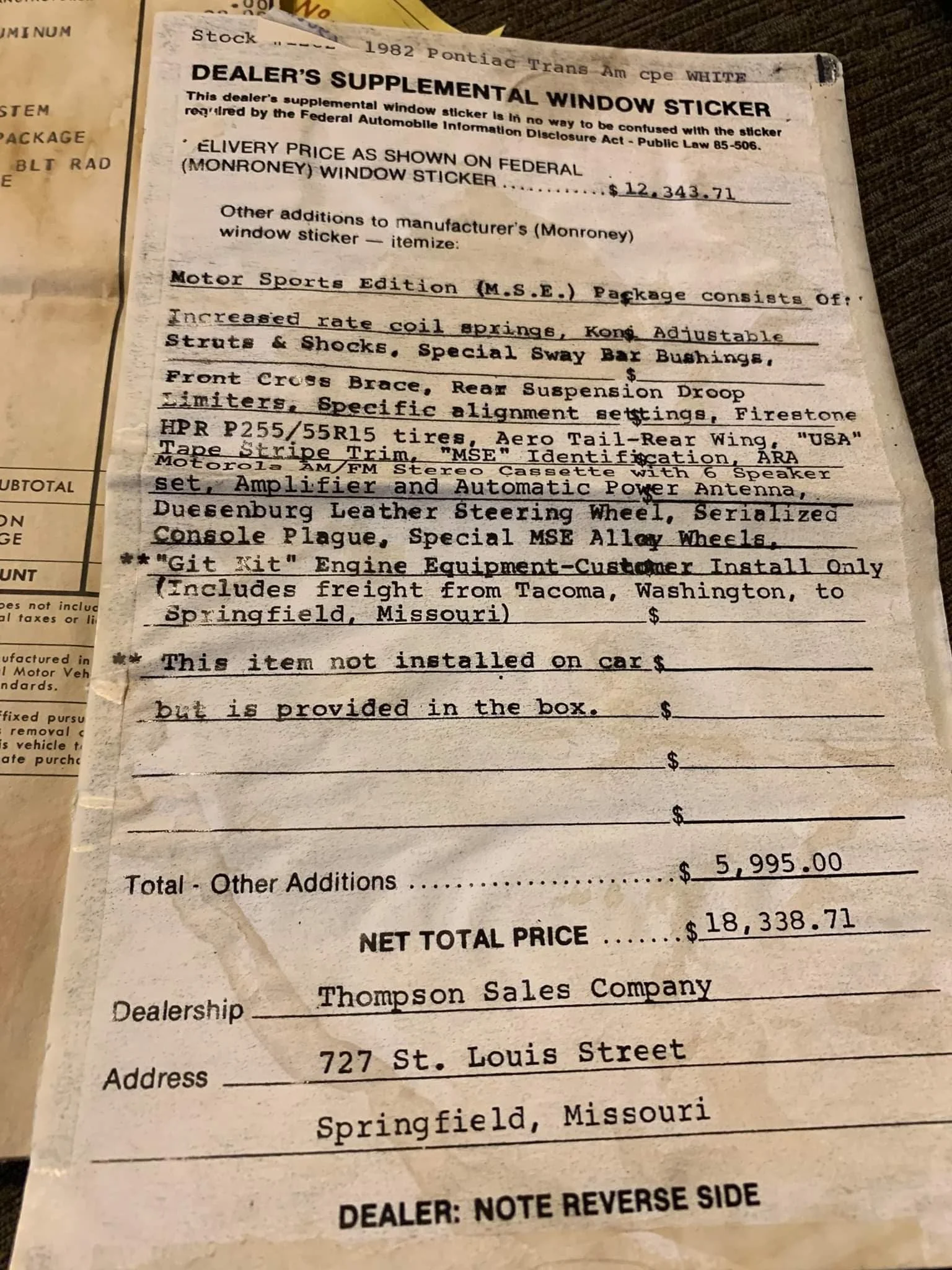
Proper Exterior, And Non-Mentioned/Listed Common Options
1982 Mecham Racing Trans Am Exterior Identification
(Goal: Show Variation Between The Cars)
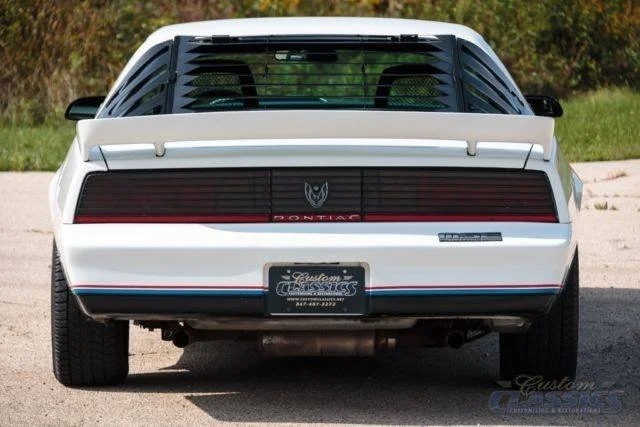
A 1982 Mecham Racing Trans Am Exterior As Described:
Reference Car #195
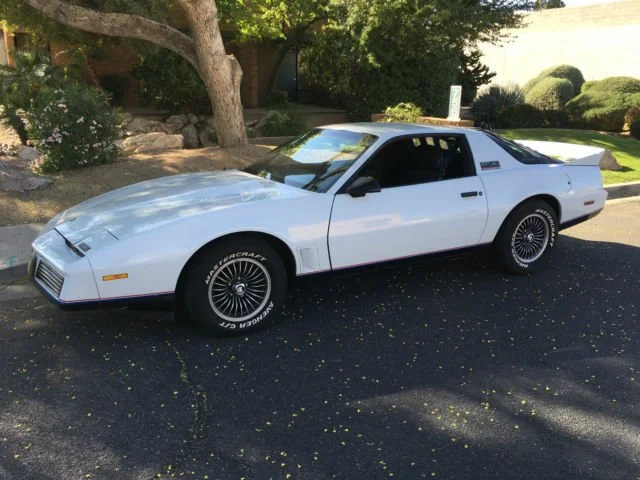
Proper (Baseline) White 1982 MSE
Red, And Blue Pin Stripes on Lower Section Of Car, And Under The Sail Panel MSE Badge
Black Mirrors (1982-1983 GM OEM Feature)
Black Lower Area Of Car
15x7 Wheels With MR Decals
MSE Badges (Sail Panels, Passenger Side Bumper, Peak Of The Hood Nose Badge, Drivers Side Pop-Up Headlight)
Aero Rear Wing
Note: Nose Badge Is Some What Higher Than Standard on #195
Proper (Baseline) Red 1982 MSE
Silver Stripe Above Lower Black Section ( Not Seen On #3)
White, And Blue Pin Stripes Under The Sail Panel MSE Badge (Rare, Not Seen On #3)
Black Mirrors (1982-1983 GM OEM Feature)
Black Lower Area Of Car
15x7 Wheels With MR Decals
MSE Badges (Sail Panels, Passenger Side Bumper, Peak Of The Hood Nose Badge, Drivers Side Pop-Up Headlight)
Aero Rear Wing
Note: #3 Has Aftermarket Exhaust (Hooker Cat-Back)
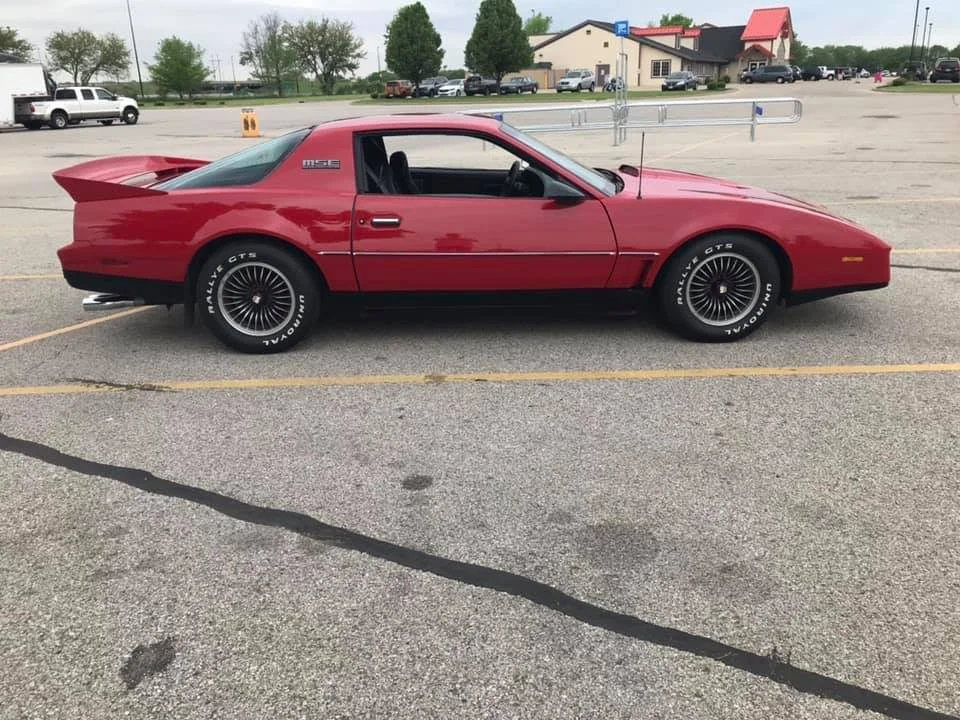
Reference Car #3
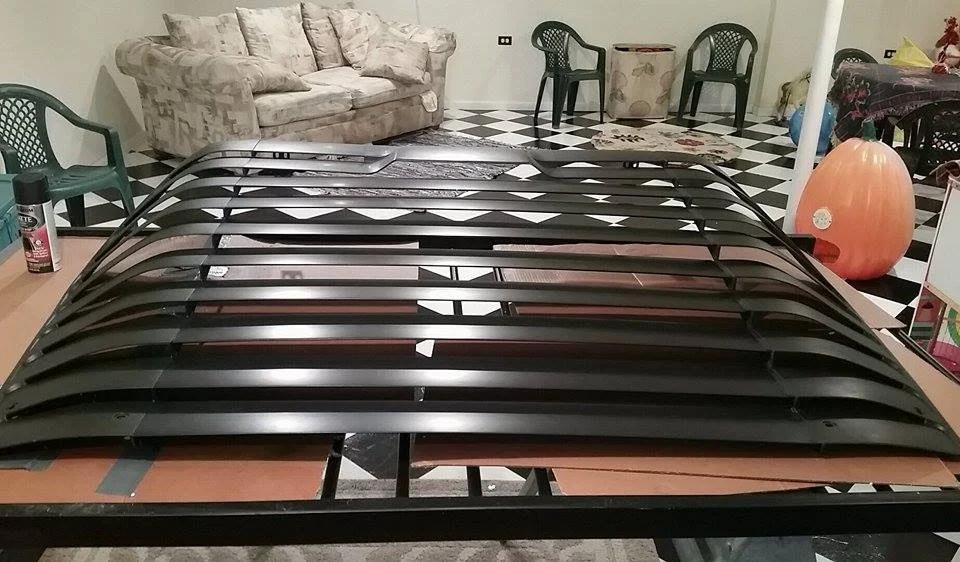
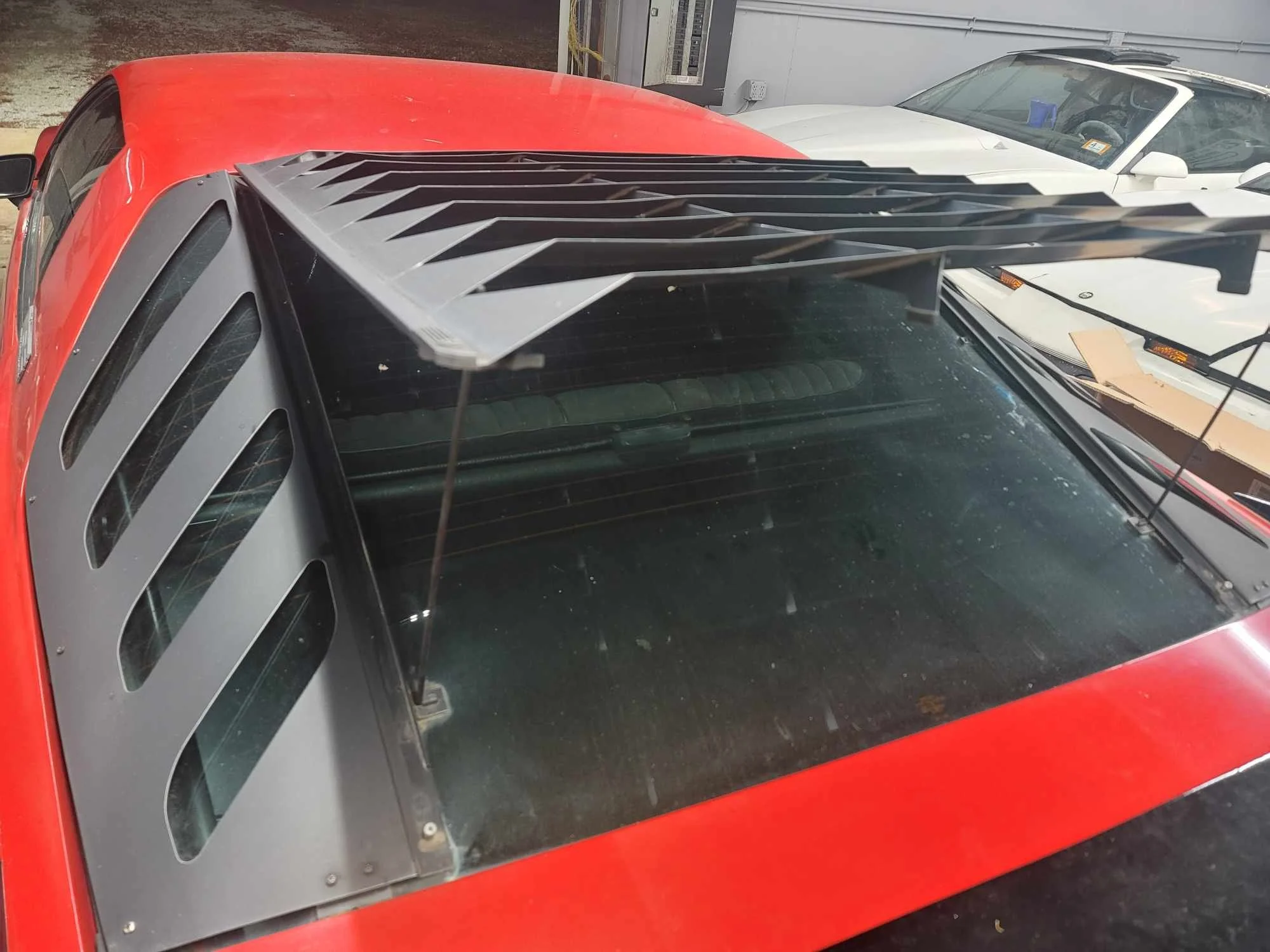
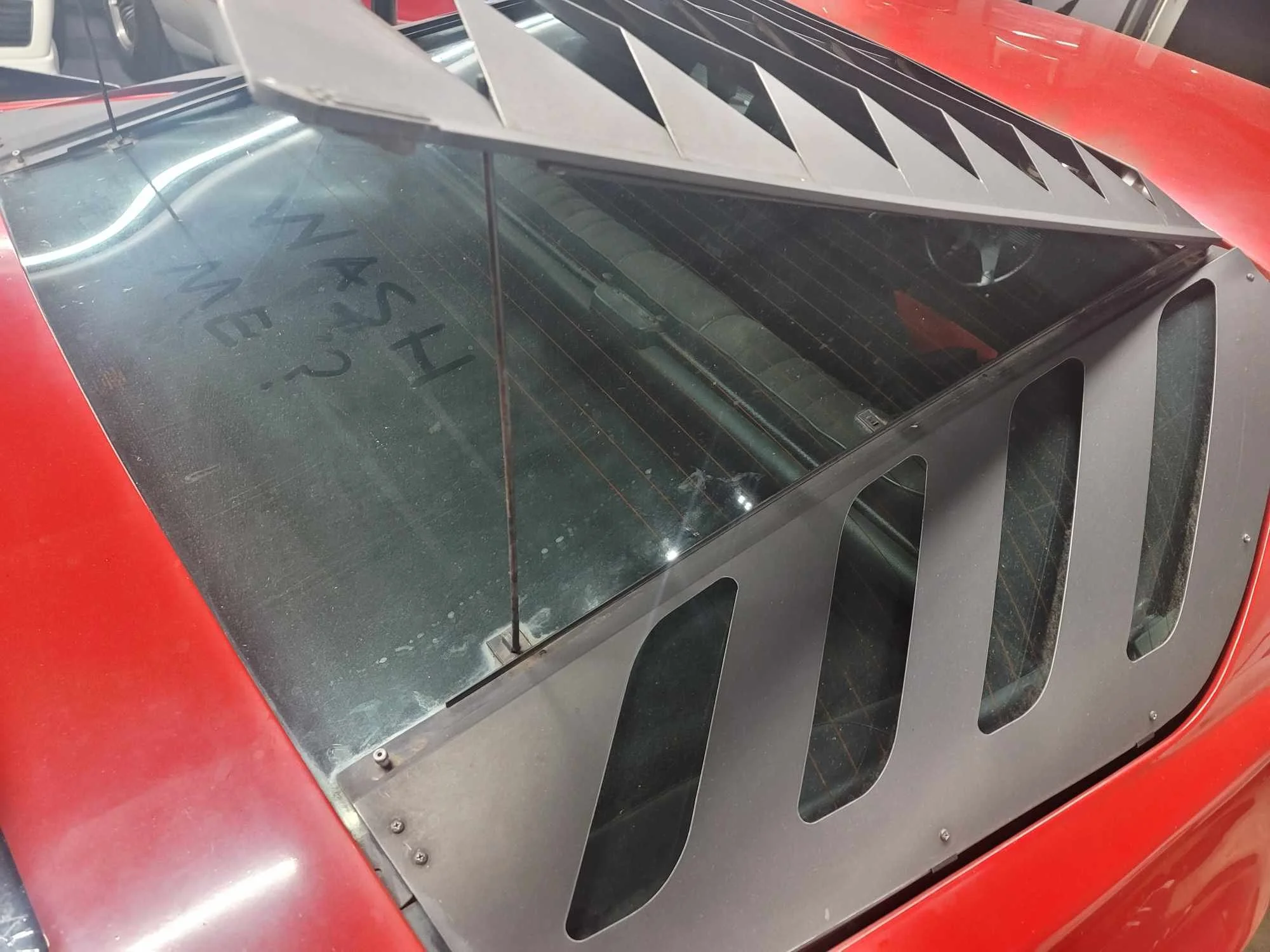
Non-Described Or Mentioned Option #1: Rear Window Louvers
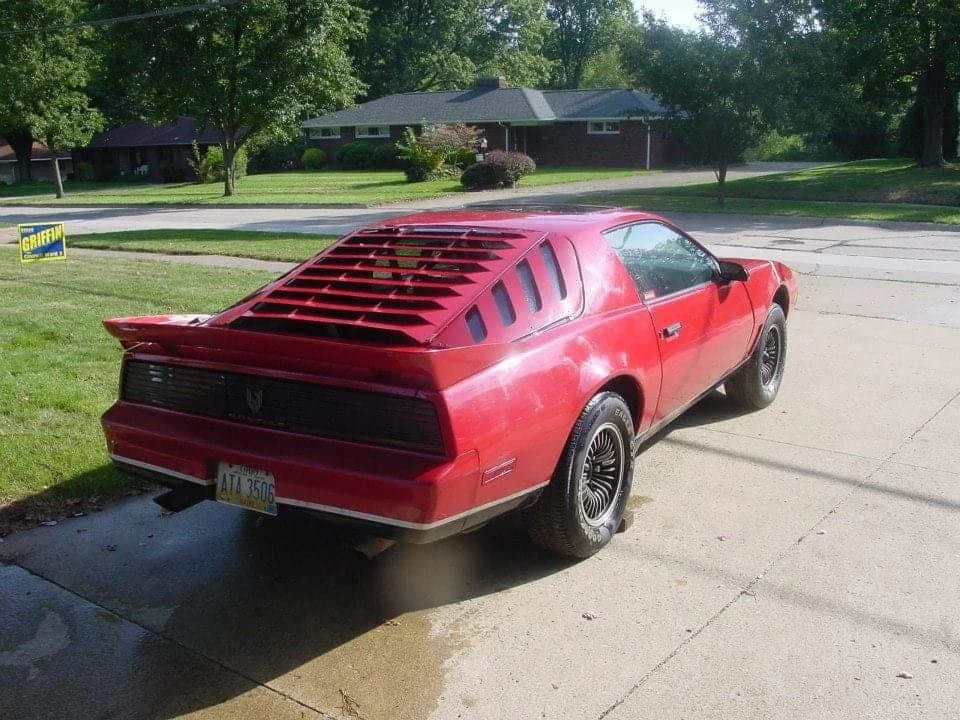
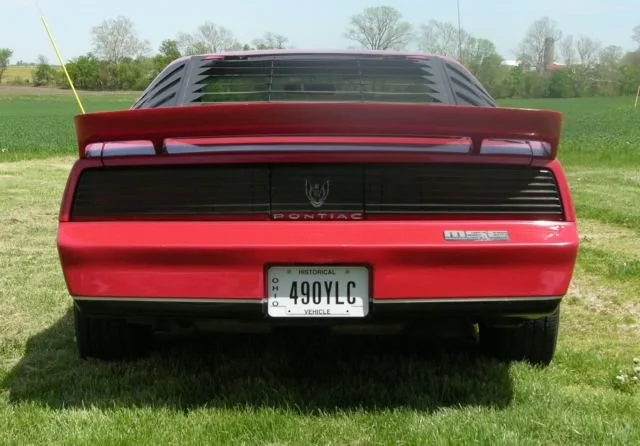
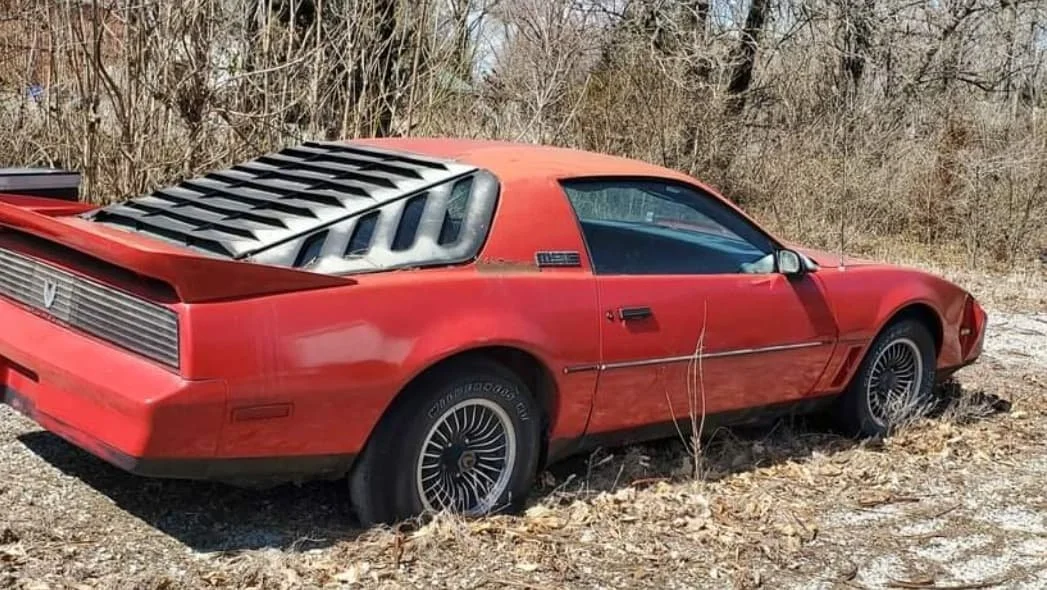
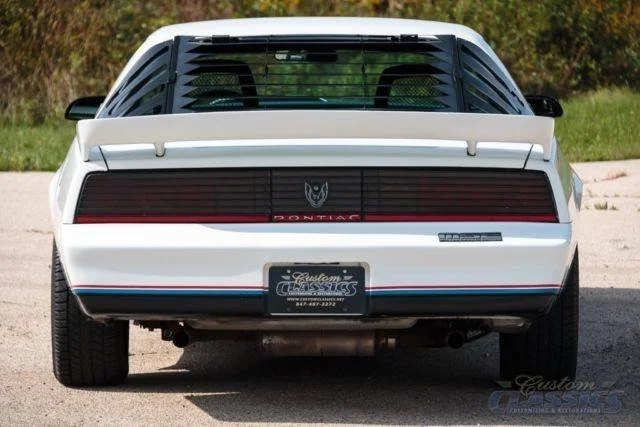
The Rear Window Louvers Seen Here Where Not Made By MSE, However They Are Seen Far Too Commonly Across All 82-86 MSE Production To Not Be Taken Into Consideration. They Are Found On Both White and Red Cars. Survivor Cars, Ones That Have Been Repainted, And Left For Dead.
The Louvers Mecham Used Were Made By A Company Called “Chastain” And Were Called “Shadow” Louvers. They Were Very Common In The Early 1980s Along With Other Aftermarket Brands Such As Cragar, And Hammond.
GM Had Their Own Set Of Rear Window Louvers As Well SPID RPO Code DE1. However MSE Did Not Use Them Often.
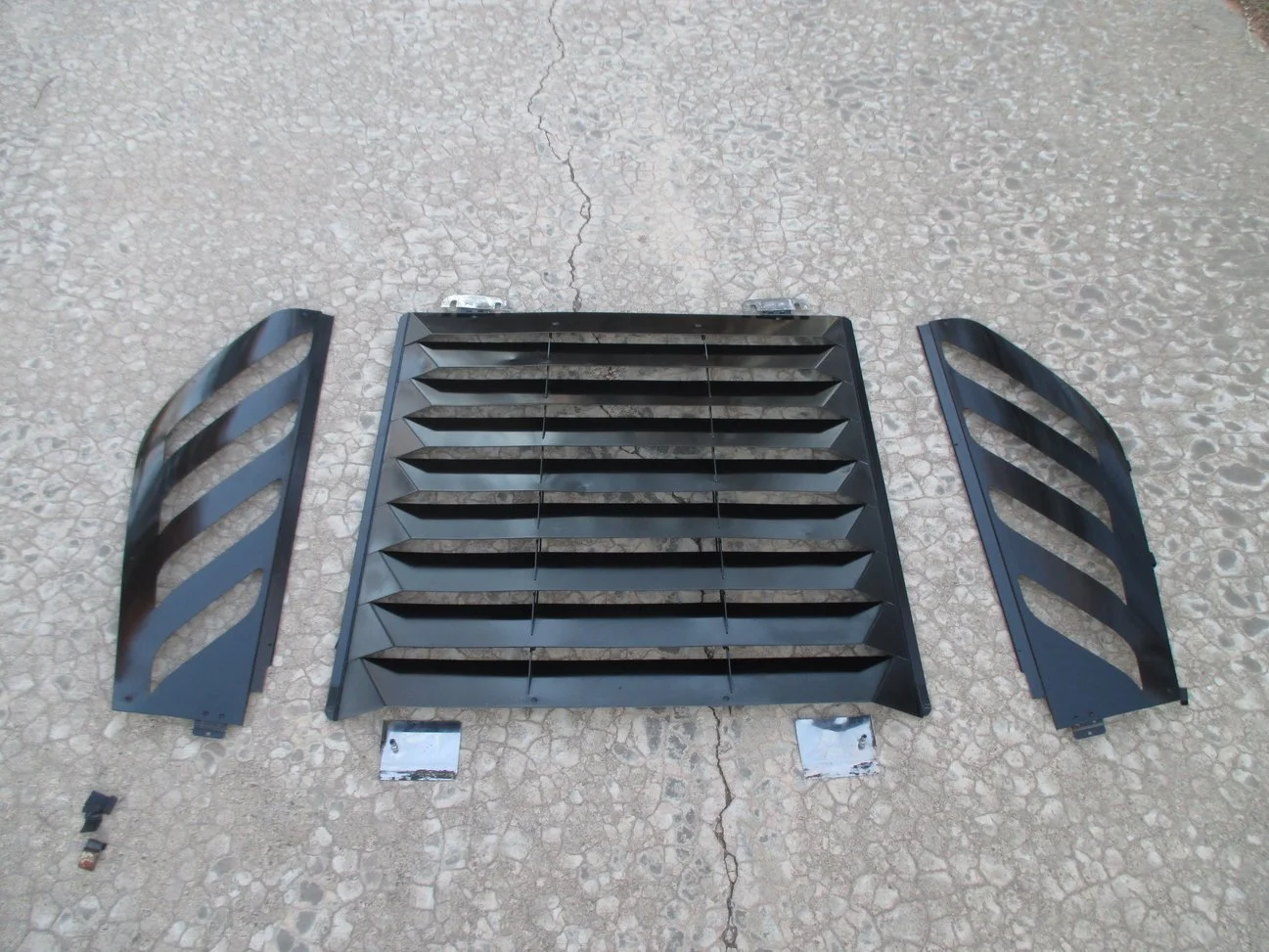
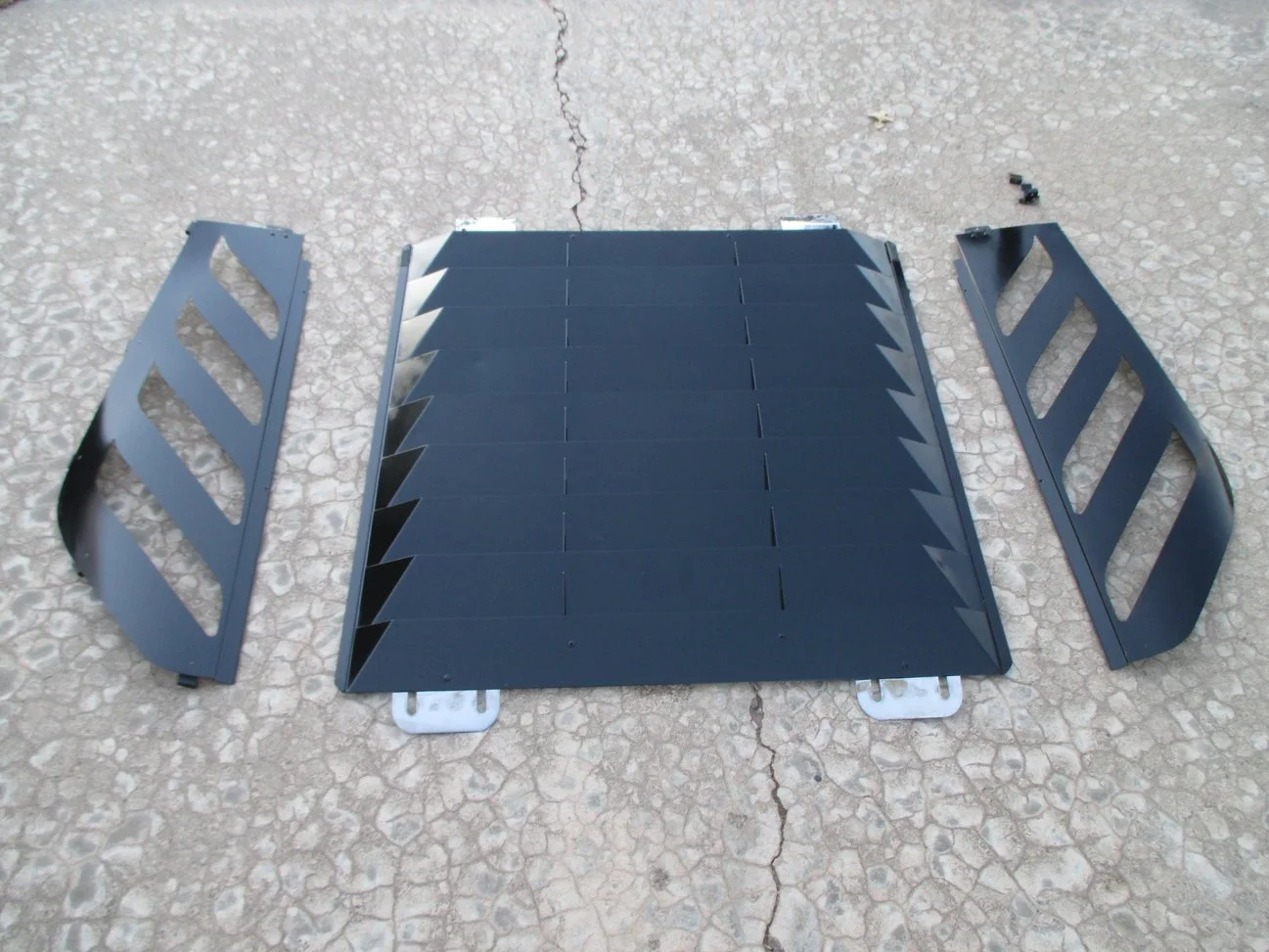
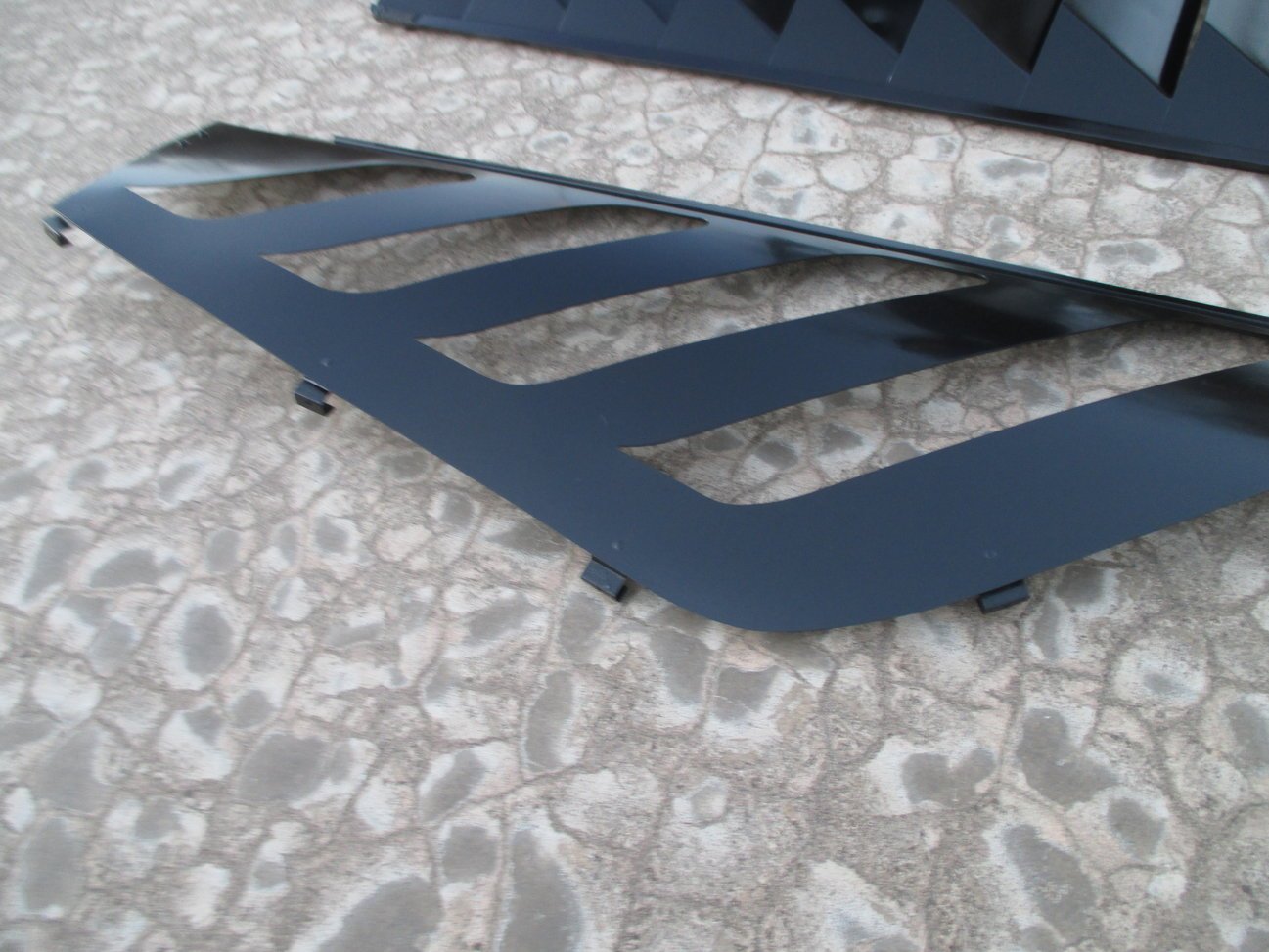
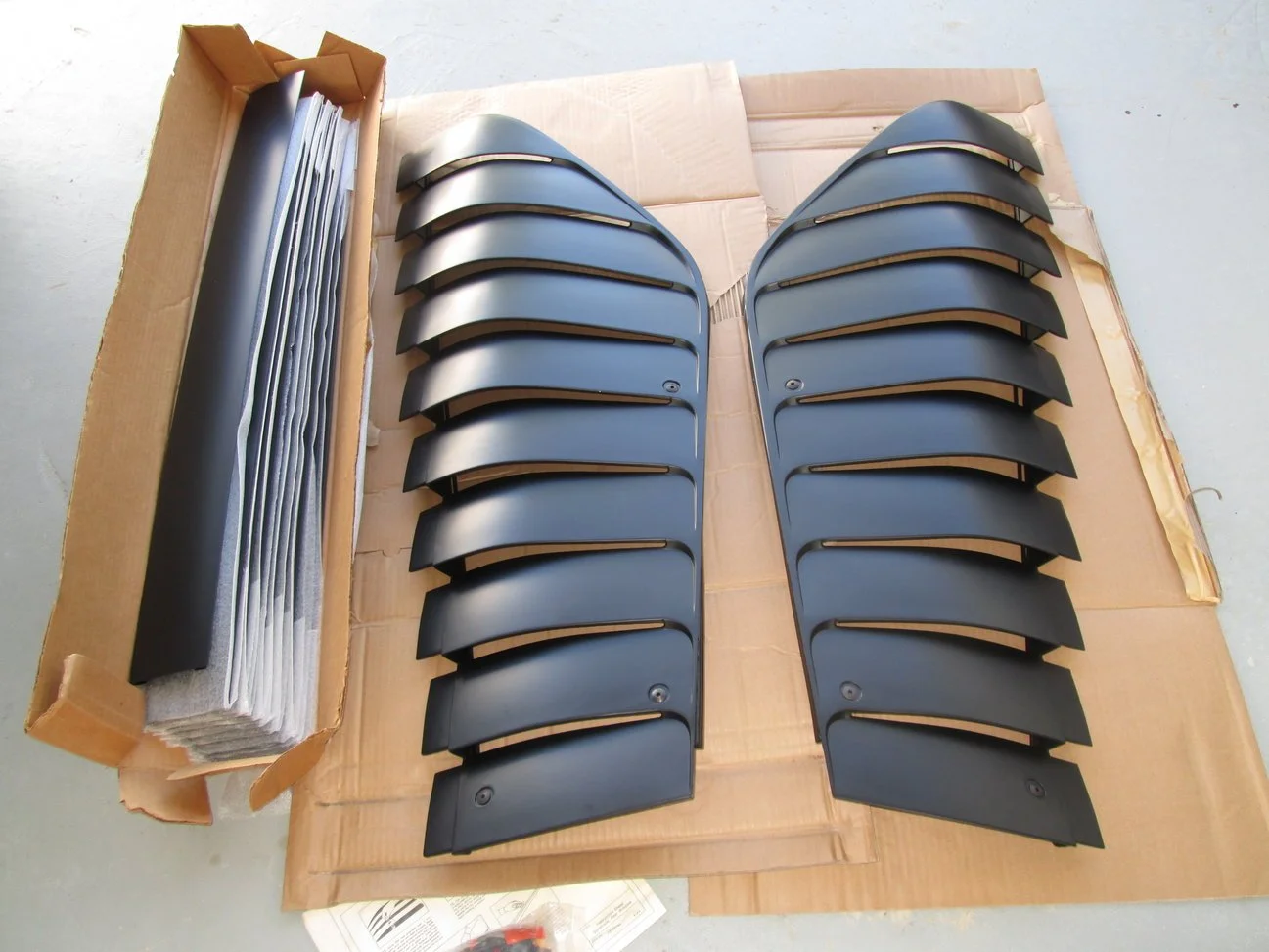

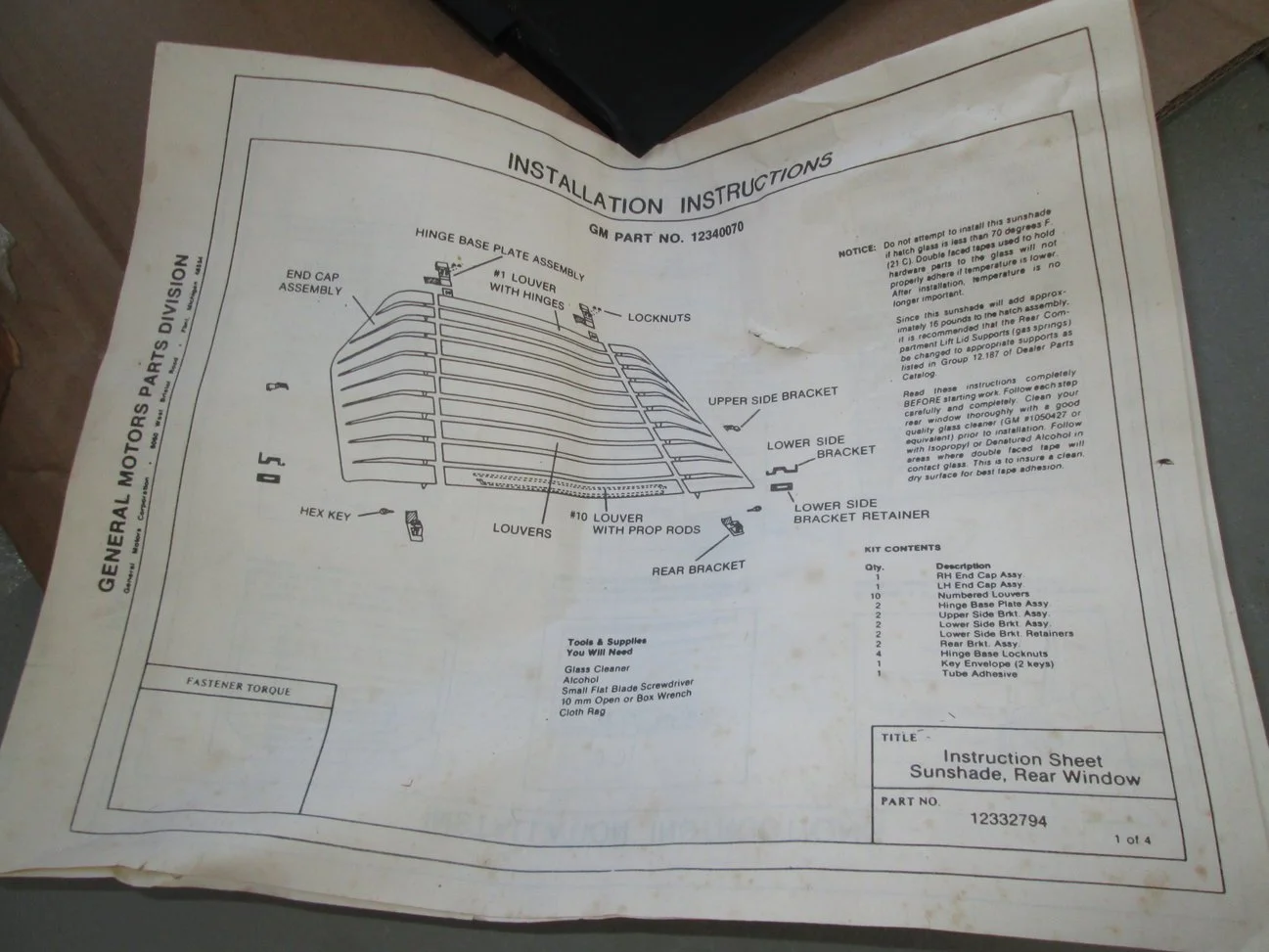
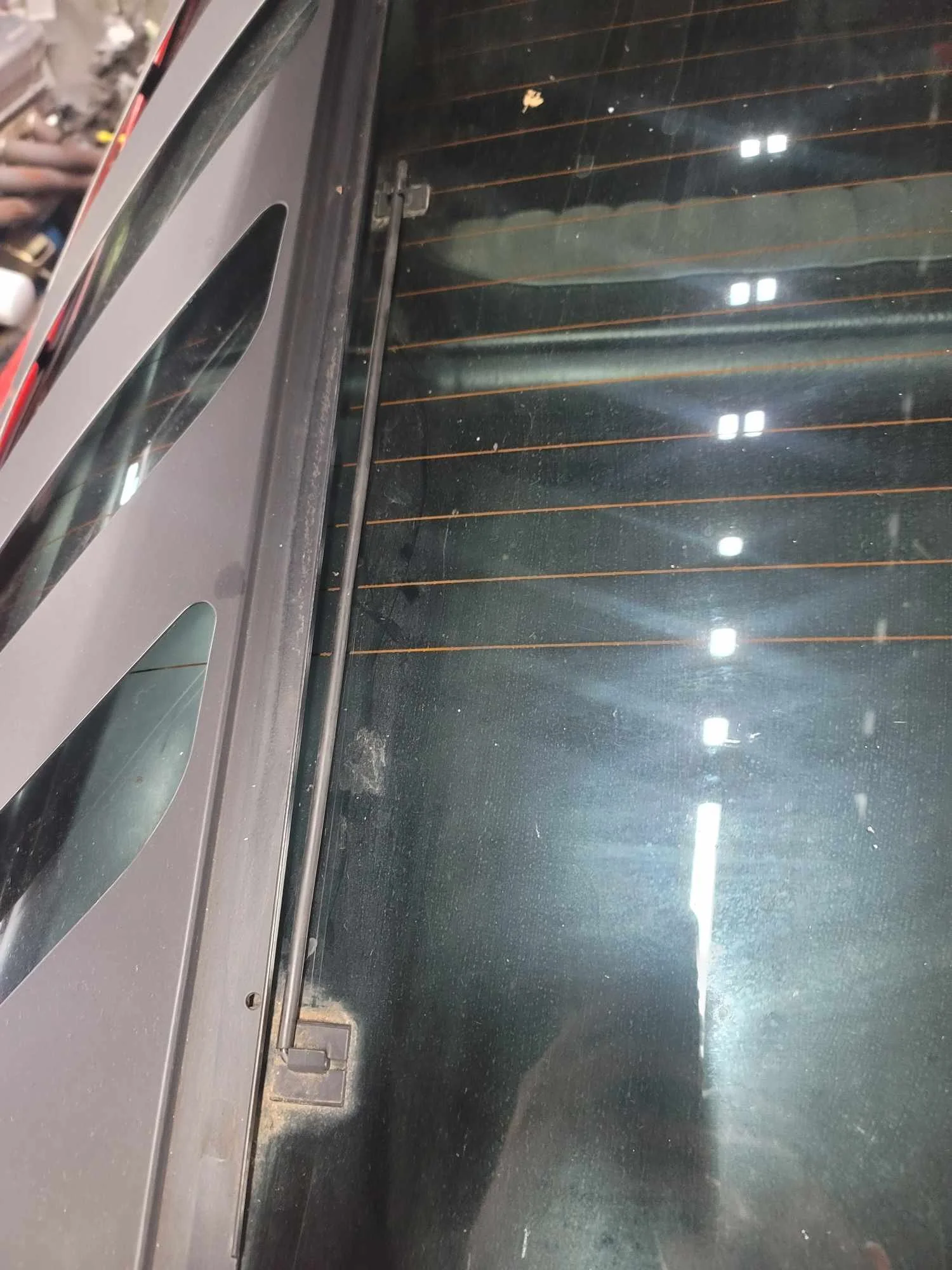
I Believe MSE Choose To Use The Shadow Louvers As They Are Easy To Open And Clean With The Large Aero Wing In The Way. As You Can See Below, There Is Plenty Of Room.
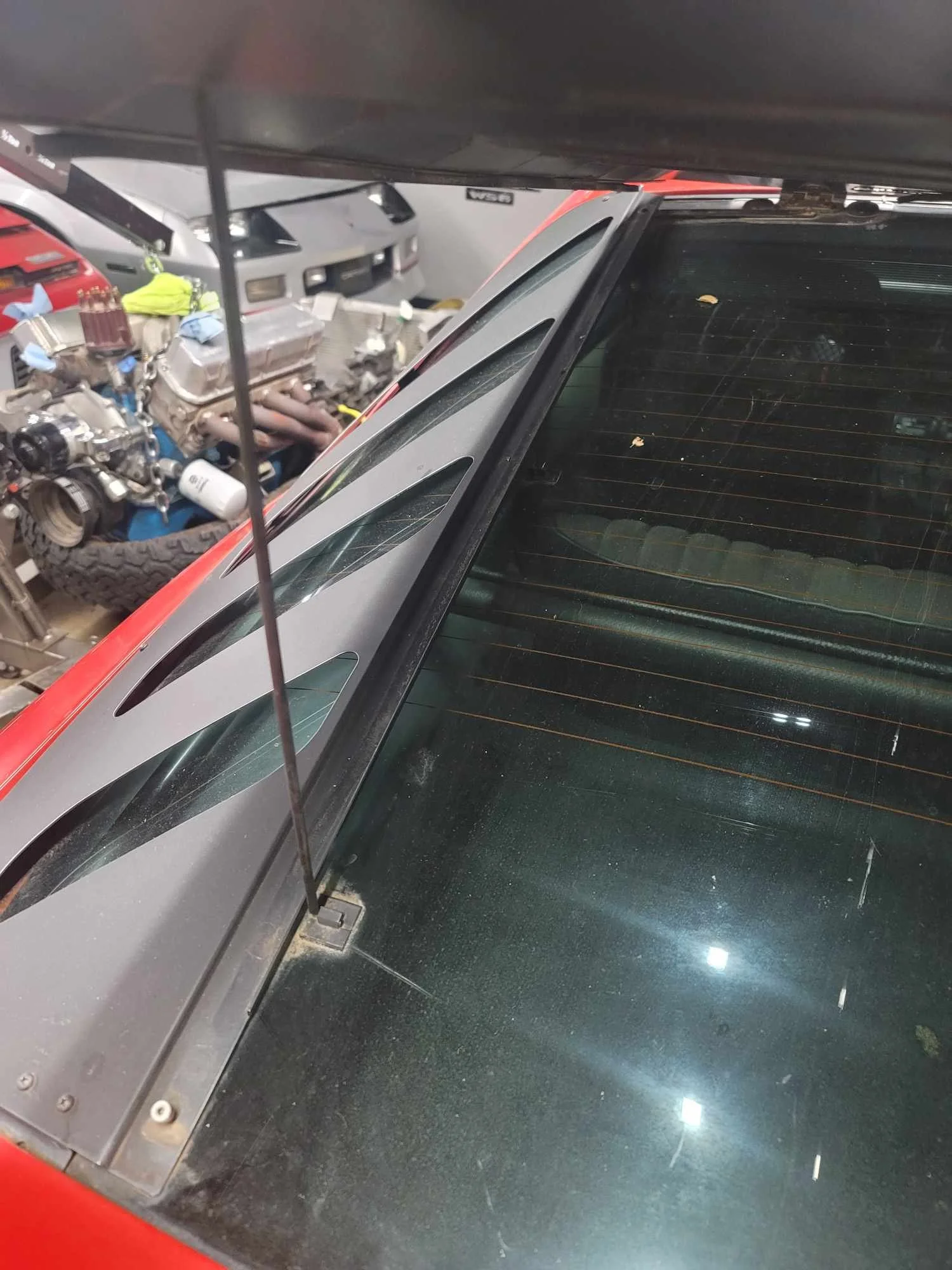
Non-Described Or Mentioned Option #2: Door Moldings
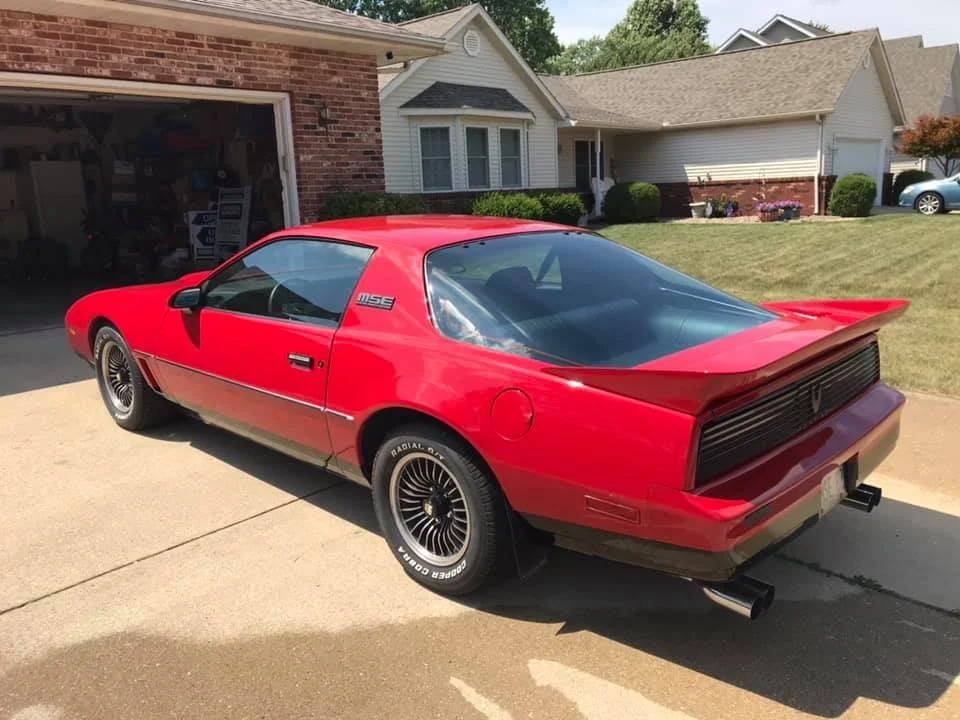
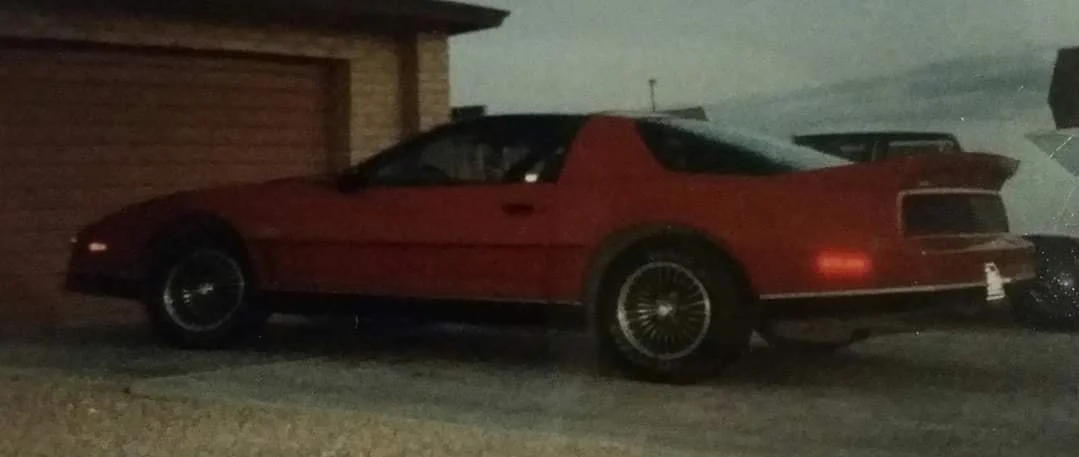
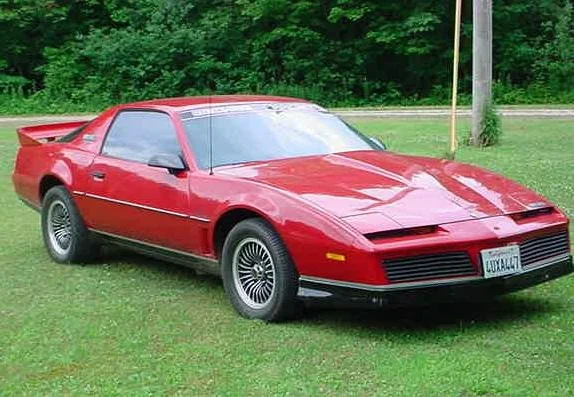
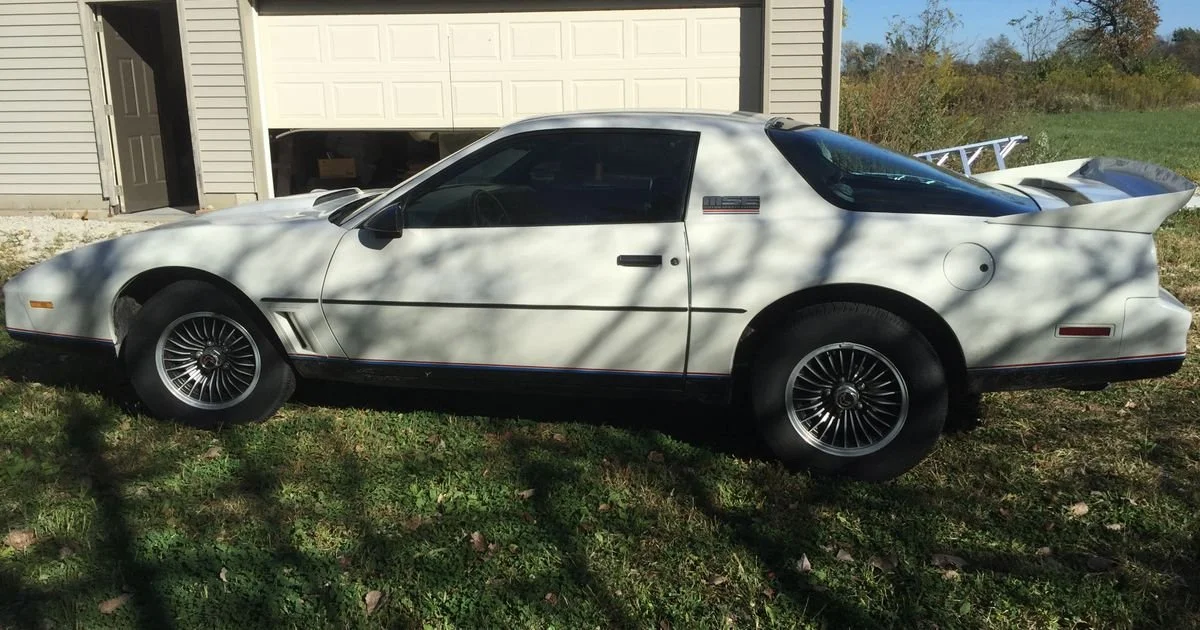
These Moldings Were Not Made By MSE. They Were A Very Commonly Seen Dealer Added Item In The 80s. Unlike The GM Style Which was Held on By 3M Double Sided Tape, This Style Was Attached With Metal Rivets. Yes, They Drilled Into The Car To Add These. They Are Multiple Piece. A End Cap on Each Side, Center Main Section, And A Rubber Insert. The Rubber Insert Came In Many Colors Including Black, White, and Red. The Rubber Inserts Are Know To Shrink Due To Age.
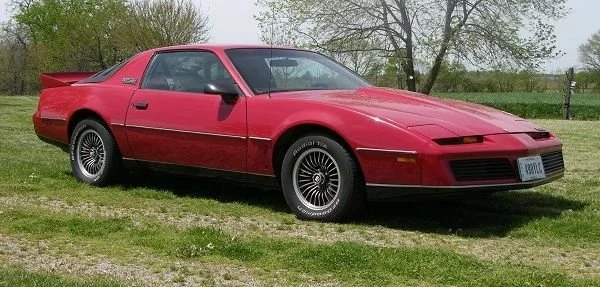
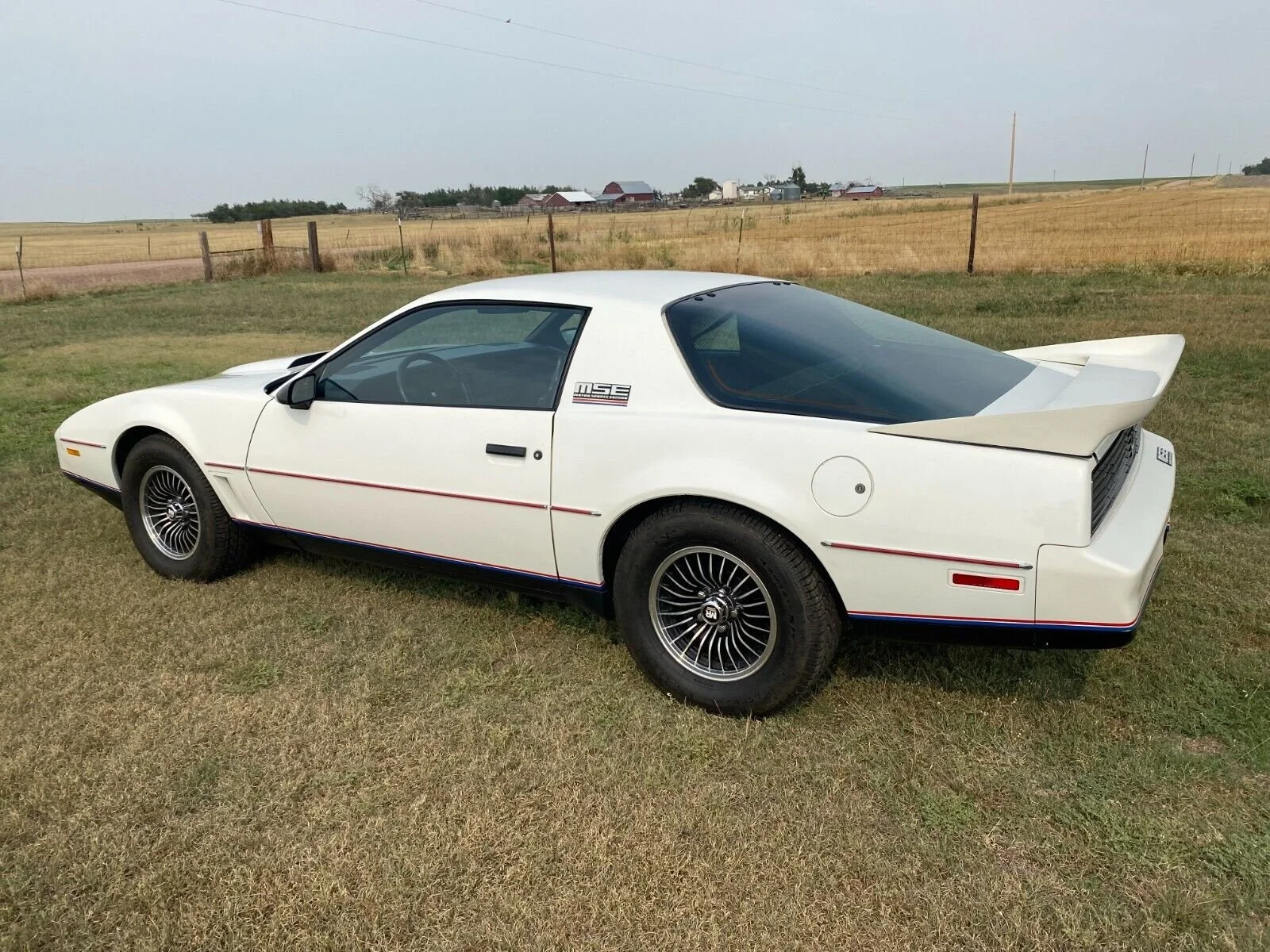
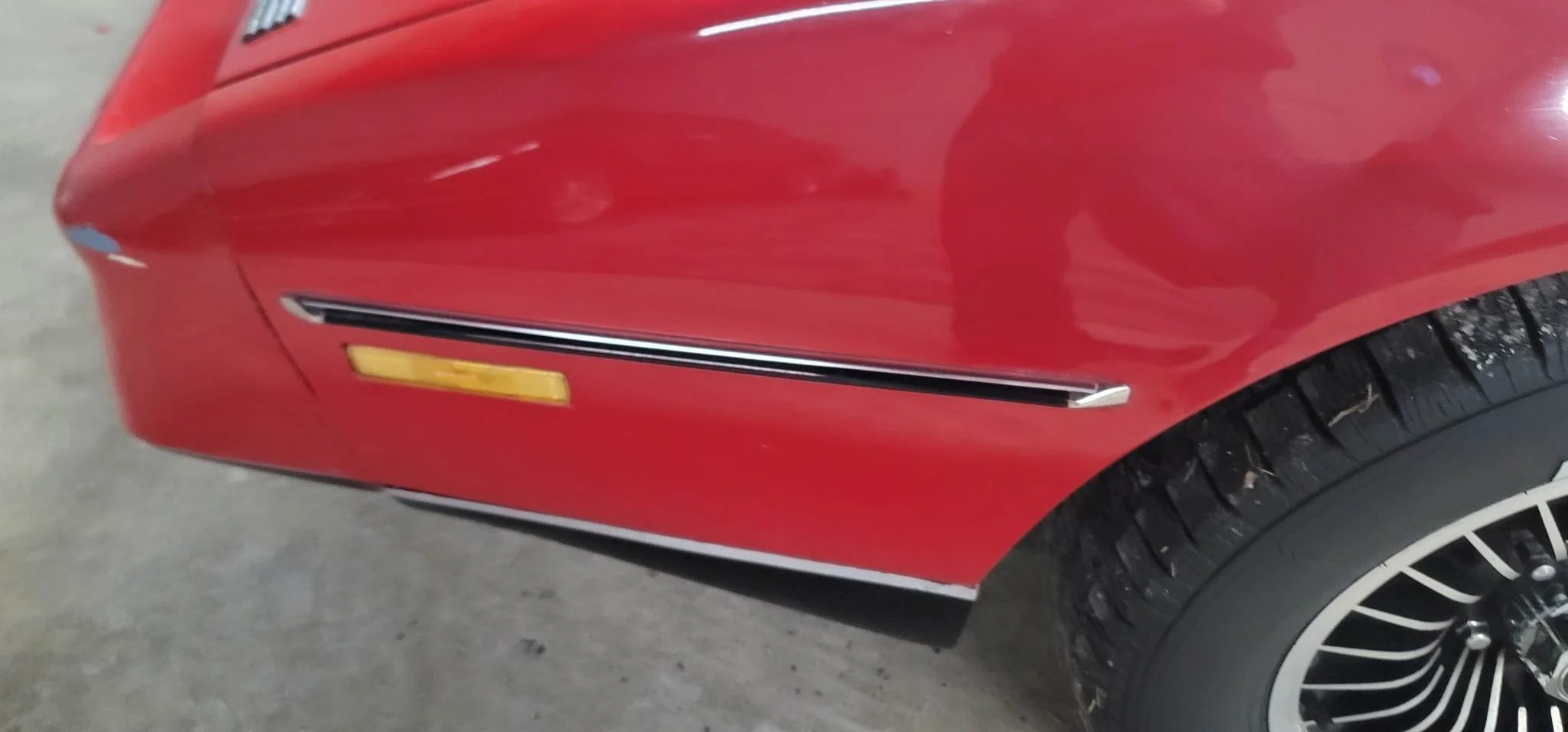
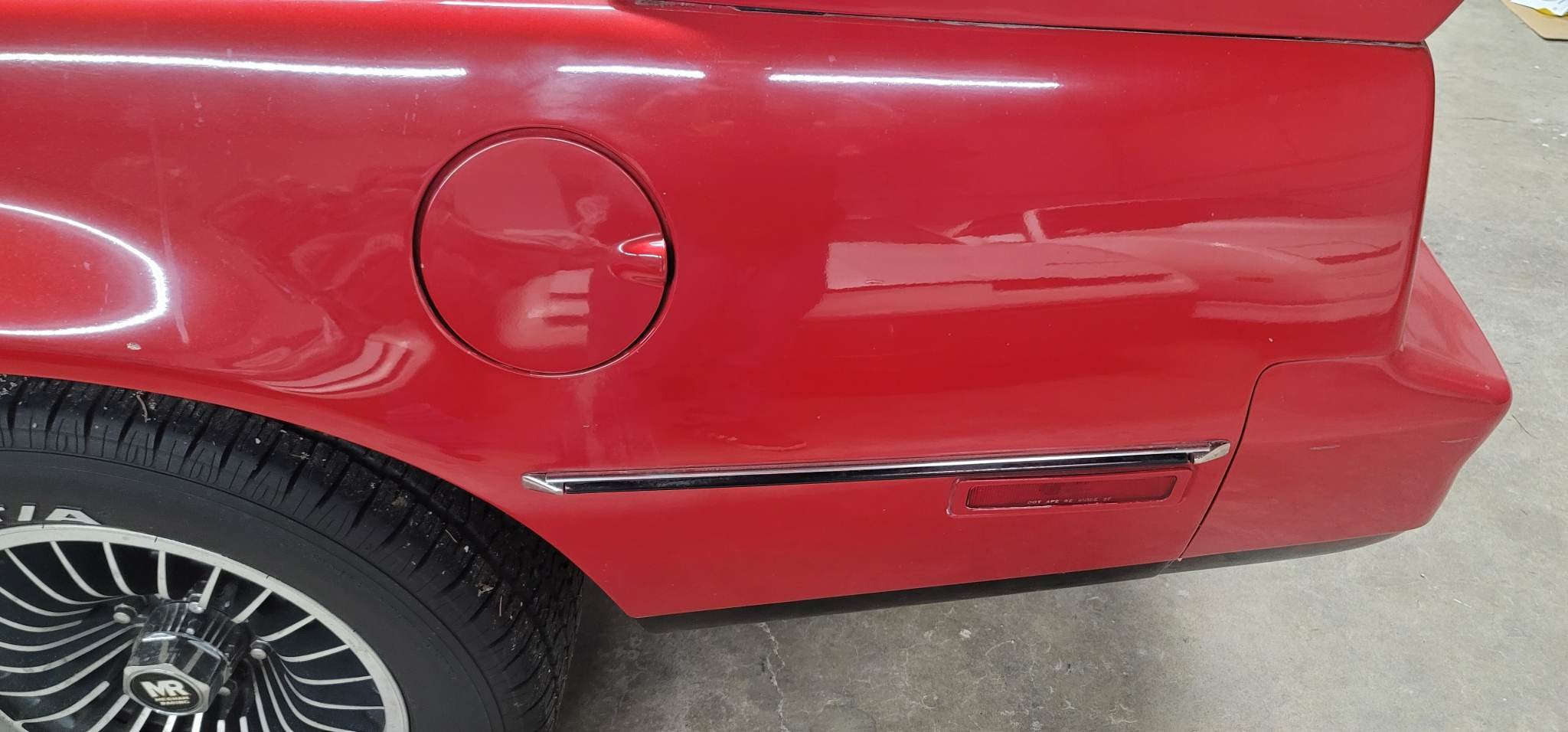
There Was A Second Design Option For These Which Extended The Moldings Onto The Front Of The Fenders, And The Quarter Panels. However This Is Very Uncommon.
Non-Described Or Mentioned Option #3: Windshield Banner
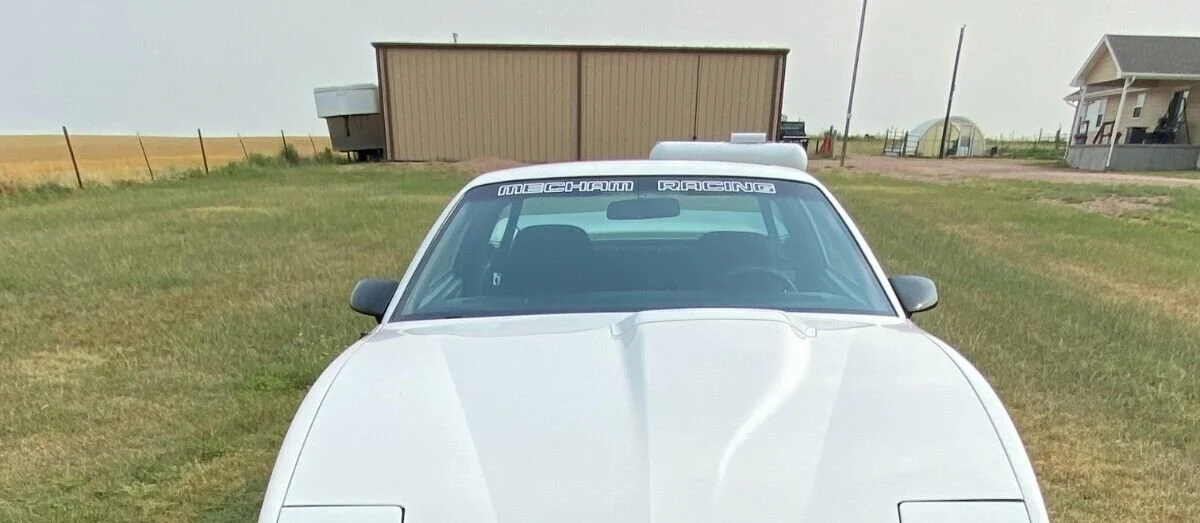
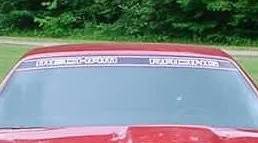
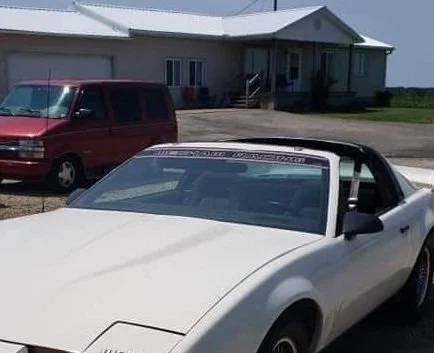
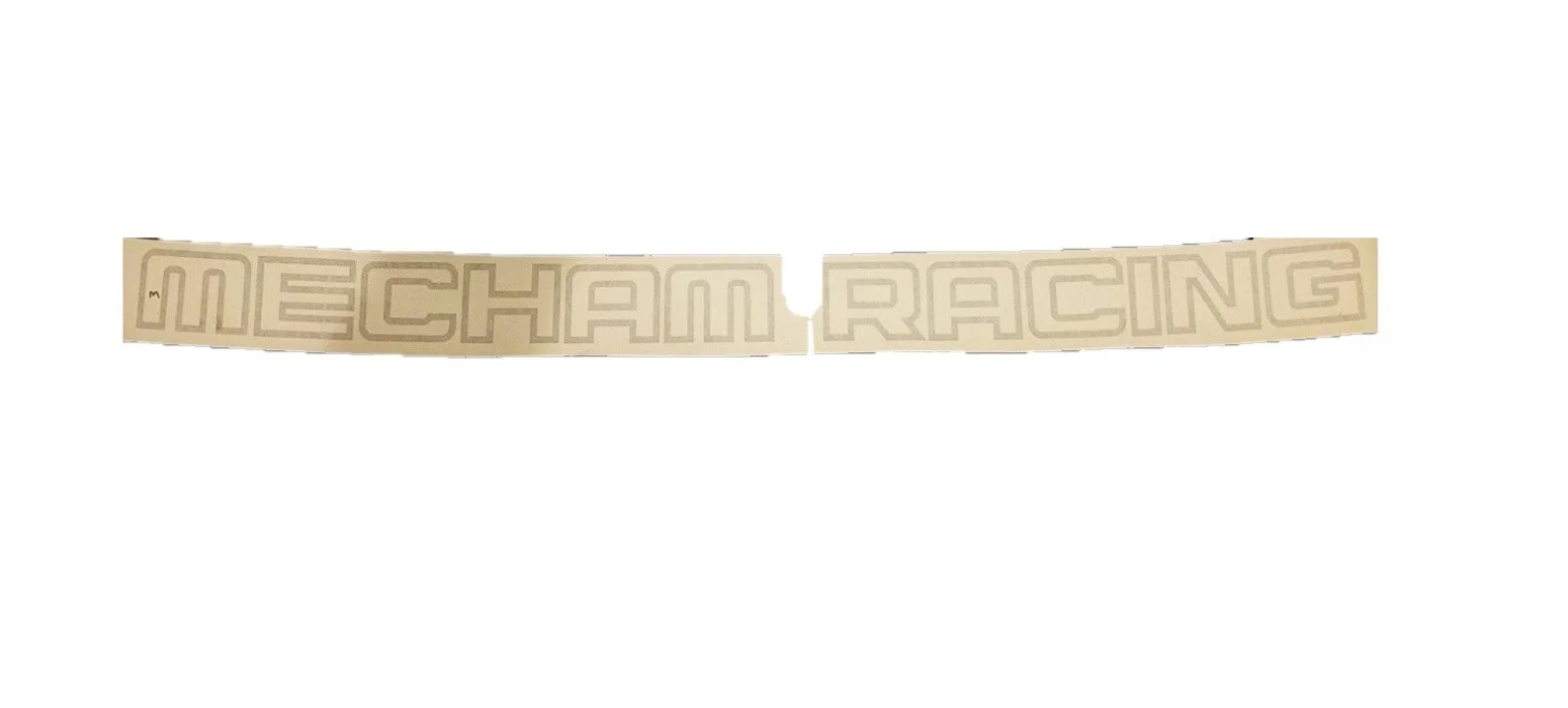
Some Cars Featured A “Mecham Racing” Front Windshield Banner. There Were Two Variations Of This. Some Came With The Red/White Pinstripes Above And Below The Main Body Of The Banner As Seen Above.
But I Seen 1982 Cars With Different Decals?
Yes, Mecham Racing Had A Whole Catalog of Decals Available. However, Most Decals We See Are Standard Or Optional On The Later 1983-1986 Cars. It Is Not Too Uncommon To Find 1982 Cars With S.C.C.A Sail Panel Wreaths, Or Number Identification Decals. I Personally Believe Most Of These Decals Were Added After The Fact Or On A Case By Case Basis As The Owner Ordered A Car. The Simple “Would You Like This Decal On There, We Just Made It?” Situation. In Conclusion, They Where Not Standard.

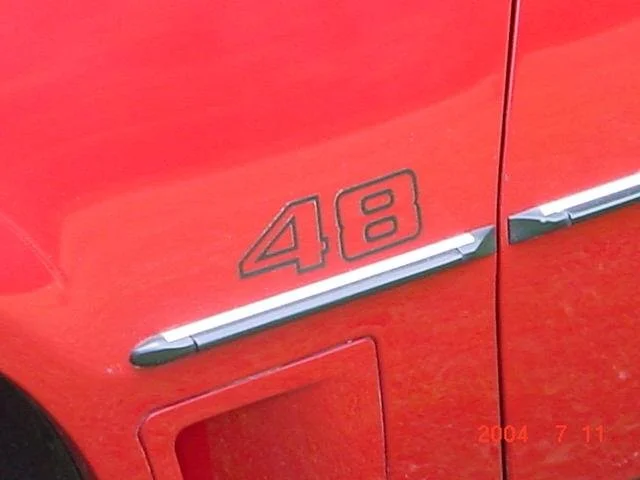
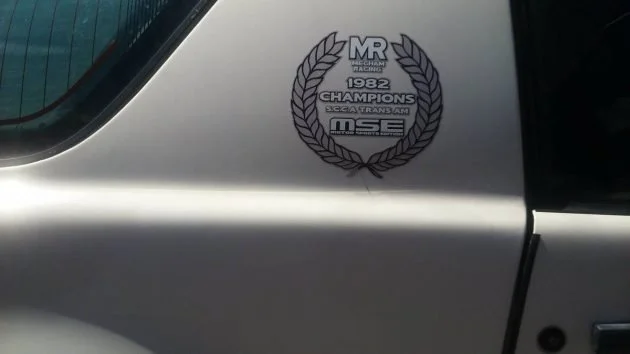
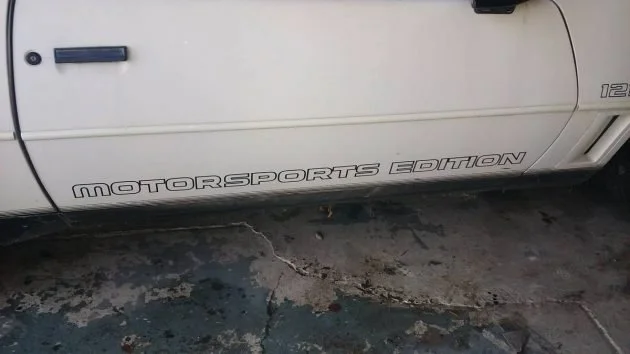
Non-Described Or Mentioned Option #4: Badge Color
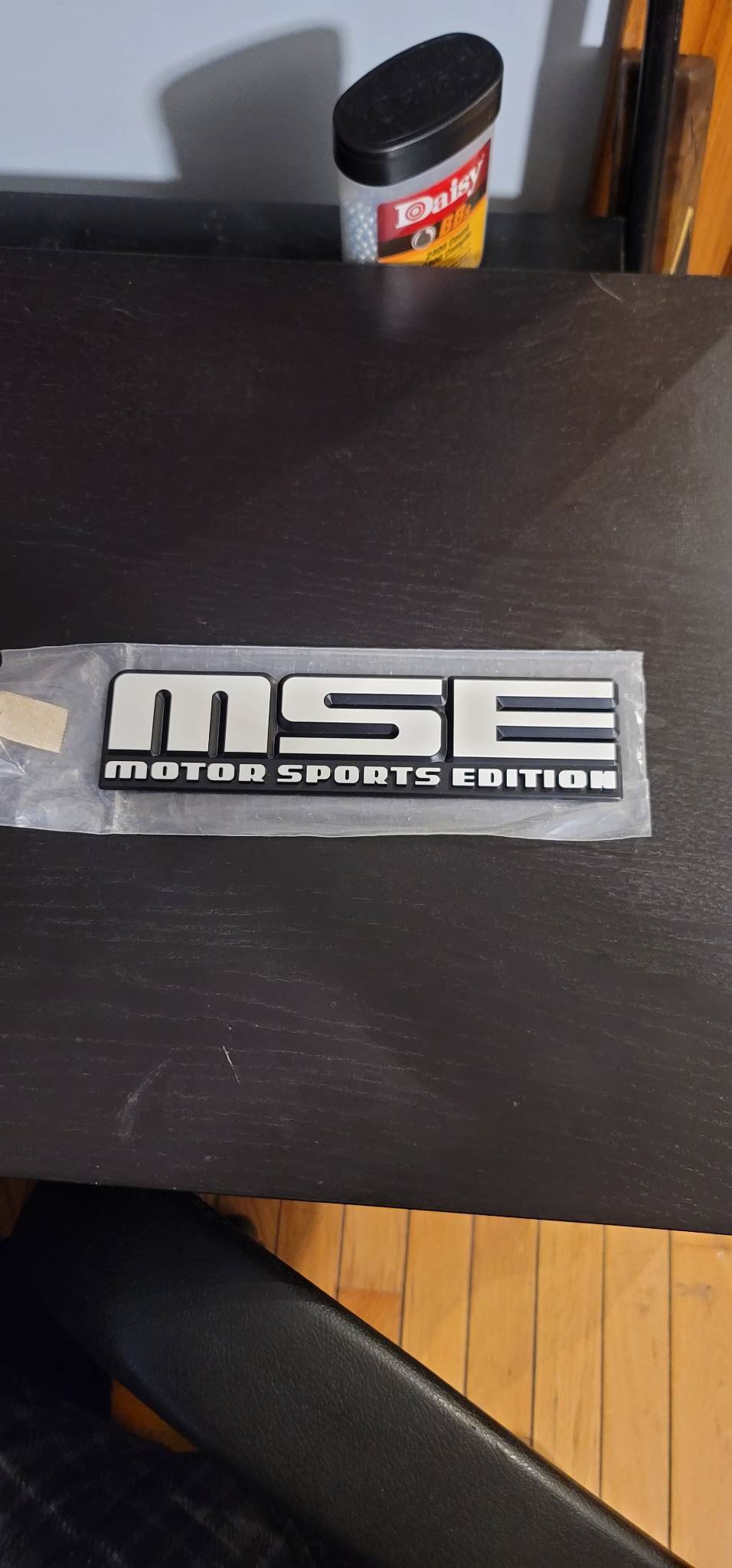
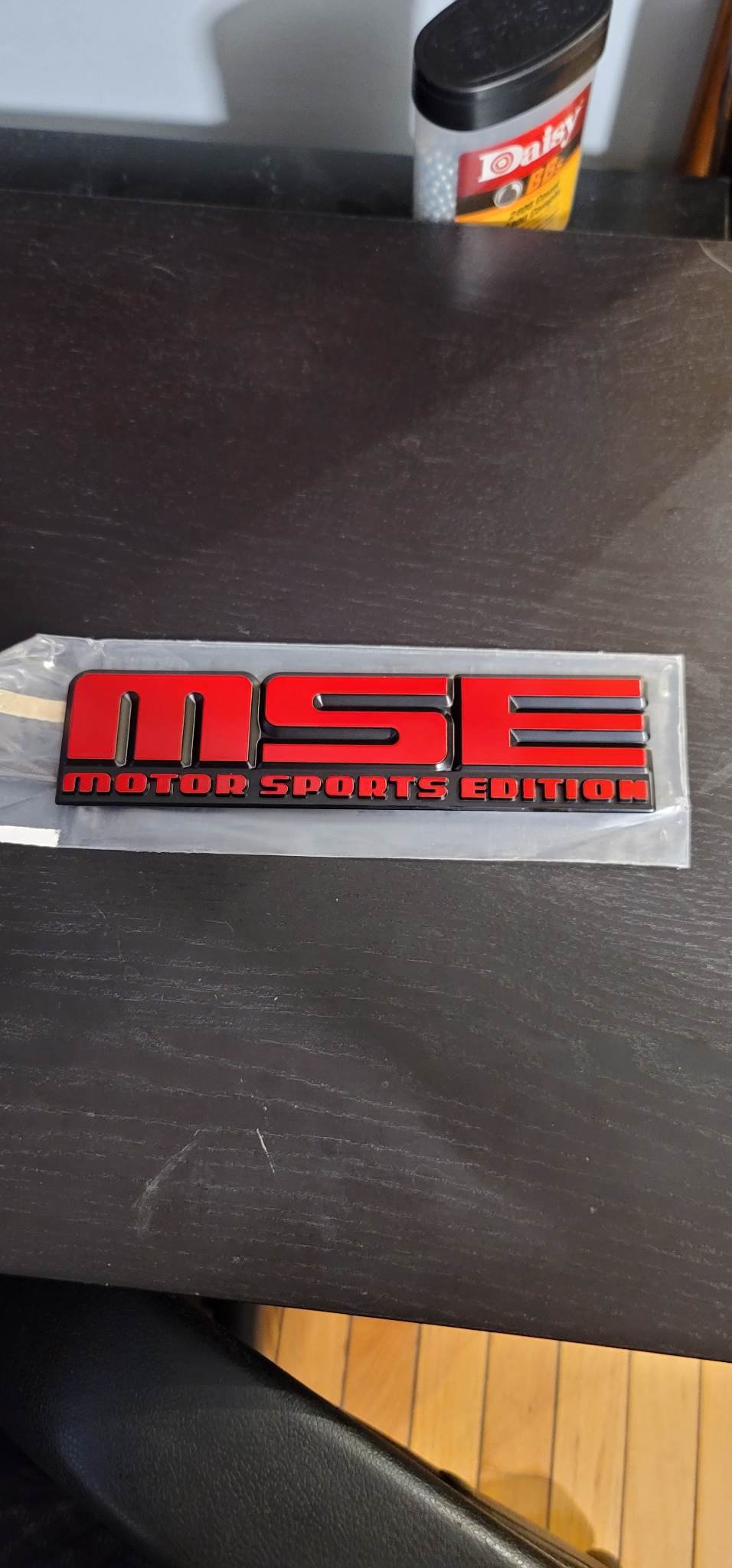
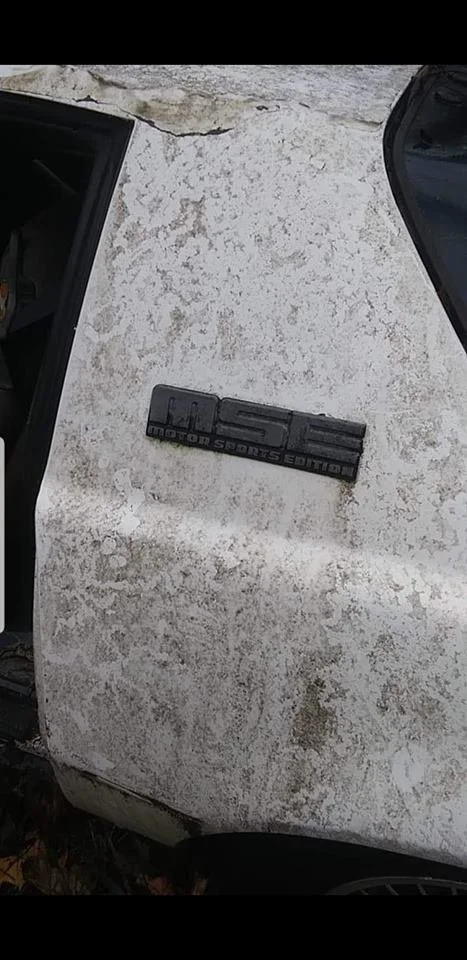
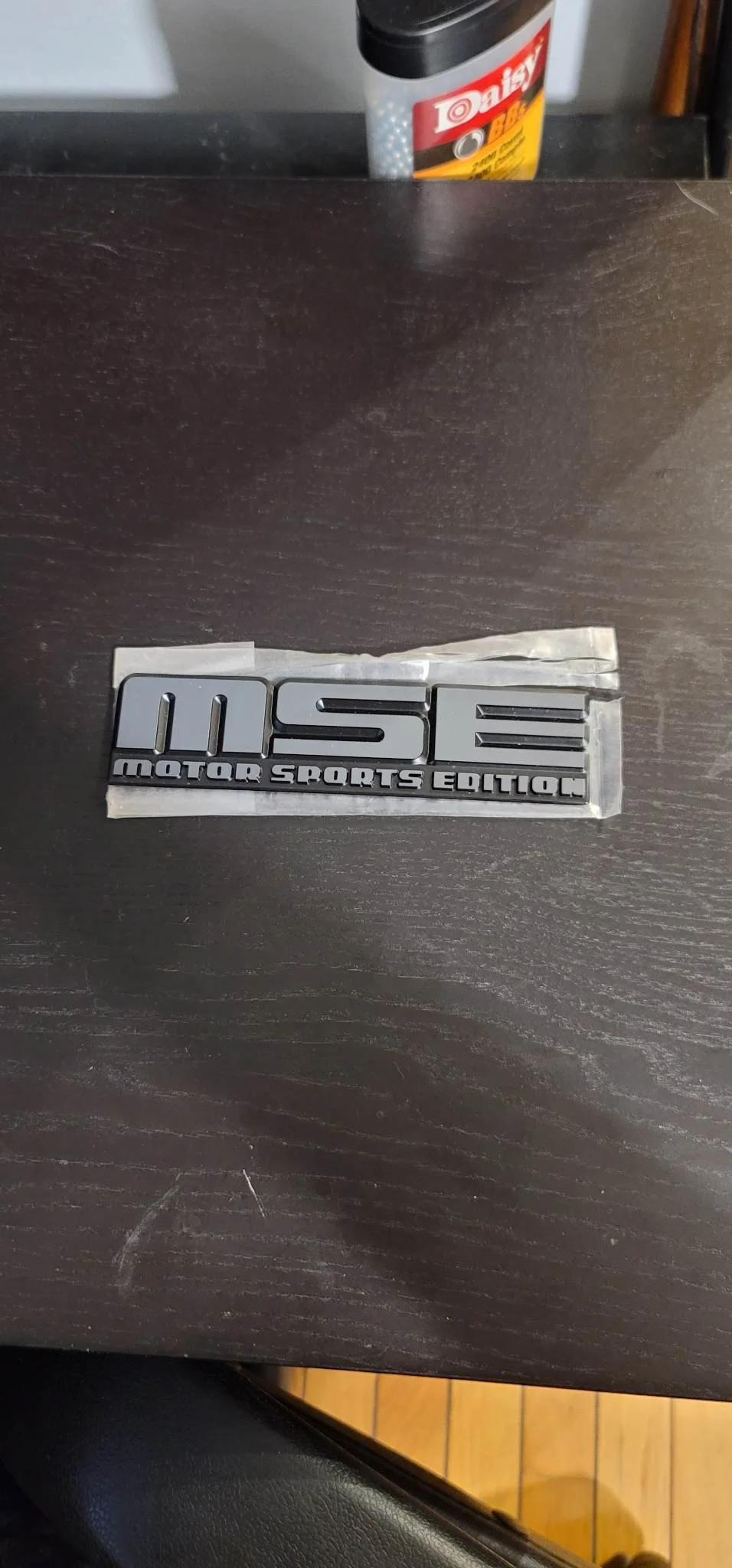
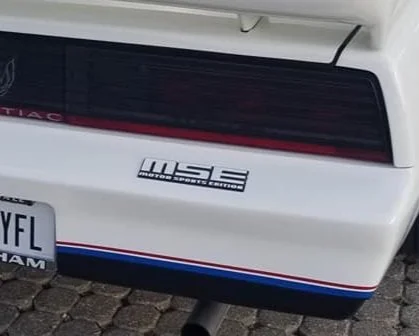
Another Hidden Option Choice Was Grey Or Body Color MSE Badges. Seen Above In “New Old Stock” From. This Was Available On Both Red, And White Cars. If Body Color Was Not Chosen, Grey Was The Default.
Non-Described Or Mentioned Option #5: Pin Stripes
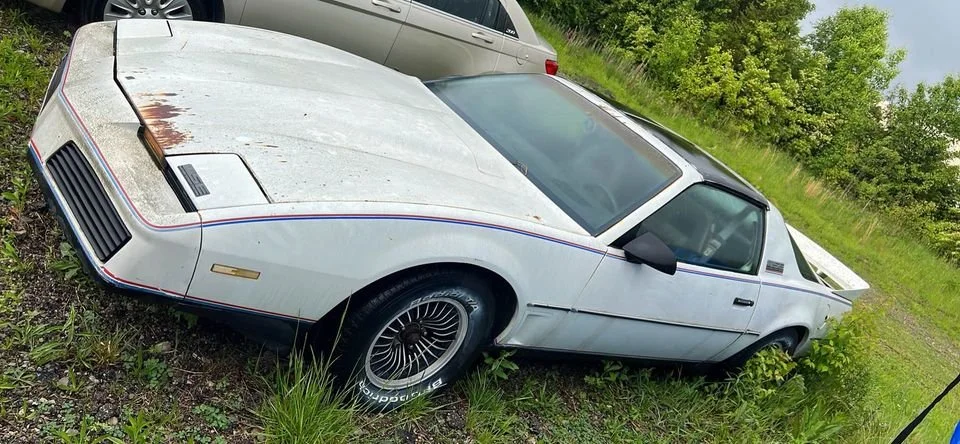
Some MSE cars received custom, one-off pinstripe designs, as seen on 1982-#168.
These unique stripe patterns appear to have been created on a case-by-case basis, rather than being part of a standardized production package.
This practice became more commonly seen on the later 1985–1986 Macho TAs, where custom pinstripe and graphic treatments appear with greater frequency.
The existence of #168 is another example of how not every MSE Trans Am followed an identical formula. Some cars received unique cosmetic treatments that set them apart from the more commonly documented configurations.
Non-Described Or Mentioned Option #6: Targa Top Conversion
(Area under construction)
The Exterior By The Numbers
1982 MSE Specific Decals, And Badges
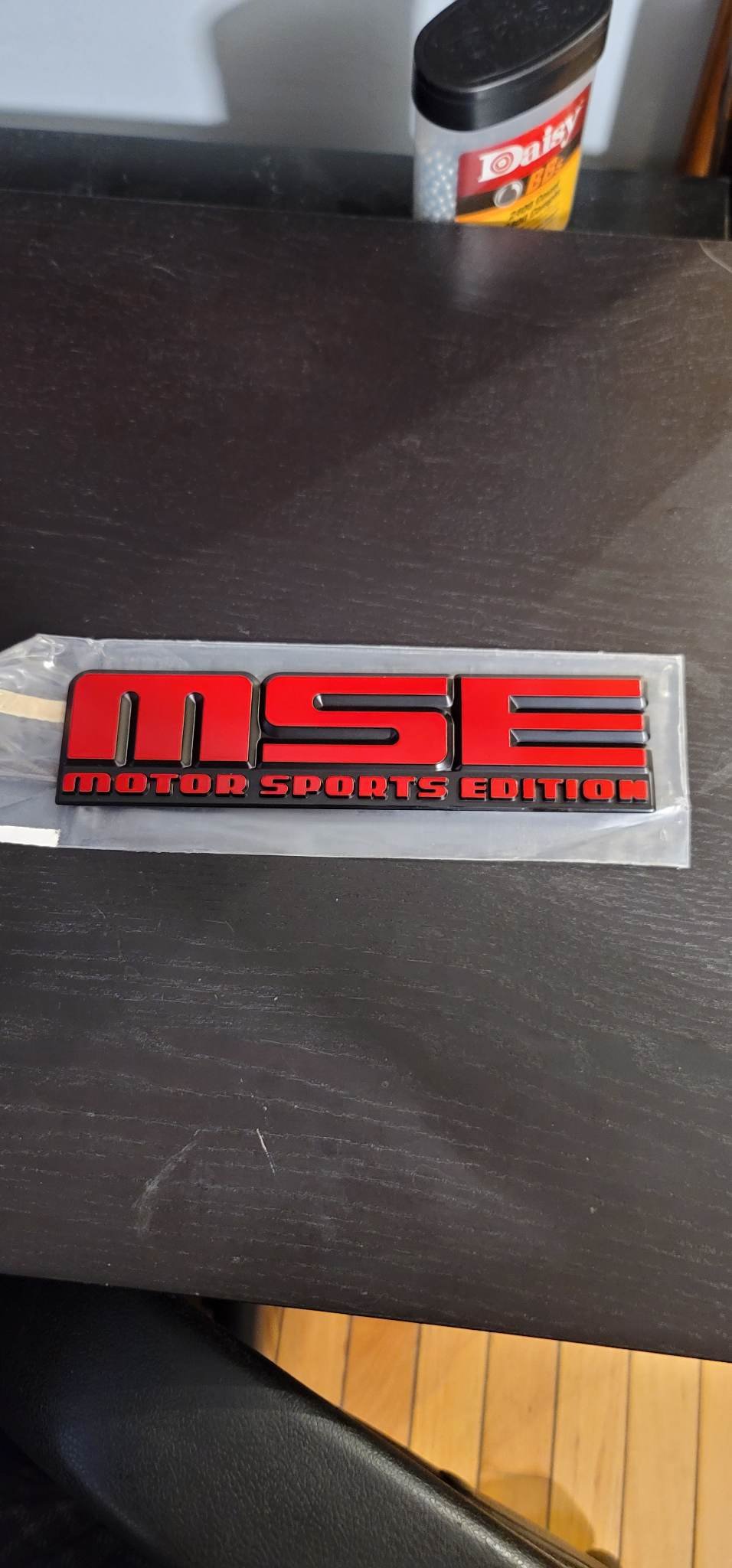
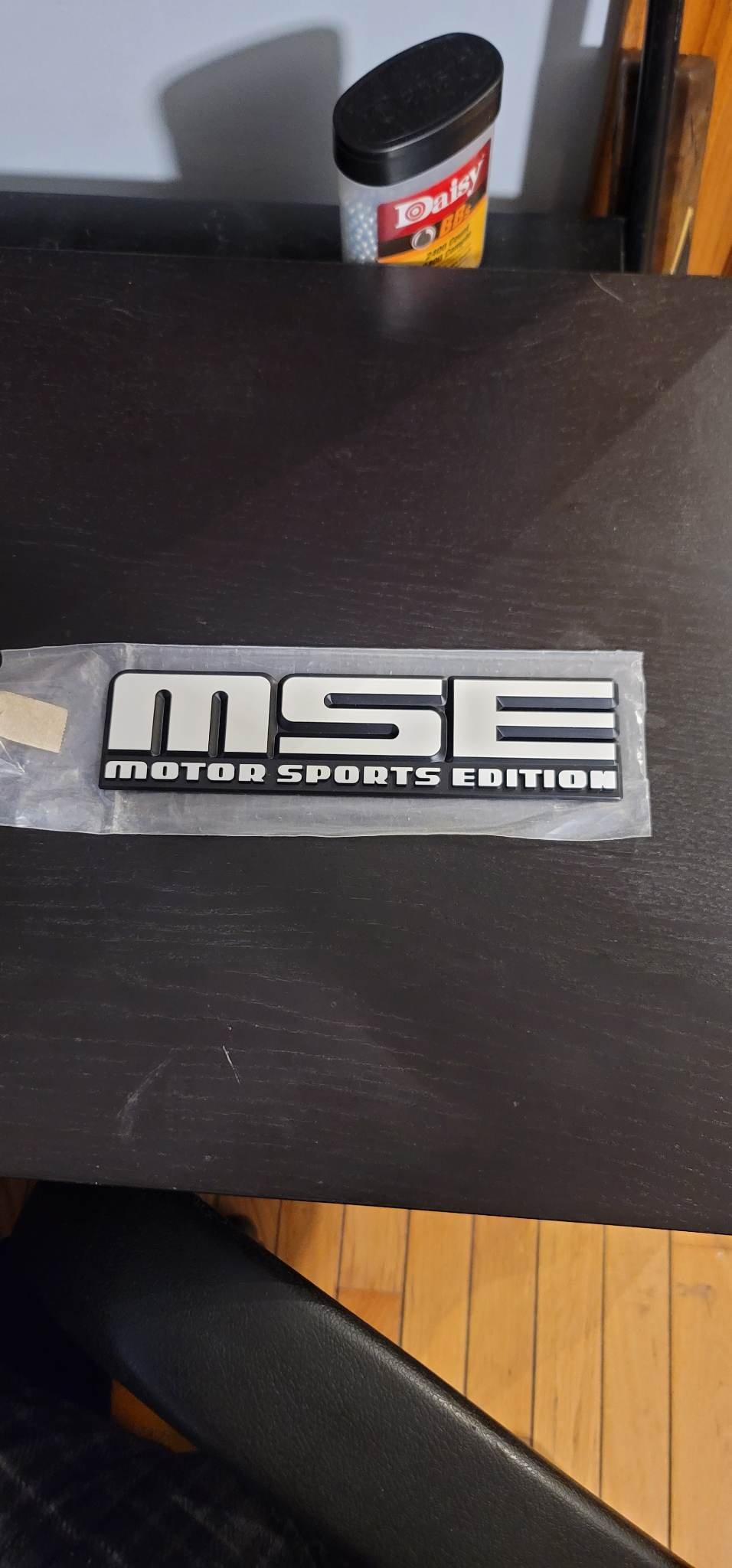
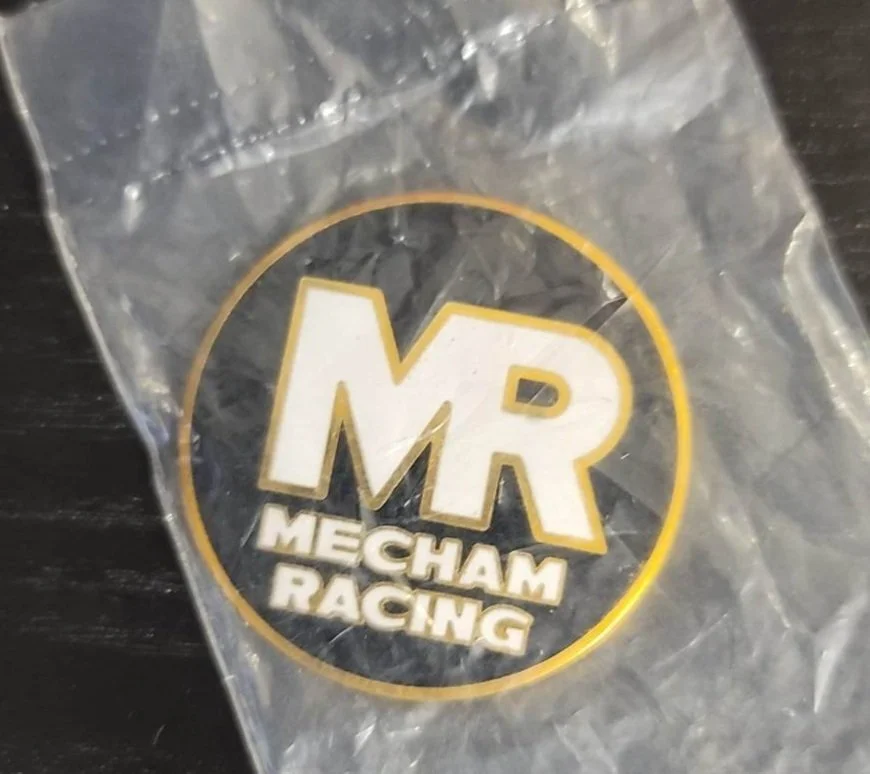
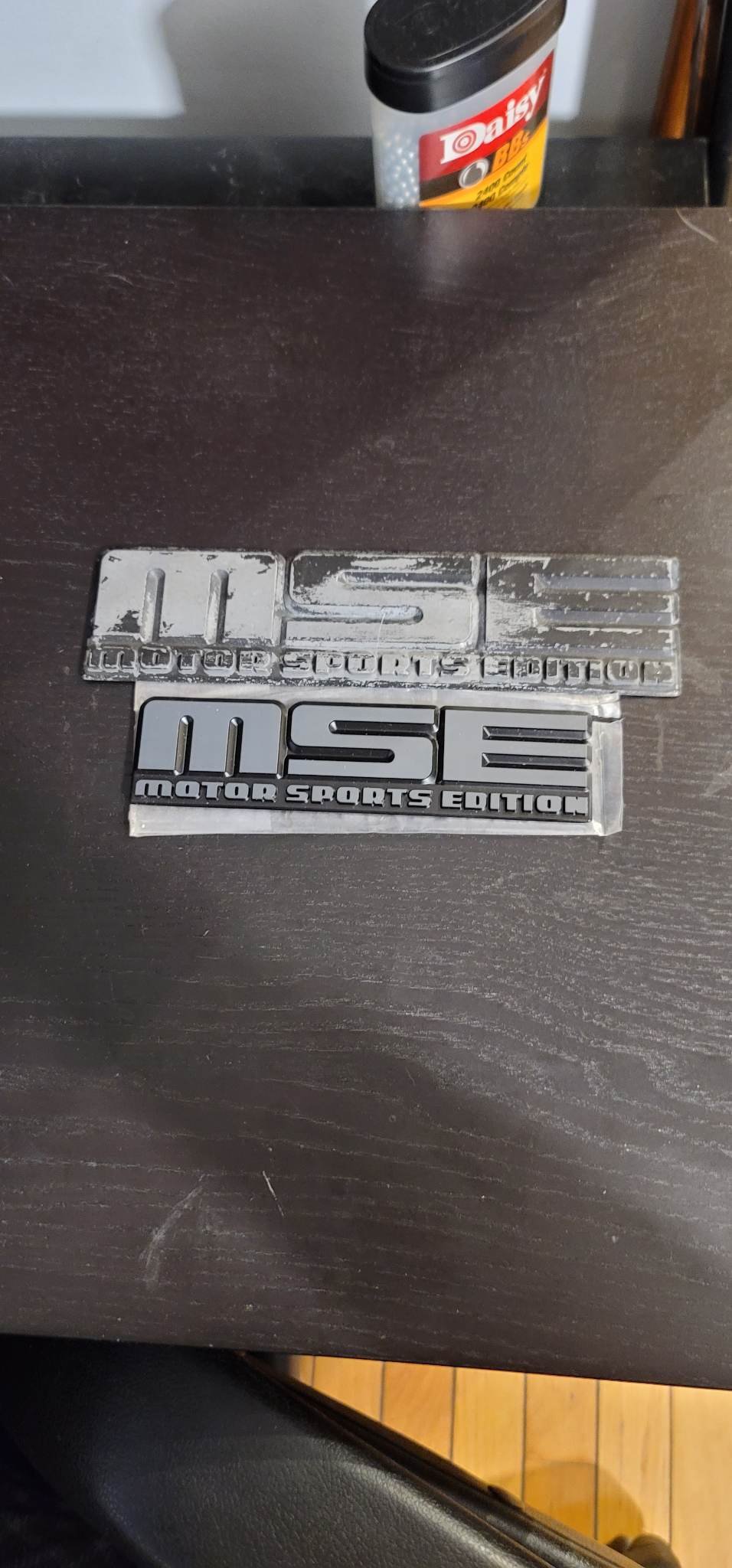
As Stated Above, Badges Came In Body Color Or Grey. The “MSE” Badges Were Found On the Passenger Side Of The Bumper, Driver Side “Pop-Up” Headlight, Both Sail Panels, And A “MR” Nose Badge On The Hood. The “MSE” Badges Came In 2 Sizes. Small, And Large. The Only Small “MSE” Badge On The Exterior Of The Car Was On The Drivers “Pop-Up” Headlight.
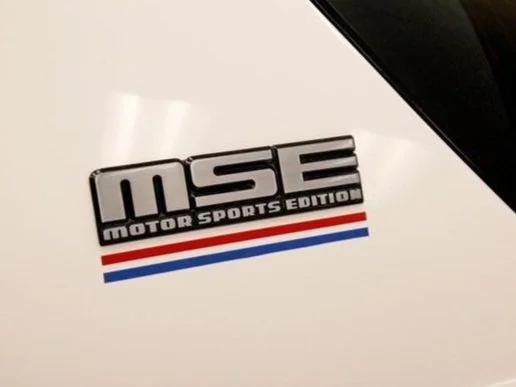
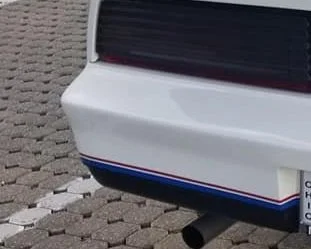
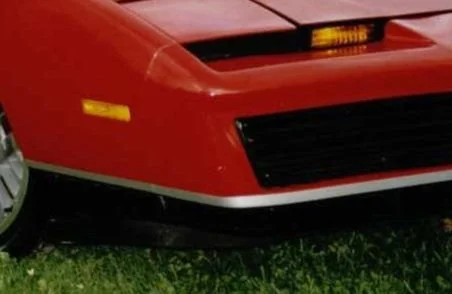
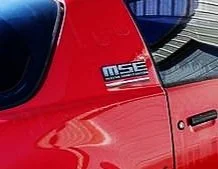
The Decals Were Different Based On The Color Of The Car. White Cars Received The Blue/Red Pinstripe (The White Is Body Color) At The Bottom, And Red Cars Received A Sliver Stripe At The Bottom.
Many White Cars Received Red/Blue Stripes Under The “MSE” Badge. The Red Cars, On Rare Occasion, Received A White/Blue Stripe (The Red Is Body Color)
1982 MSE Specific Wheels (Added Decal/Disc)
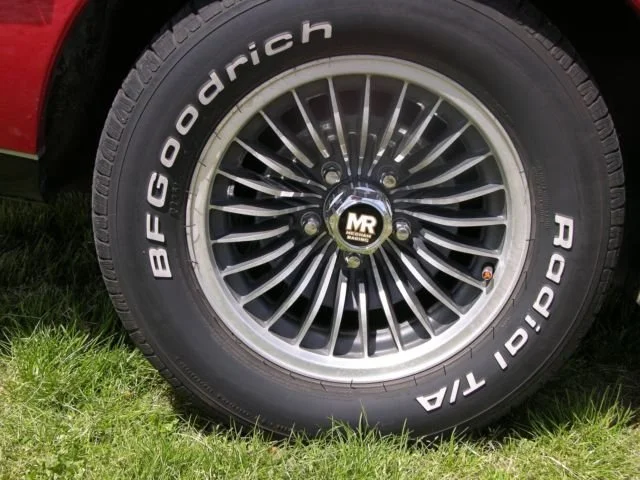
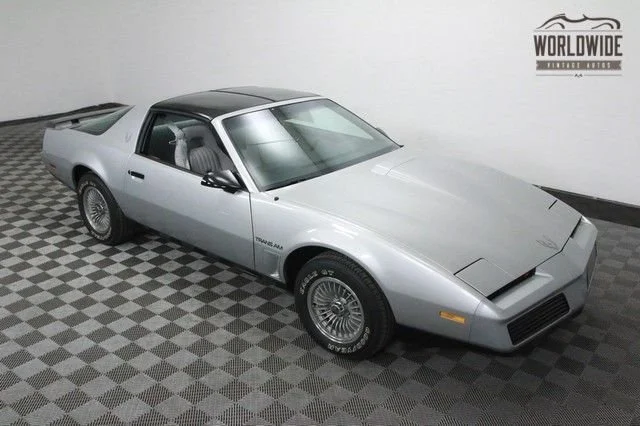
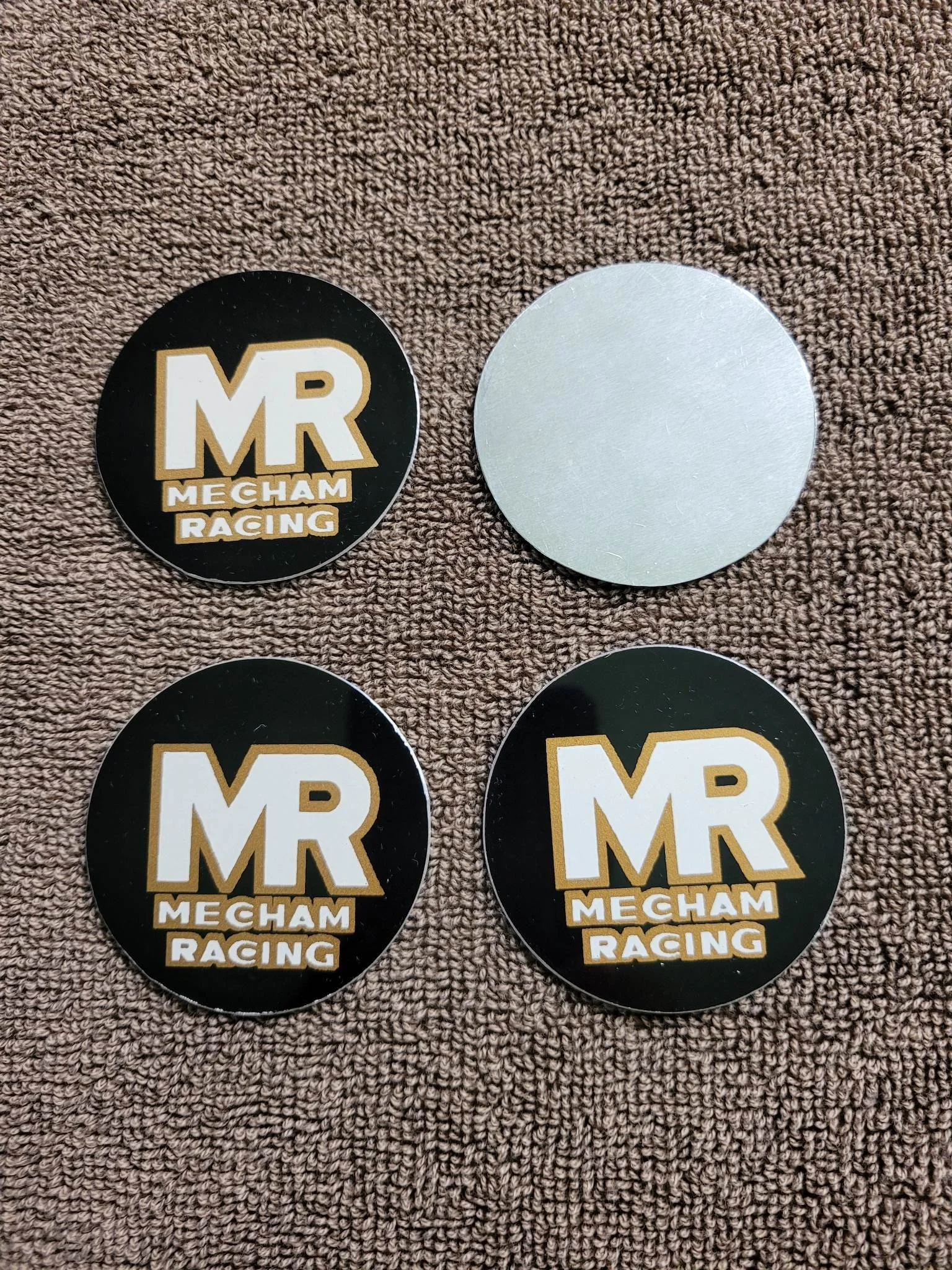
While Most Of The MSE Cars Received Decals On The Center Caps, In Very Limited Numbers, Some Of The Center Caps Received Aluminum Discs.
The Picture On The Left Is Of A NOS Set. Quite Possibly One Of The Only Loose Complete Sets Left In Existence
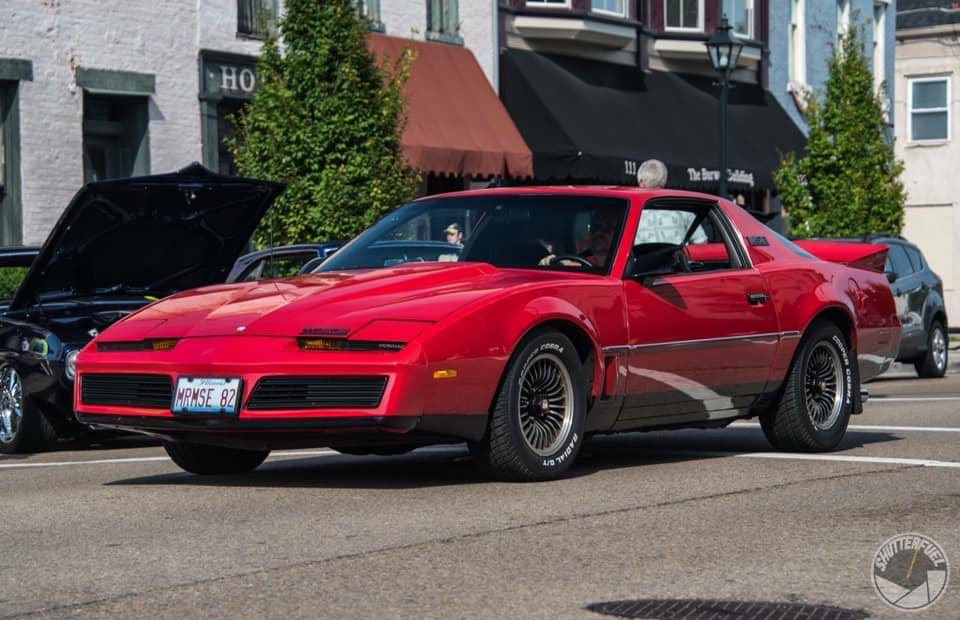
Here We See A Close Up Of A The 15x7 Wheel With MR Decals Used In 1982. Mecham Went Out Of Their Way To Make These Wheels Sound Unique. Saying They Where Made By Modern Wheel Company.
However, All Mecham Racing Did Was Add “MR” Logos To The Factory Wheel Center Caps.
The Major Difference Was That Mecham Had The Same Company Make The Wheels With A Machined Face. Which GM Later Adopted As Their Own.
On The Left You Can See A Low Mile, Well Optioned 1982 Trans Am With The Same 15x7s.
On The Right, 1982-#03R…
1982 MSE Rear Wing
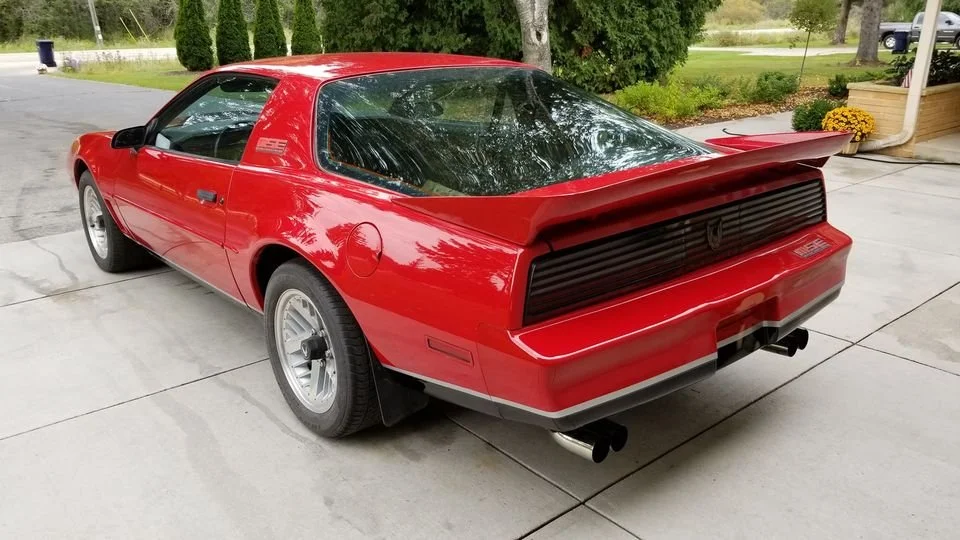
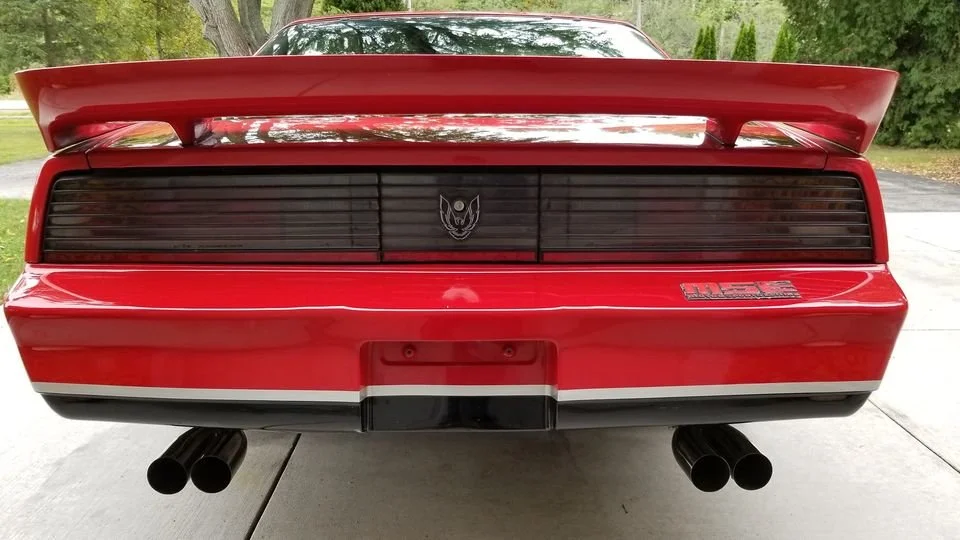
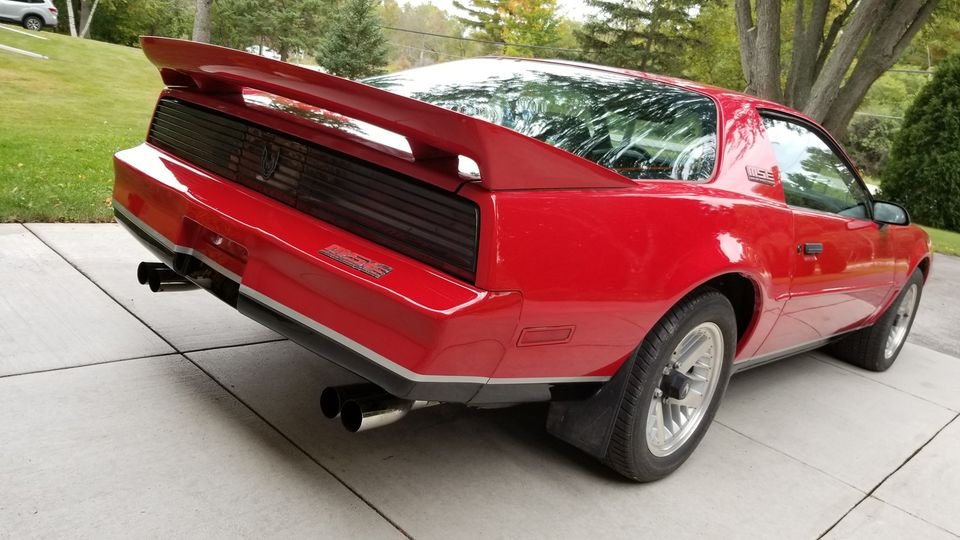
In 1982, Mecham Racing Designed This Rear “Whale Tail”. In The Future Mecham Racing Would Redesign This Wing To Be Lighter In 1985. The Early 1982-1984 Version Was Far Heavier.
(www.mechamperformance.com Description)
“This is the wing designed by Dennis Mecham for the 1982 MSE Race/Street program. The wing was used on the Huffaker built race cars to win the SCCA Trans Am Championship in 1982. According to GM Wind Tunnel Engineers who tested the wing to "prove" our design, the part is "very efficient making high down force numbers without adding significant drag". It was also featured on each MSE street car produced in that year and subsequent years. The Aero Tail was updated in 1984 and '85. This design is taken from the original with two exceptions. The original was a solid molded product and as such was a bit heavy and prone to stress cracks due to resin rich areas in a few of the corners. This new part is a hollow, hand laid part that is both stronger and lighter than the original while being true in dimension and design. We at Mecham Design, Performance are pleased to offer the original Aero Tail for our customers.
This wing is a direct bolt on replacement for Gen 3 Firebirds that were equipped from the factory with a rear wing that was a band across the tail with two stantions.”
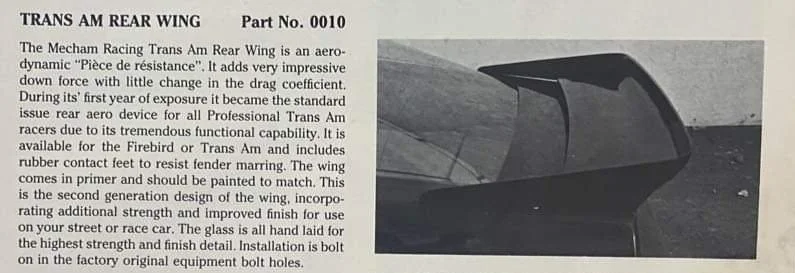
Here Is The Listing For The Mecham Racing Rear Wing In The Later, 1985 Sales Catalog. The Wing Is Listed As Part Number 0010.
1982 MSE Front Air Dam
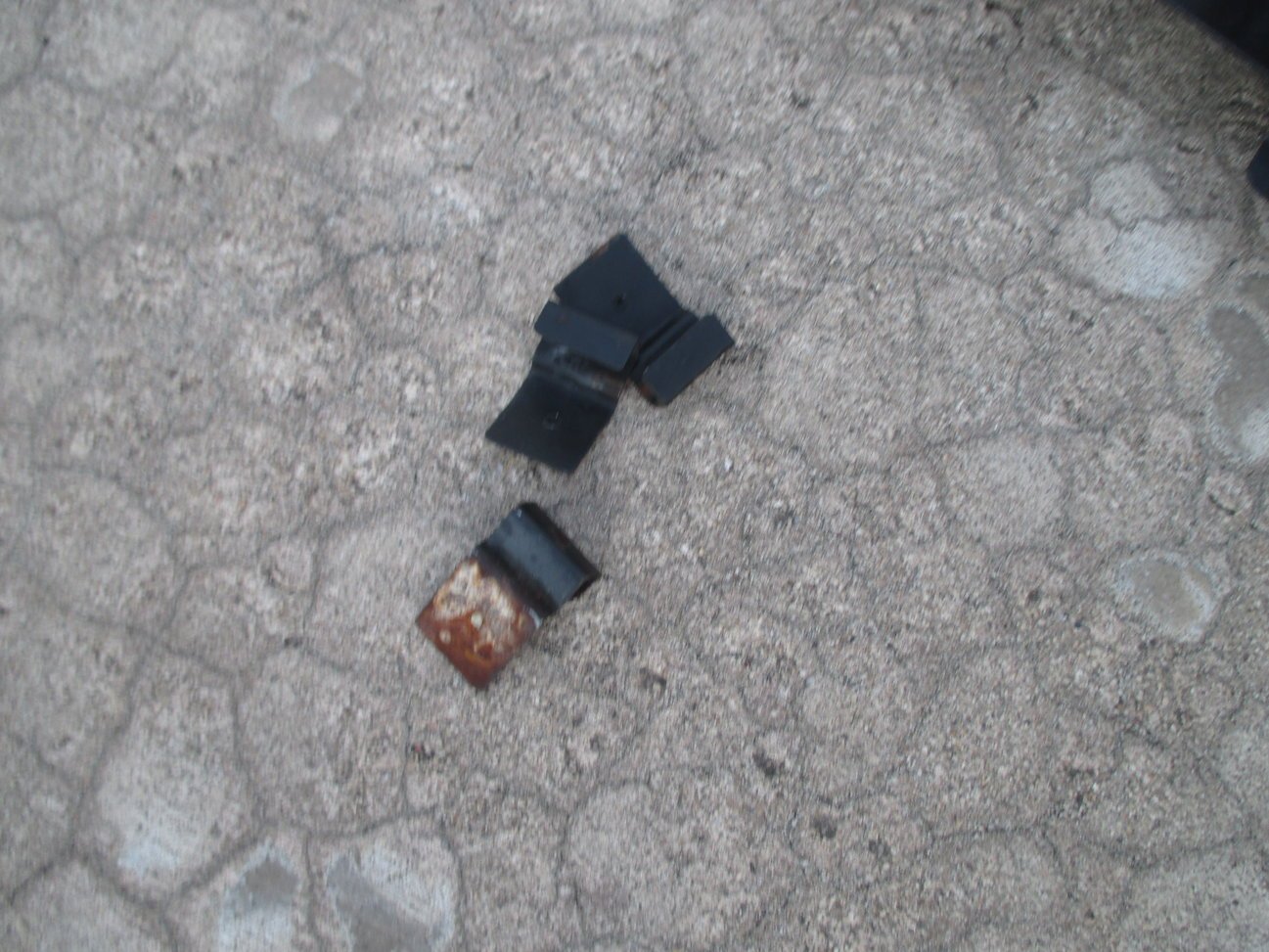
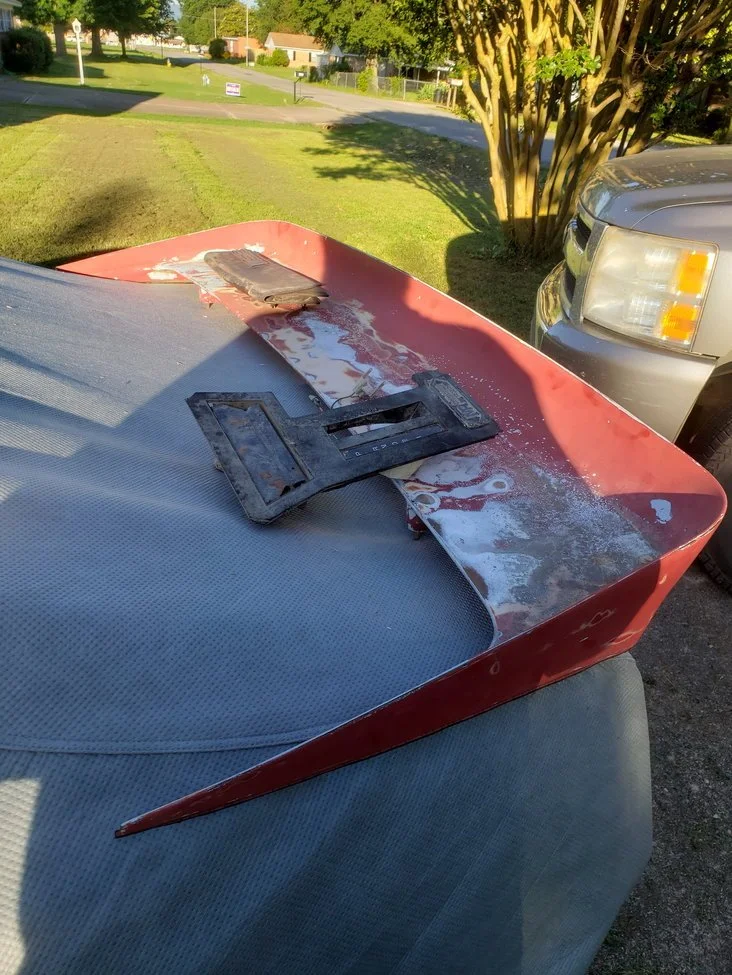
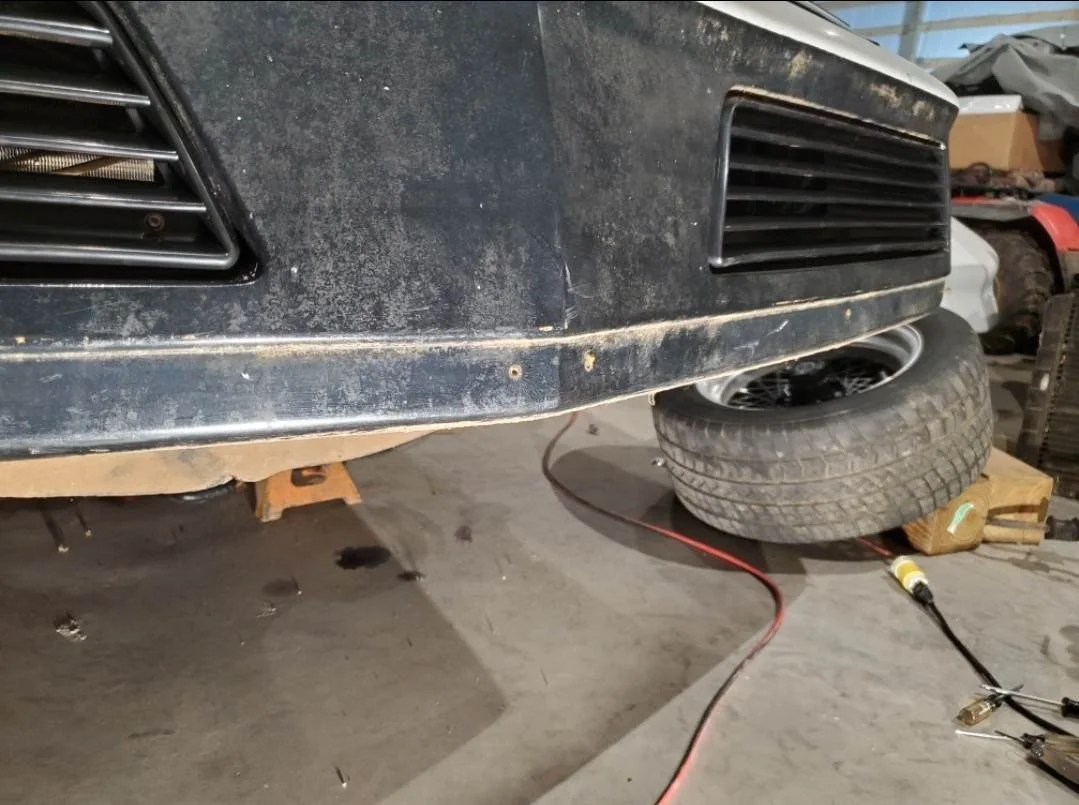
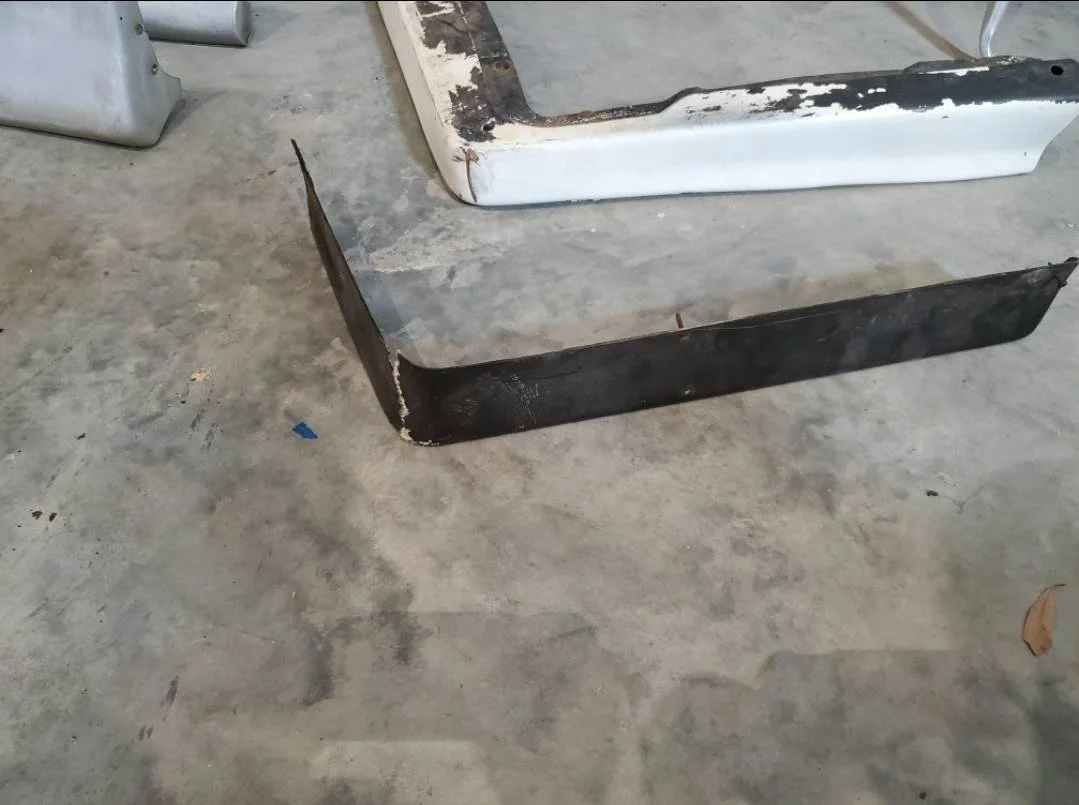
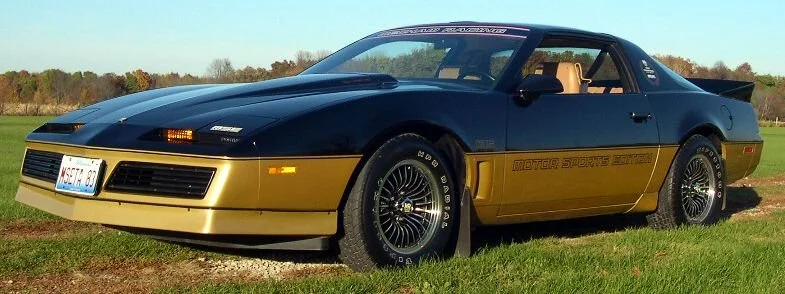
Very Few True MSE Air Dams Have Survived. Many MSE Cars Simply Received A Trans Am W62 Aero Package Front Air Dam As It Was Made Available In Late 1982, For the 1983 Model Year. MSE Pieces Can Be Identified By The Hardware Which Is Exposed. Cars Equipped With This Option Have Mounting Holes Exposed When Missing. Blow Is A Picture Of A Broken Piece Of One, And A 1983 Car (Best Picture Available)

Proper Engine, And Non-Mentioned/Listed Common Options
1982 Mecham Racing Trans Am Engine Identification
(Goal: Show Variation Between The Cars)
A 1982 Mecham Racing Trans Am Engines As Described:
As Stated Above, Not All MSE Trans Am Cars Were Made Equal. The Engines Are One Of The First Places This Becomes Clear. While The Outside Appearance Of The Cars Carried A Level Of Consistency, The Engines Faced A Different Fate. The Was Largely Because With The “Git Kit” Installed, The Mecham Cars Would Not Be Emissions Compliant For The Time.
The Mecham Racing “Git Kit”
Very Much Unknown, The Git Kit Came In Stages
Base Mecham Racing Appearance Package No Git Kit 0 HP Gain (125 HP LG4)
Git Kit With Factory Exhaust 50 HP Gain (175 HP 305 LG4) (Lets Call This Stage #1)
Git Kit With Duel Exhaust 75 HP Gain (200 HP 305 LG4) (Duel Exhaust Was Optional) (Lets Call This Stage #2)
Git Kit With Everything Plus Cam And Gear Swap 175 HP Gain (300 HP 305 LG4) (Lets Call This Stage #3)
The Stage 3 cars were believed to be 350 swaps due to the power numbers stated, and the discovery of a 82 MSE with a 350/TH350 swap Verified as far back as the mid 80s. (Conversations with prior owners)
Git Kit Optional As A Side Package Loose Of a Car $650 ($1971.22 In 2023)
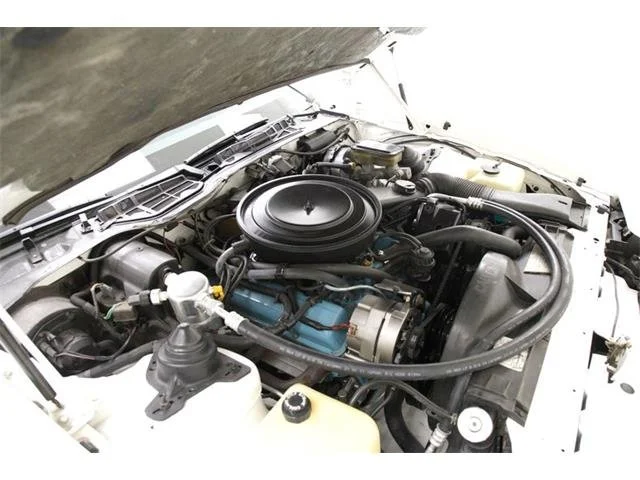
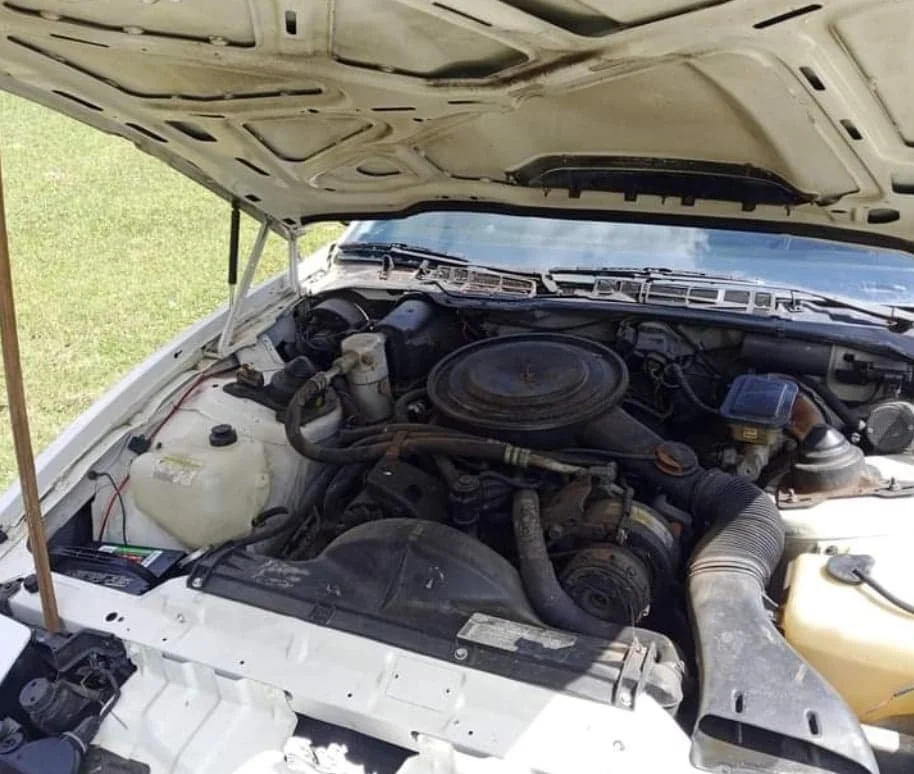
1982 MSE Trans Am #49
Non-Git Kit Car. Base LG4 Engine That Came In Mostly All 1982 Trans Am Cars. Worst Of The LG4 Engines. Nothing Special. Worn, And Tired, Its Blue Engine Paint Long Gone.
1982 MSE Trans Am #148
Git Kit Level 1 Car. Base LG4 Engine With Holley 4BBL Carburetor, Edelbrock Intake Manifold, Mallory Distributor, Low Restriction Air Cleaner, Tri-Y Headers. #148 Is Missing Its High Flow Air Cleaner, And Also The Edelbrock Intake Manifold Appears To Be Missing Or Painted Over As Its Still Blue (#148 Has 51,000 Miles, Likely Painted over, And Air Cleaner Not Used By a Sneaky Owner).
1982 MSE Trans Am #148 Continued*
Question: How Do We Know This Is a Level 1 Git Kit?
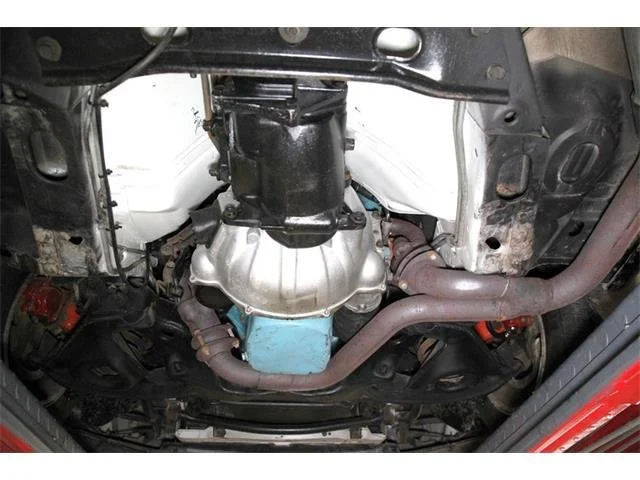
Answer: This Is Not a True Duel Exhaust Car. Here We See, Some Very Neatly Tucked, Headers Feed Into A Large Tube Y-Pipe With Single Exit.
A 1982 Mecham Racing Trans Am Engines As Described:
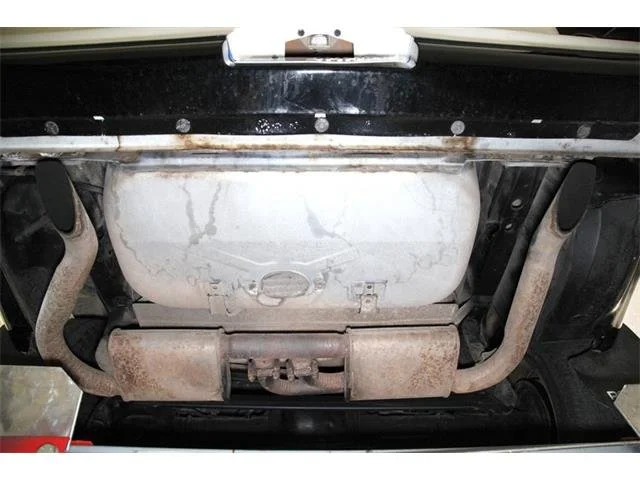
1982 MSE Trans Am #148 Continued*
Here You Can See A Factory Exhaust Set Up. Don’t Be Fooled By The Duel Input. It Splits When It Goes Over The Rear Axle.
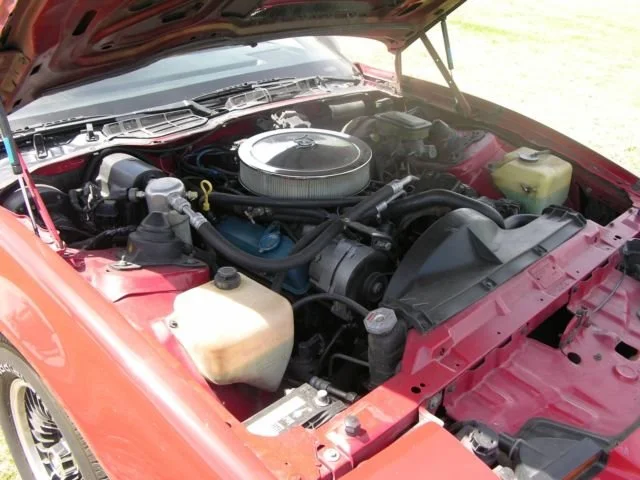
1982 MSE Trans Am #36
Git Kit Level 2 Car. Base LG4 Engine With Holley 4BBL Carburetor, Edelbrock Intake Manifold, Mallory Distributor, Low Restriction Air Cleaner, Tri-Y Headers. Here You Can See The High Flow Open Air Element Air Cleaner.
Edit: #36 Recently Discovered To Be A LVL 3 Car. Mecham Swapped with a TH350/350. More to Follow Below.
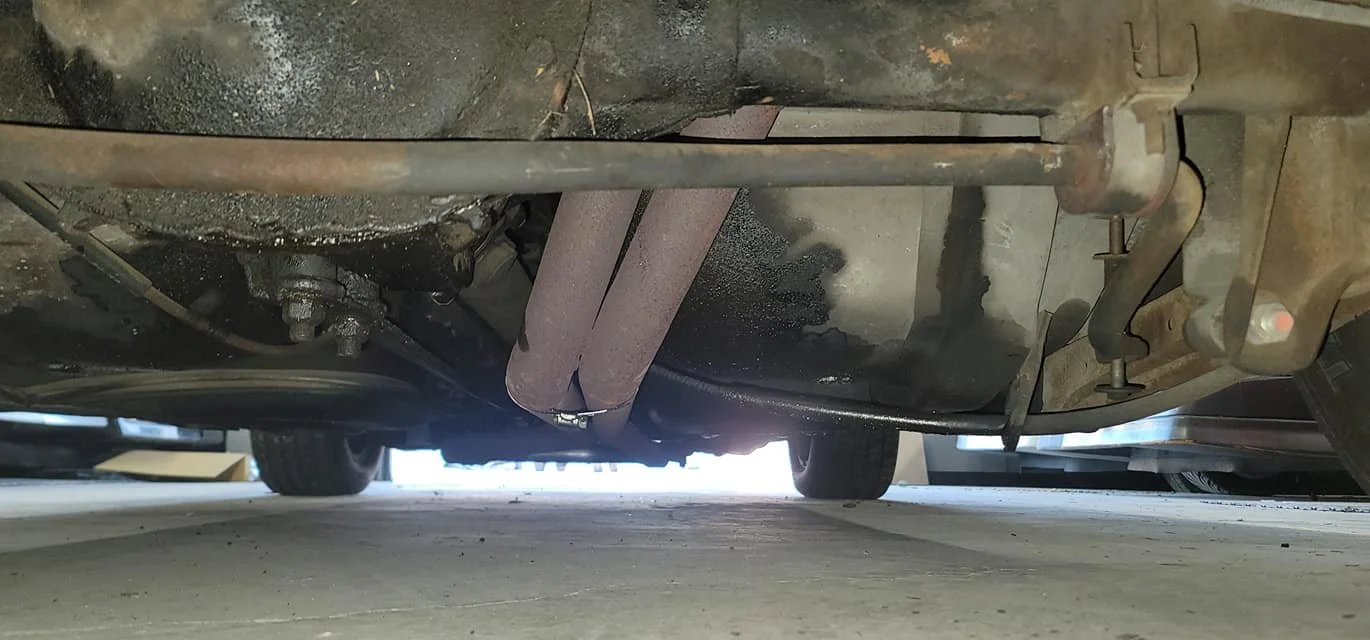
1982 MSE Trans Am #36 Continued*
Here You Can See The Git Kit Duel Exhaust Run The Length Of The Car. If you Look Closely, You Can See It Has A H Pipe Also Installed. (Installed Later, Verified By Last 3 Owners Of The Car)
Edit: #36 Recently Discovered To Be A LVL 3 Car. Mecham Swapped with a TH350/350. More to Follow Below.
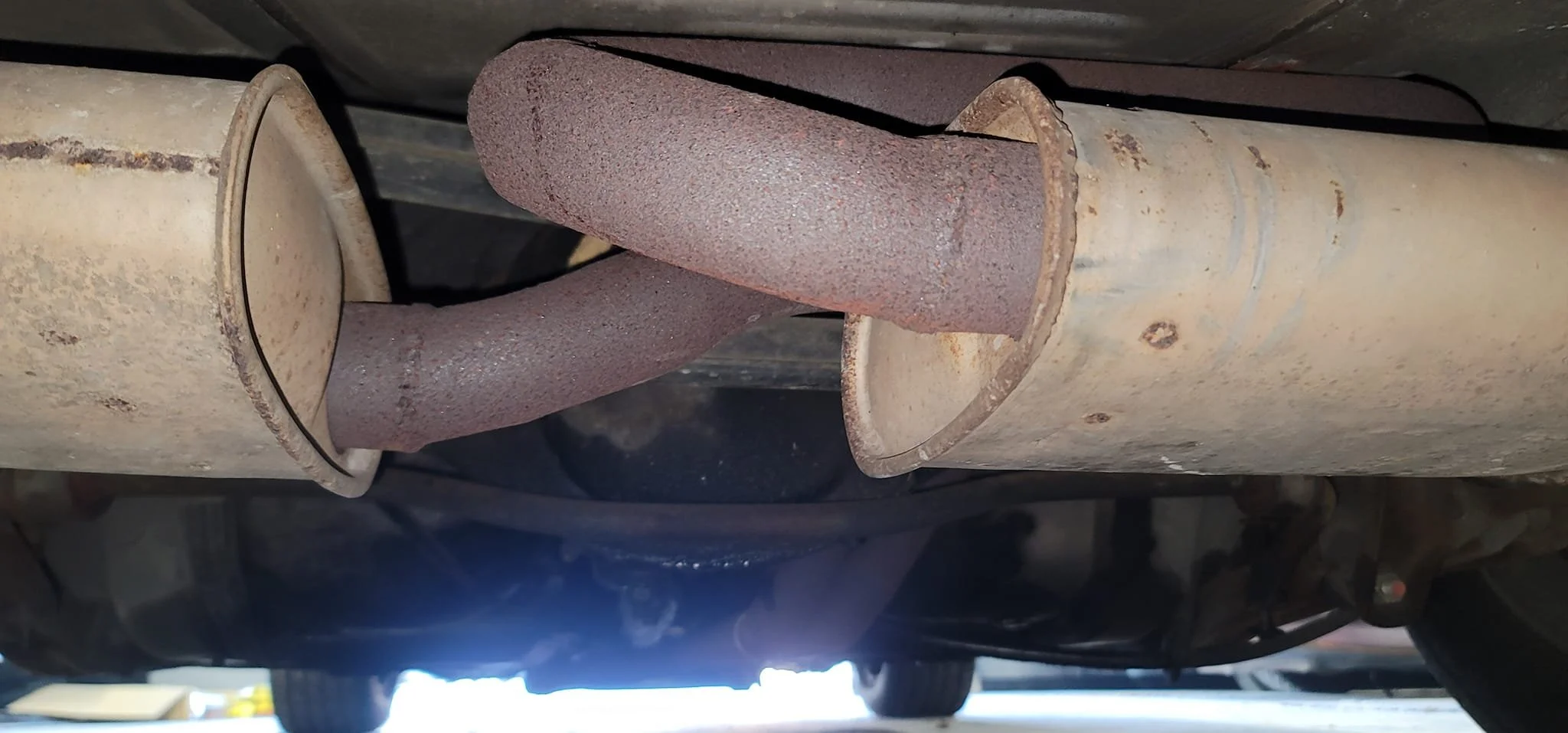
1982 MSE Trans Am #36 Continued*
Here You Can See The Git Kit Duel Exhaust Run Into Stock GM Mufflers. Very Interesting How They Did This.
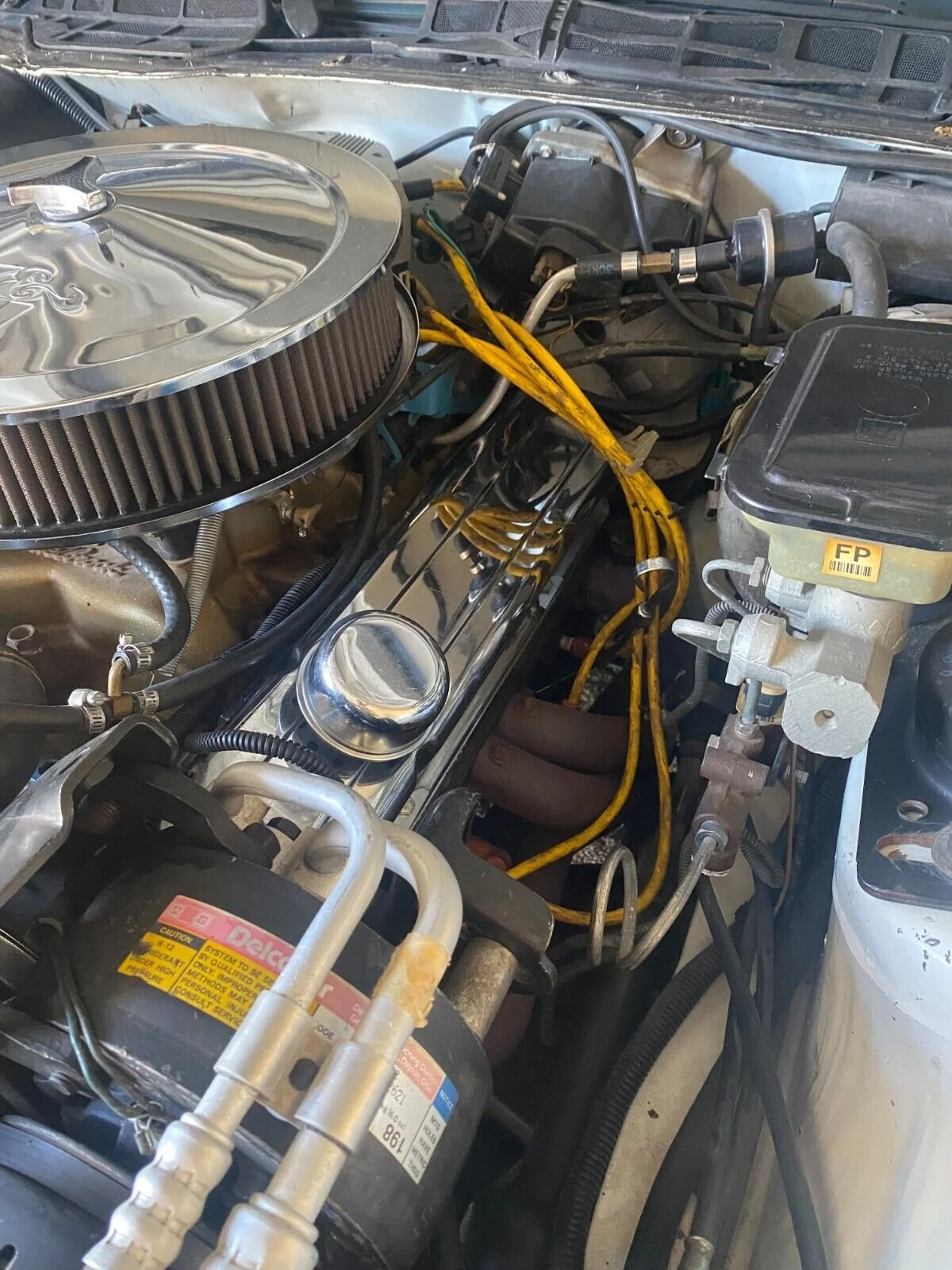
1982 MSE Trans Am #87
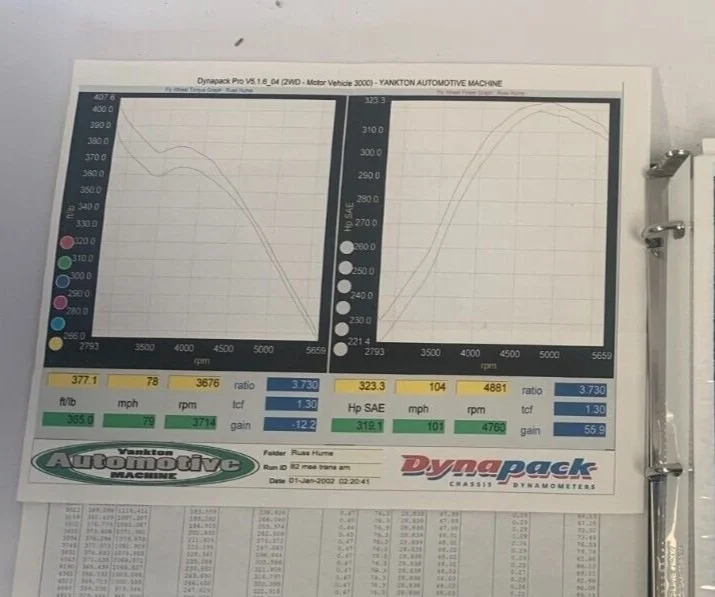
Git Kit Level 3 Car. Cam Shaft/Gear Swap LG4 Engine With Holley 4BBL Carburetor, Edelbrock Intake Manifold, Mallory Distributor, Low Restriction Air Cleaner, Tri-Y Headers.
1982 MSE Trans Am #87 Continued*
While Looking Exactly The Same As The Level 2 Engine. The Cam Swap Is Hidden Inside, But Those Numbers On The Dyno Sheet Show Are Not As Shy.
A Dyno Or Engine Tear Down Would Be Needed To Verify A Level 3 Car.
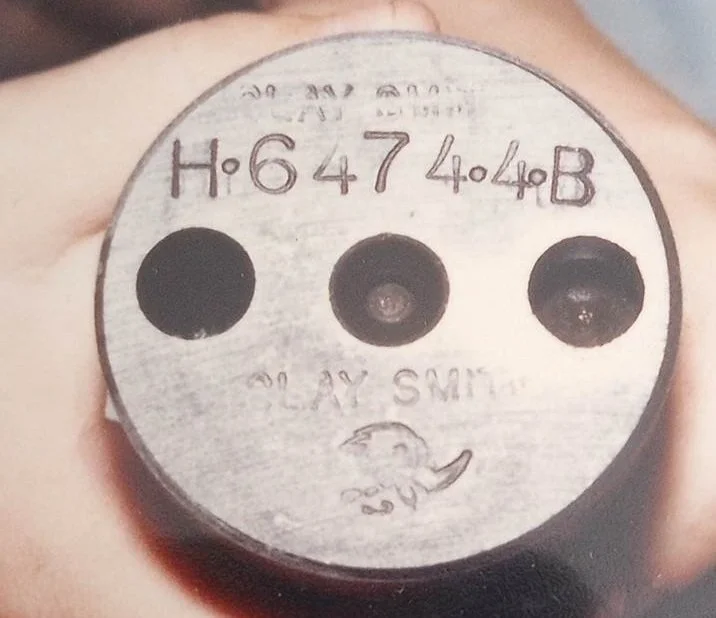
Below Is Potentially the Cam Used In The Level 3 Cars, And The Later “Macho 5.7” Engines. A Clay Smith H-6474-4-B. This One Is Off A 1984 Car.
The “Git Kit” By The Numbers
The “Git Kit” Was Developed By Huffaker Engineering, Now Known As Huffaker Motorsports. They Are A Real, No Compromise, Motorsport Company With Decades Of Experience. They Built The Race Cars For The Mecham Racing SCCA Team. Best Said In Their Own Words:
“Huffaker has a 50-year history of building championship winning race car engines from small bore BMCs to fire breathing V-8’s and everything in between. Huffaker-built engines have been part of 35 SCCA and multiple-Trans Am Championships. The Huffaker team knows how to extract top performance and reliability from every type of motor. We have an in-house engine dyno for rent or as a turn key solution.” (huffakermotorsports.com)
Sadly, There Is Not Much Mention Of The Mecham Racing Days On Their Website Only This:
“Huffaker won the 1982 Trans-Am Championship with Elliott Forbes-Robinson behind the wheel”- In A Mecham Racing TA By Over 50 Points……
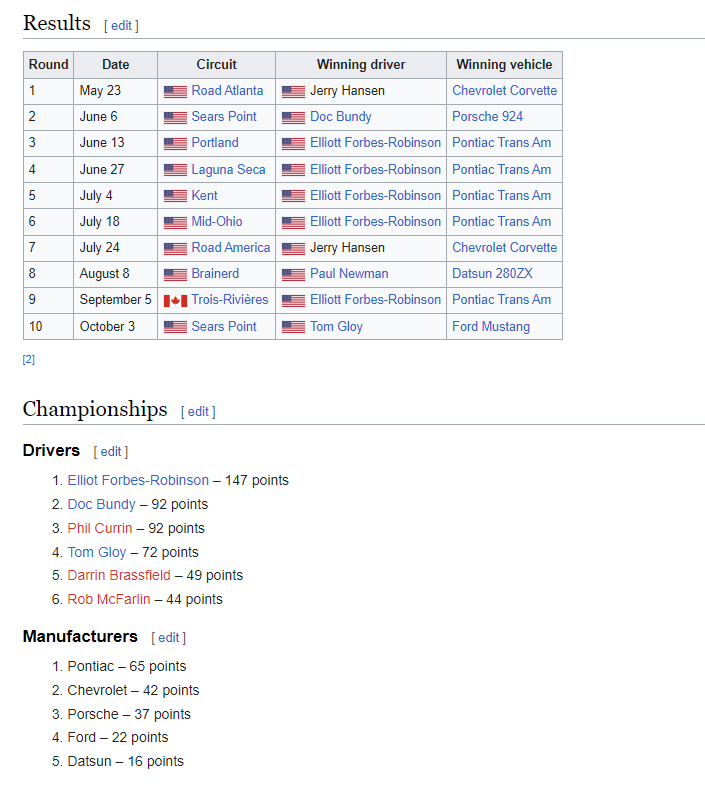
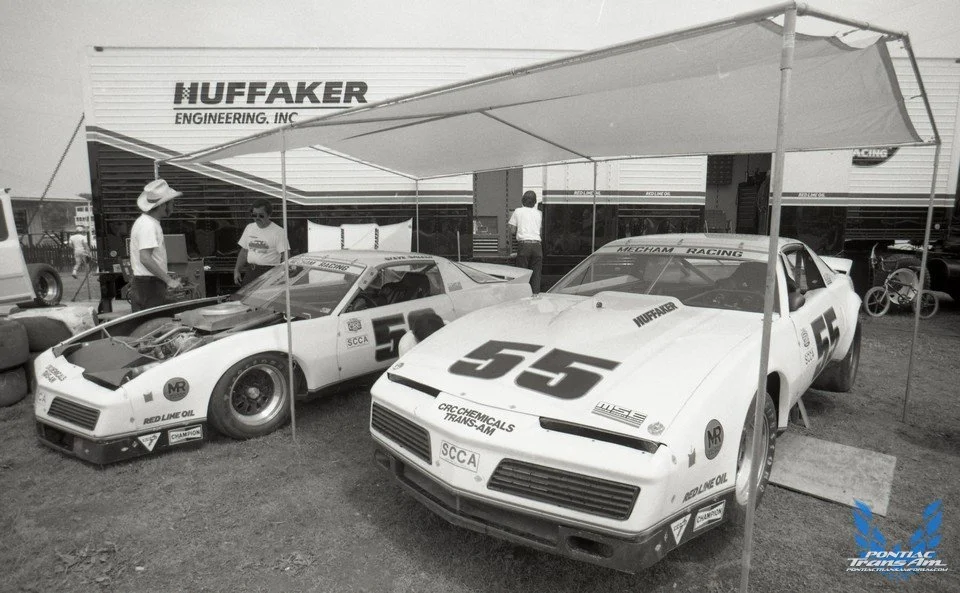
The “Git Kit” Holley Carburetor
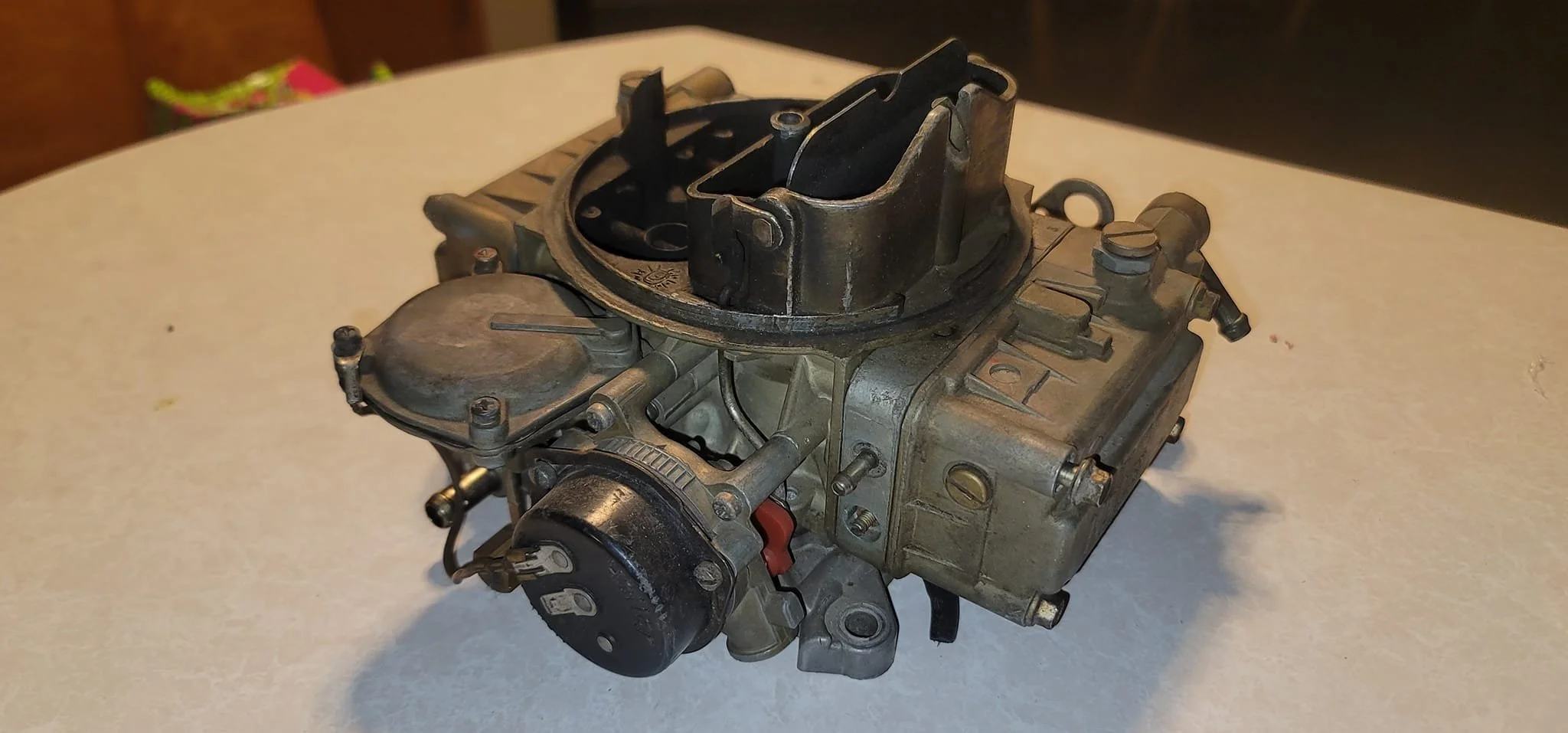
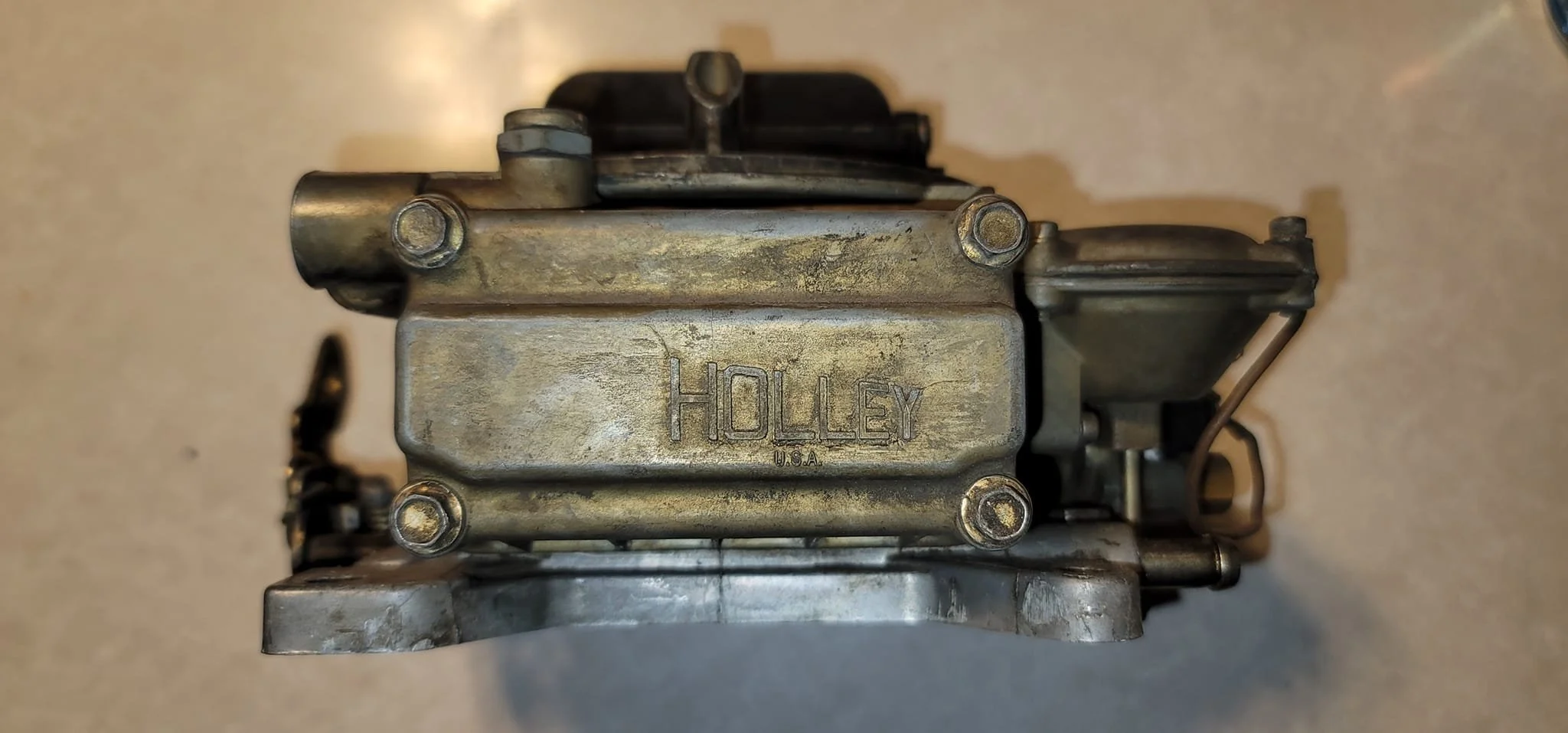
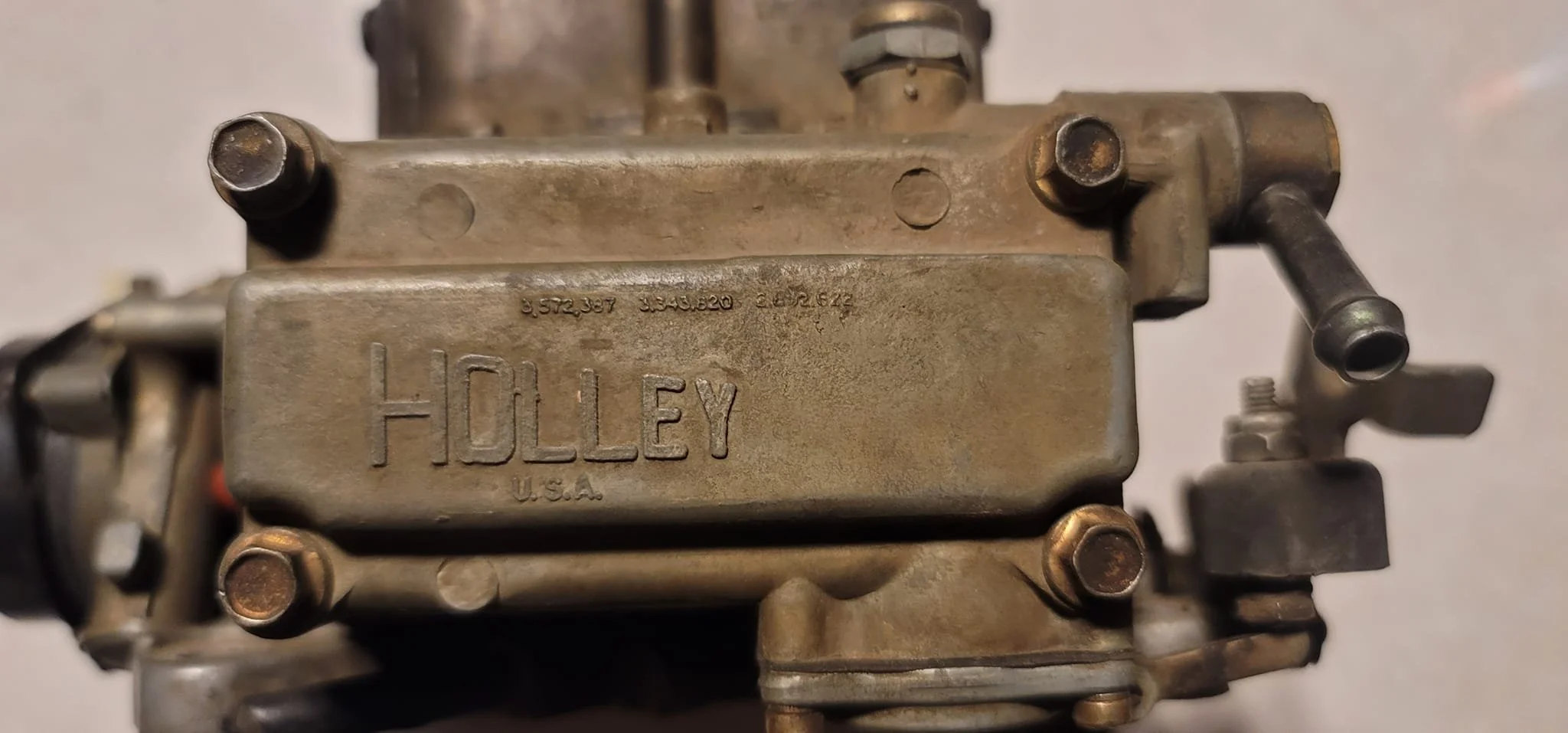
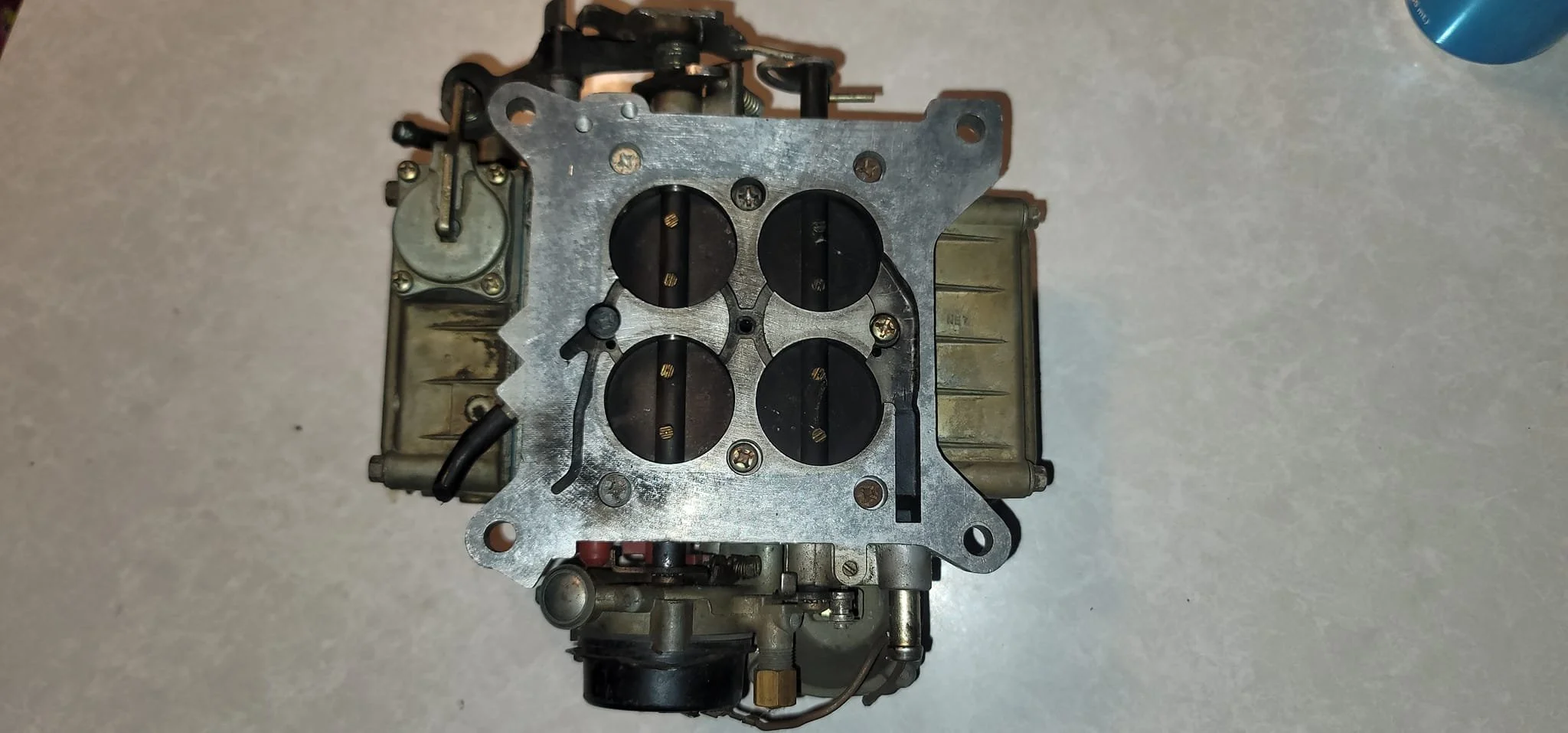
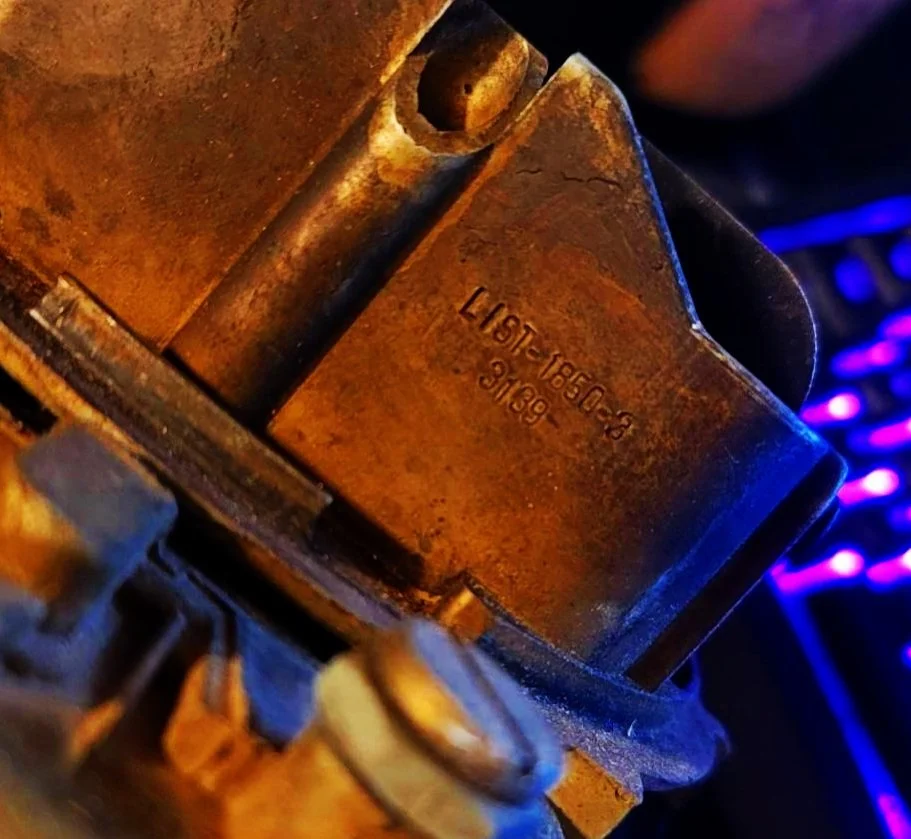
The “Git Kit” Carburetor Was A Holley 600 CFM. A 1850-3 To Be Exact. This Example Is Off 1982-#36. It Was Removed, And Replaced Due To Its Old Age. The Date Codes On This One Puts It at The 313th Day Of 1979. So It Sat For A Few Years Before It Met MSE #36. Mecham Racing Part Number Is Unknown.
The “Git Kit” Was Developed By Huffaker Engineering, Now Known As Huffaker Motorsports. They Are A Real, No Compromise, Motorsport Company With Decades Of Experience. They Built The Race Cars For The Mecham Racing SCCA Team. Best Said In Their Own Words:
“Huffaker has a 50-year history of building championship winning race car engines from small bore BMCs to fire breathing V-8’s and everything in between. Huffaker-built engines have been part of 35 SCCA and multiple-Trans Am Championships. The Huffaker team knows how to extract top performance and reliability from every type of motor. We have an in-house engine dyno for rent or as a turn key solution.” (huffakermotorsports.com)
Sadly, There Is Not Much Mention Of The Mecham Racing Days On Their Website Only This:
“Huffaker won the 1982 Trans-Am Championship with Elliott Forbes-Robinson behind the wheel”- In A Mecham Racing TA By Over 50 Points……
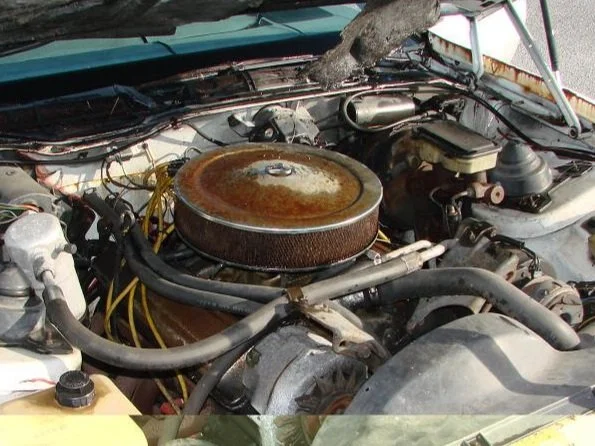
The “Git Kit” High Flow Open Air Element Intake
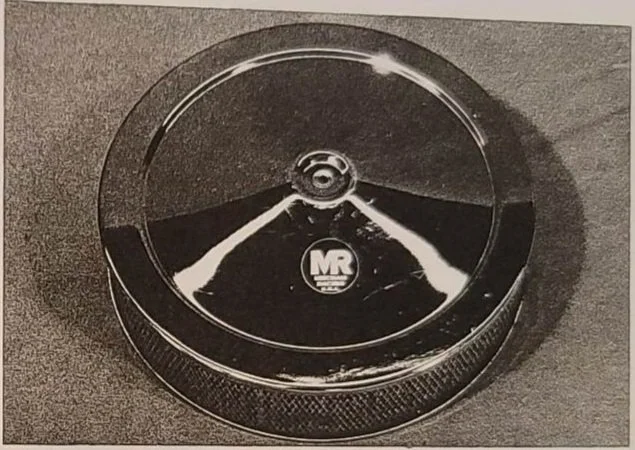
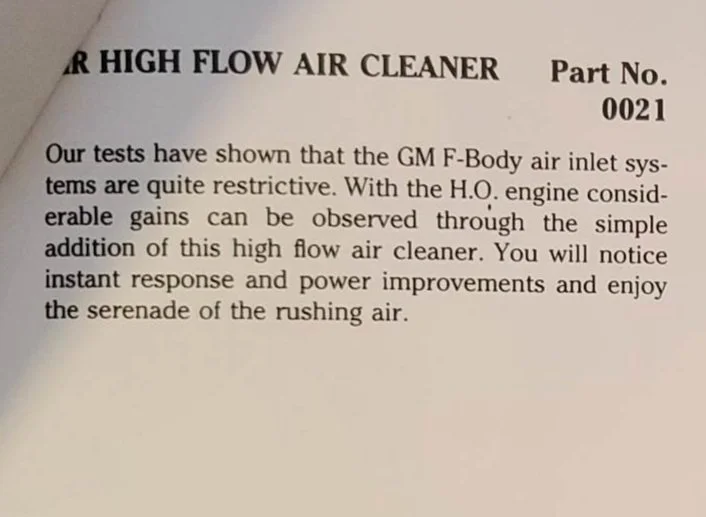
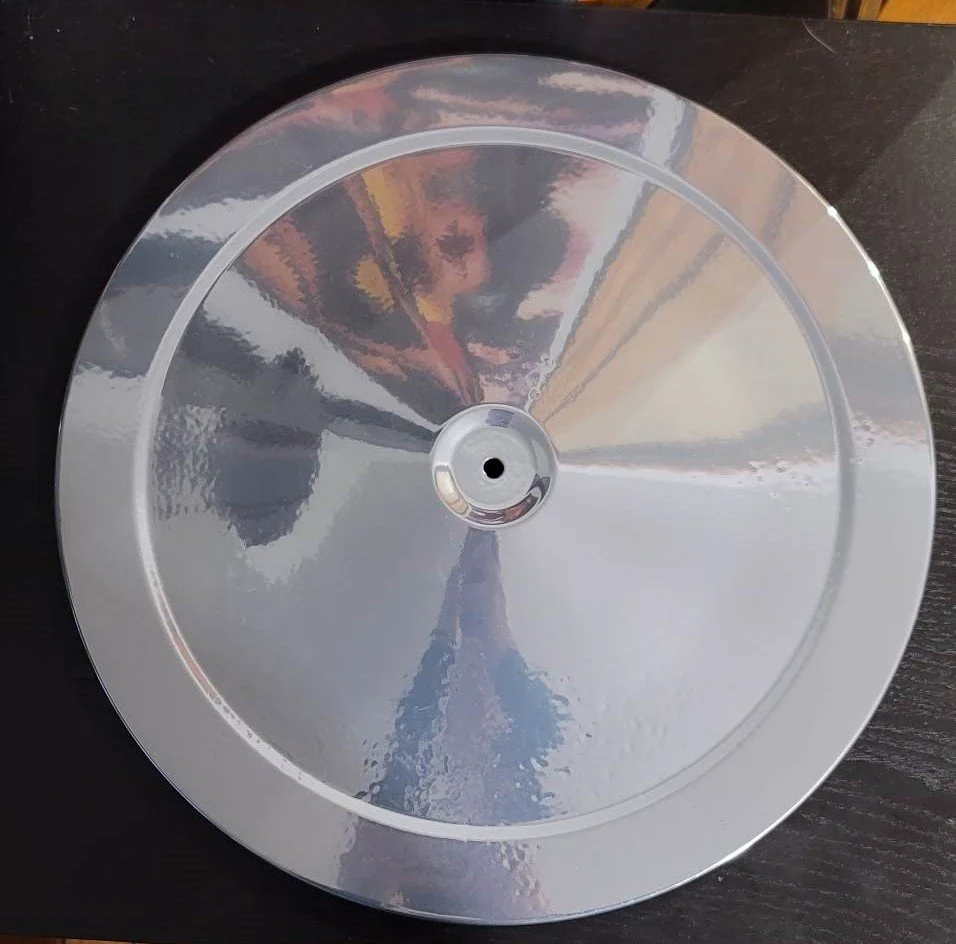
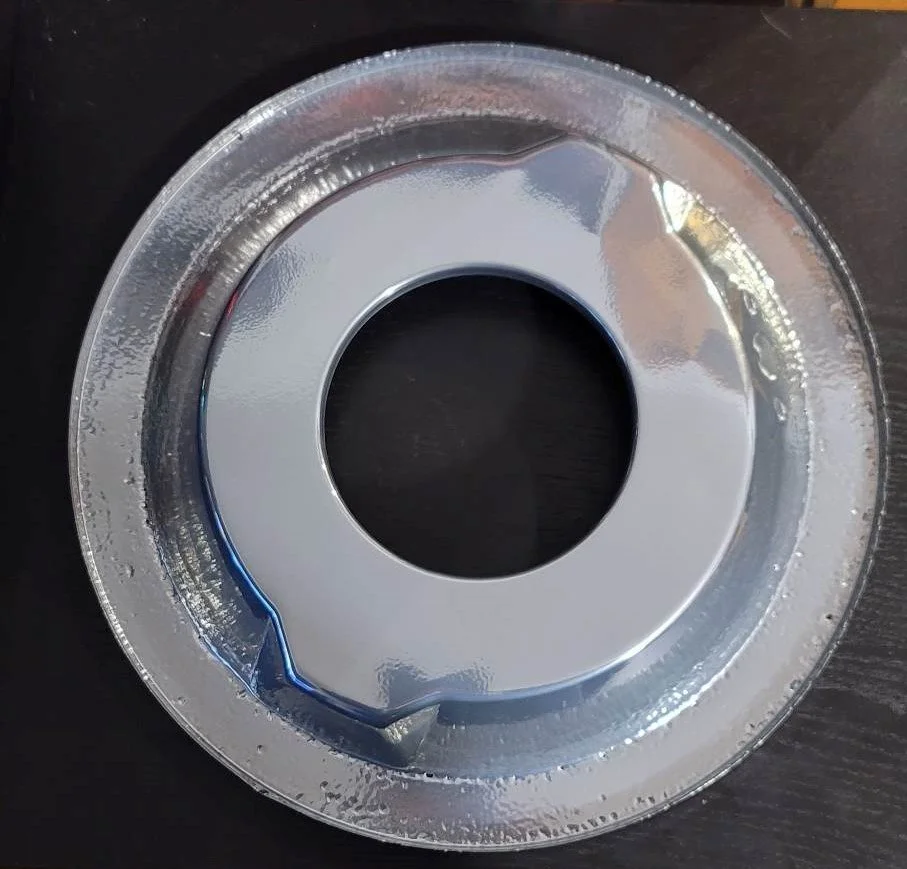
The “Git Kit” Open Element Filter Was Nothing Too Crazy. Seen Rusty And True On 1982-#66, It Did Its Job For The Time. To Date, I have Yet To See A “MR” Nose Badge On The Filter Lid. The 2nd, And 3rd Pictures Are From The Much Later 1985 MR Parts Catalog. Mecham Part Number 0021. The Last Pictures Are Of A Restored Intake Off 1982-#40R.
The “Git Kit” Champion Spark Plugs
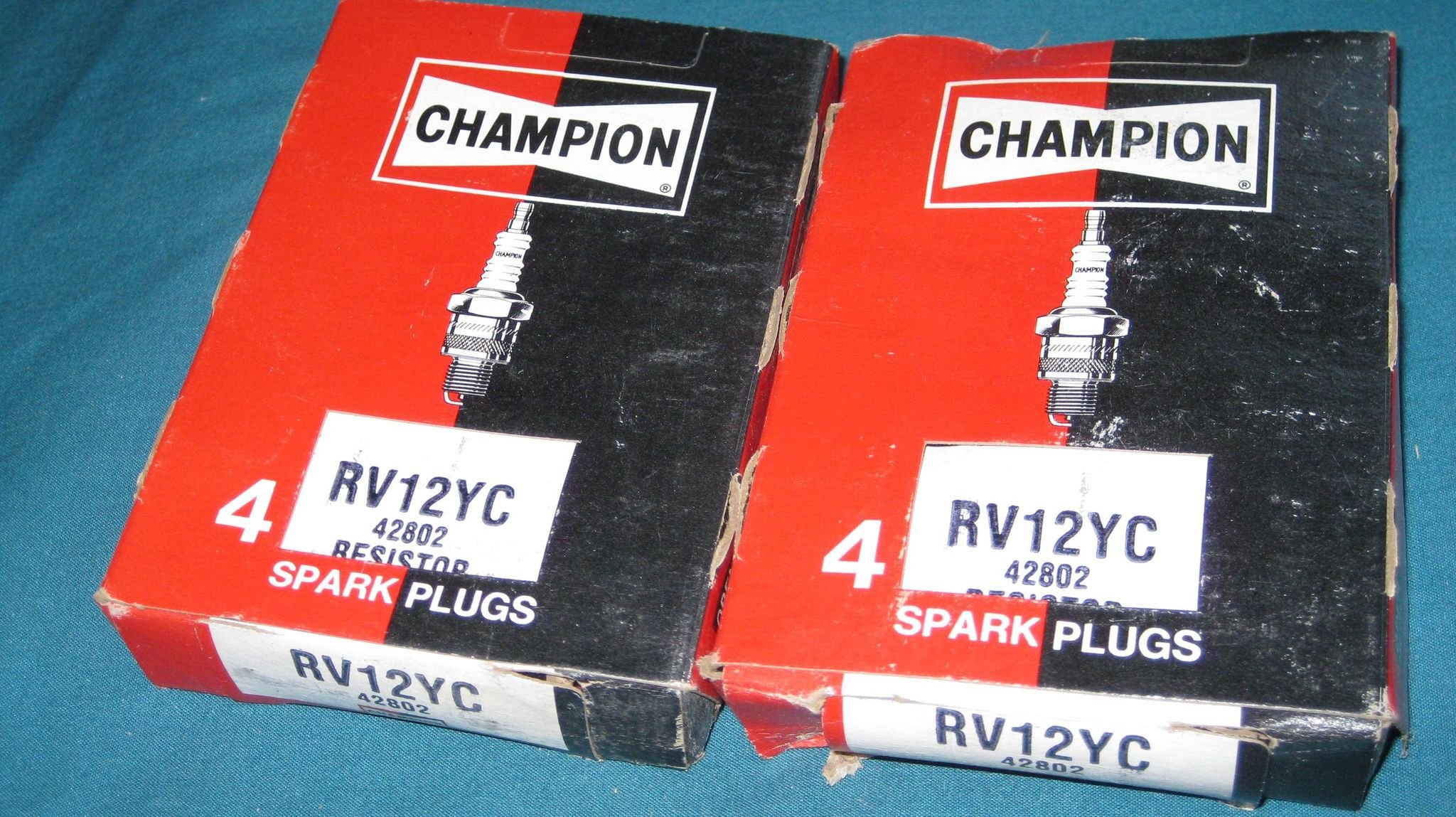
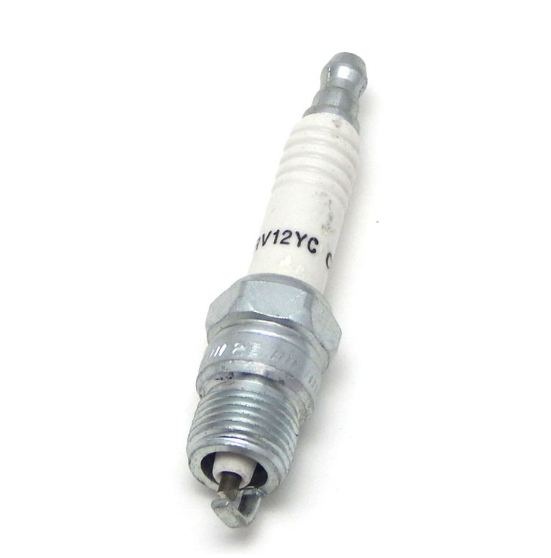
The “Git Kit” Spark Plugs Are Still Available Today. They Are “Champion 406 RV12YC Spark Plugs”. In The First Picture You Can See A Vintage NOS Pack Of Them. Copper Plugs, Pretty Standard Stuff.
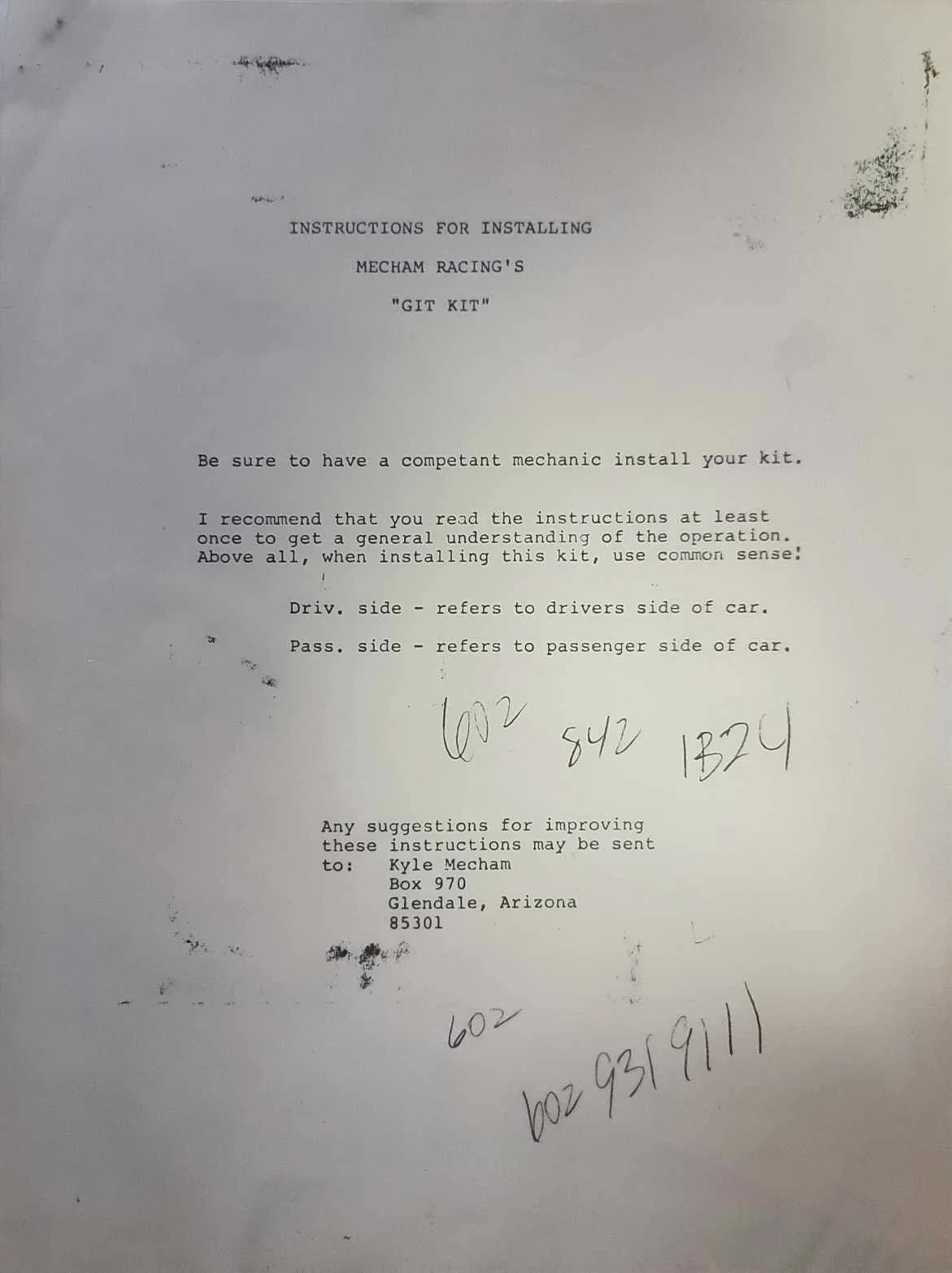
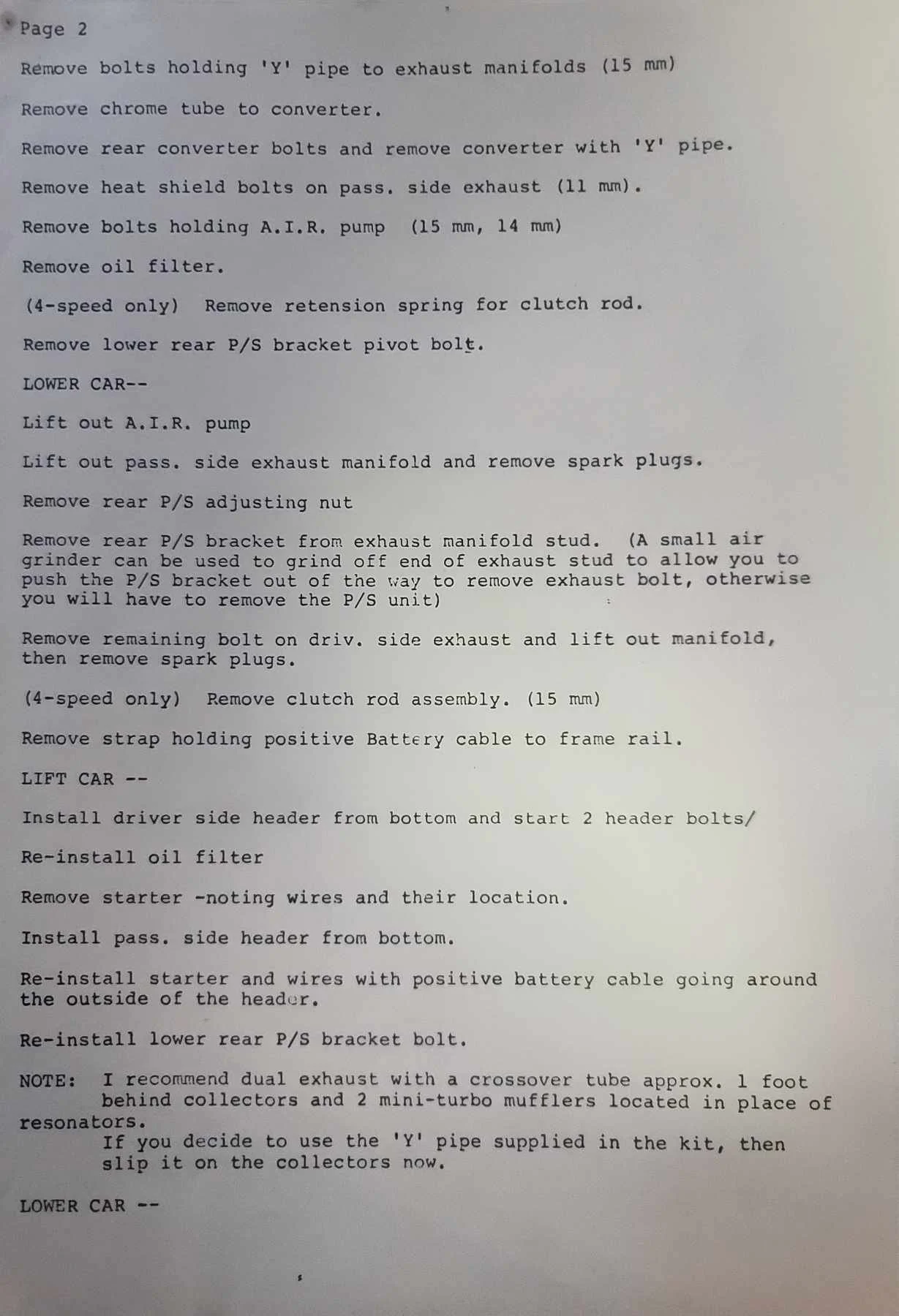
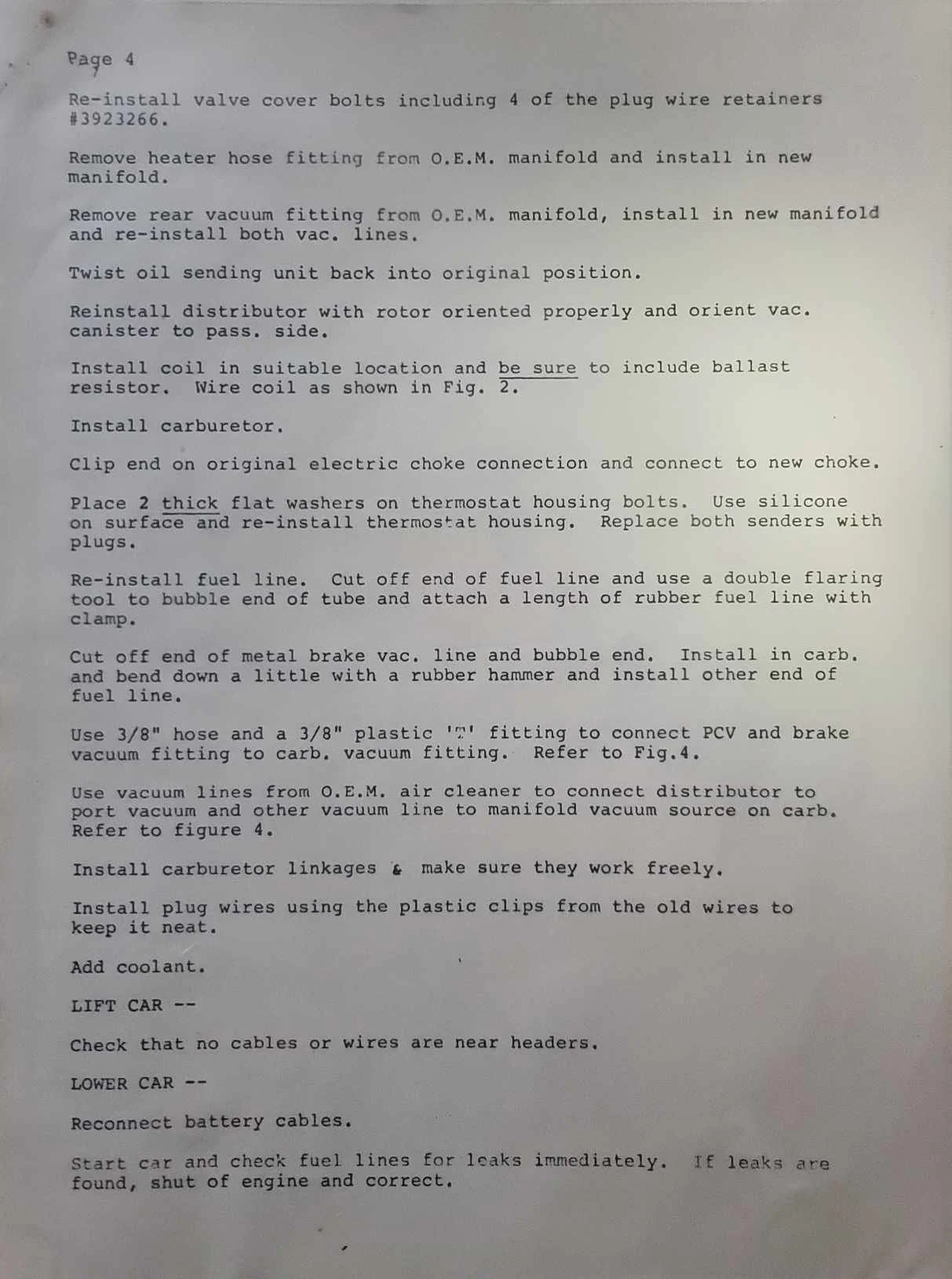
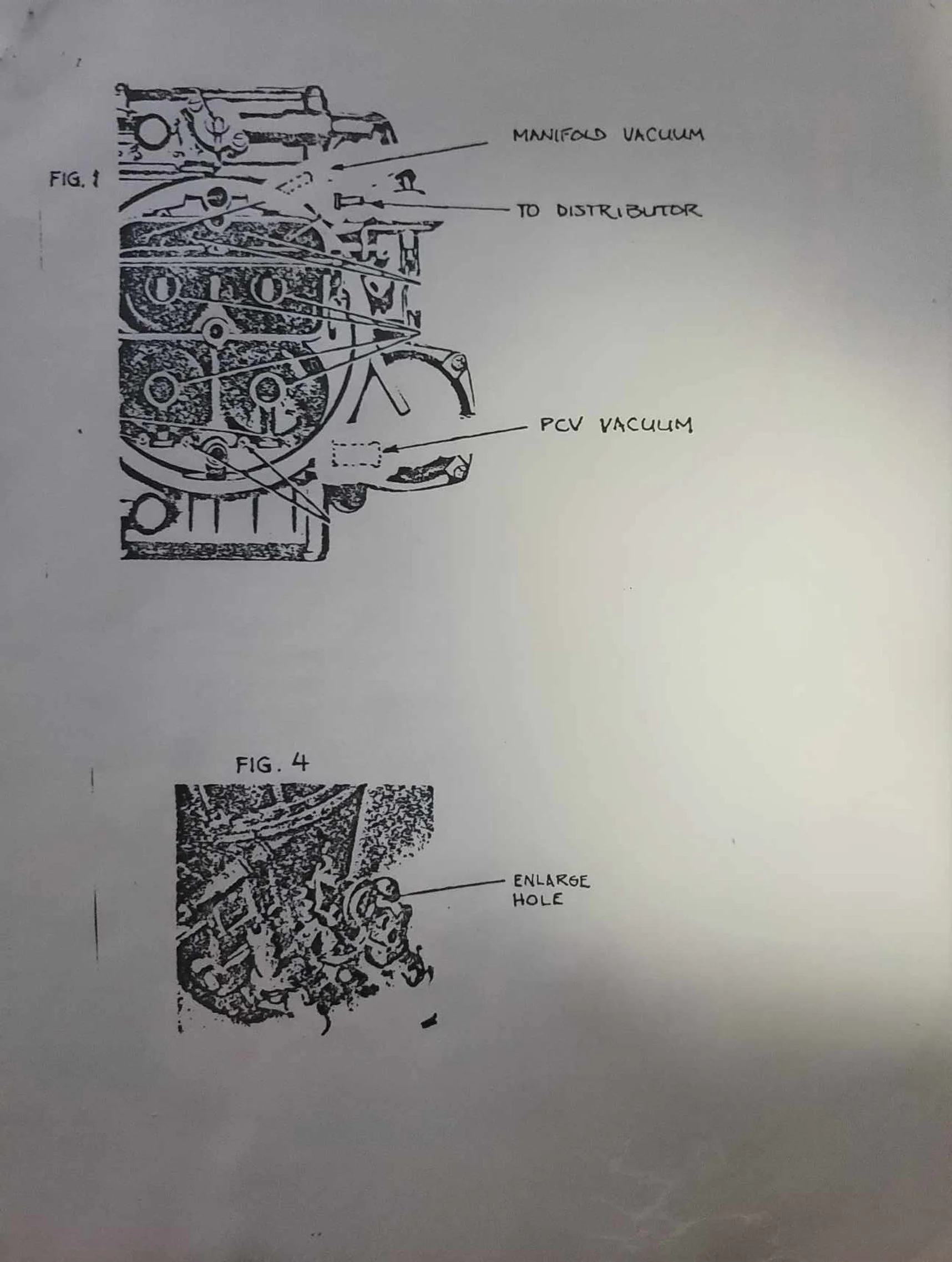
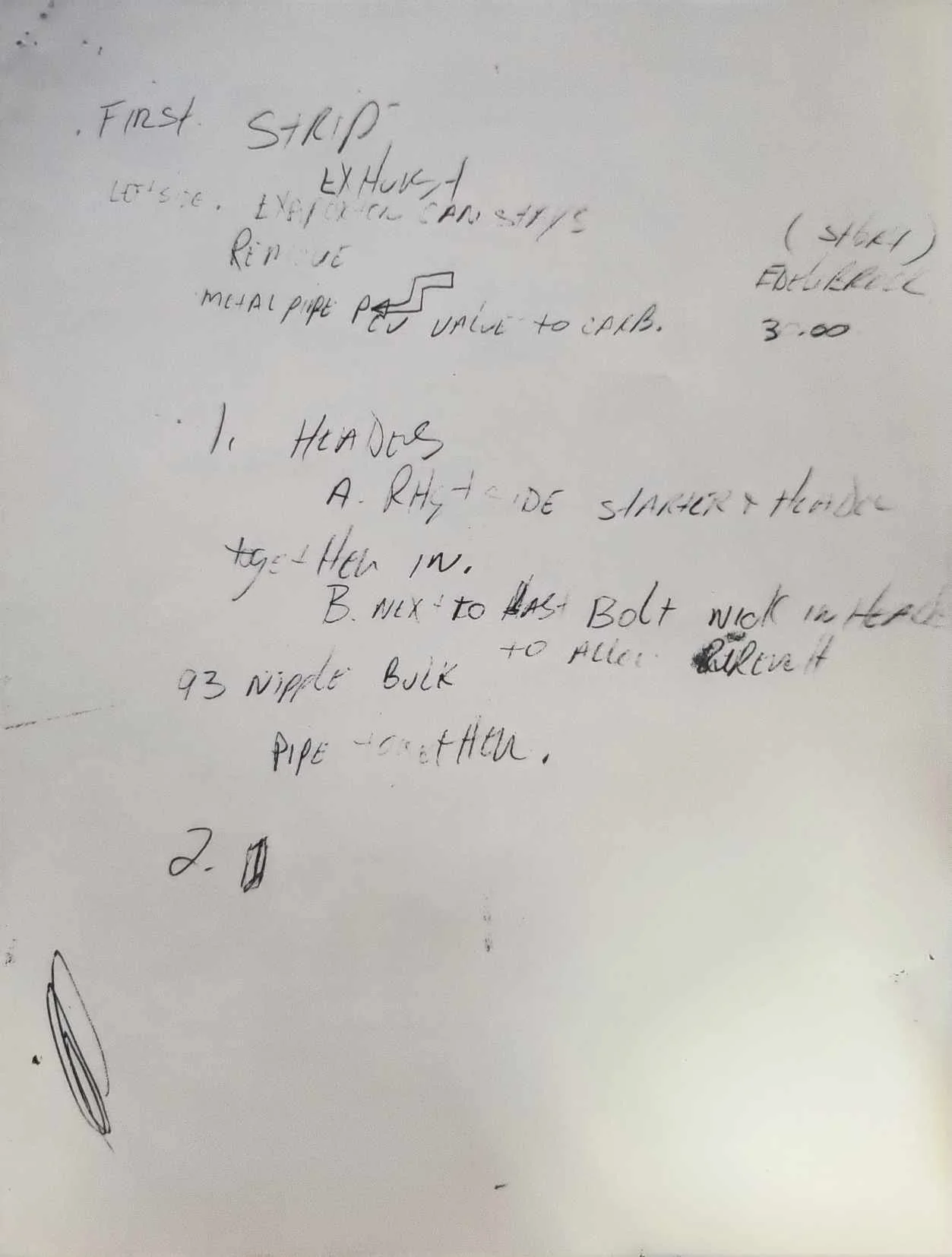
Original Git Kit Install Instructions
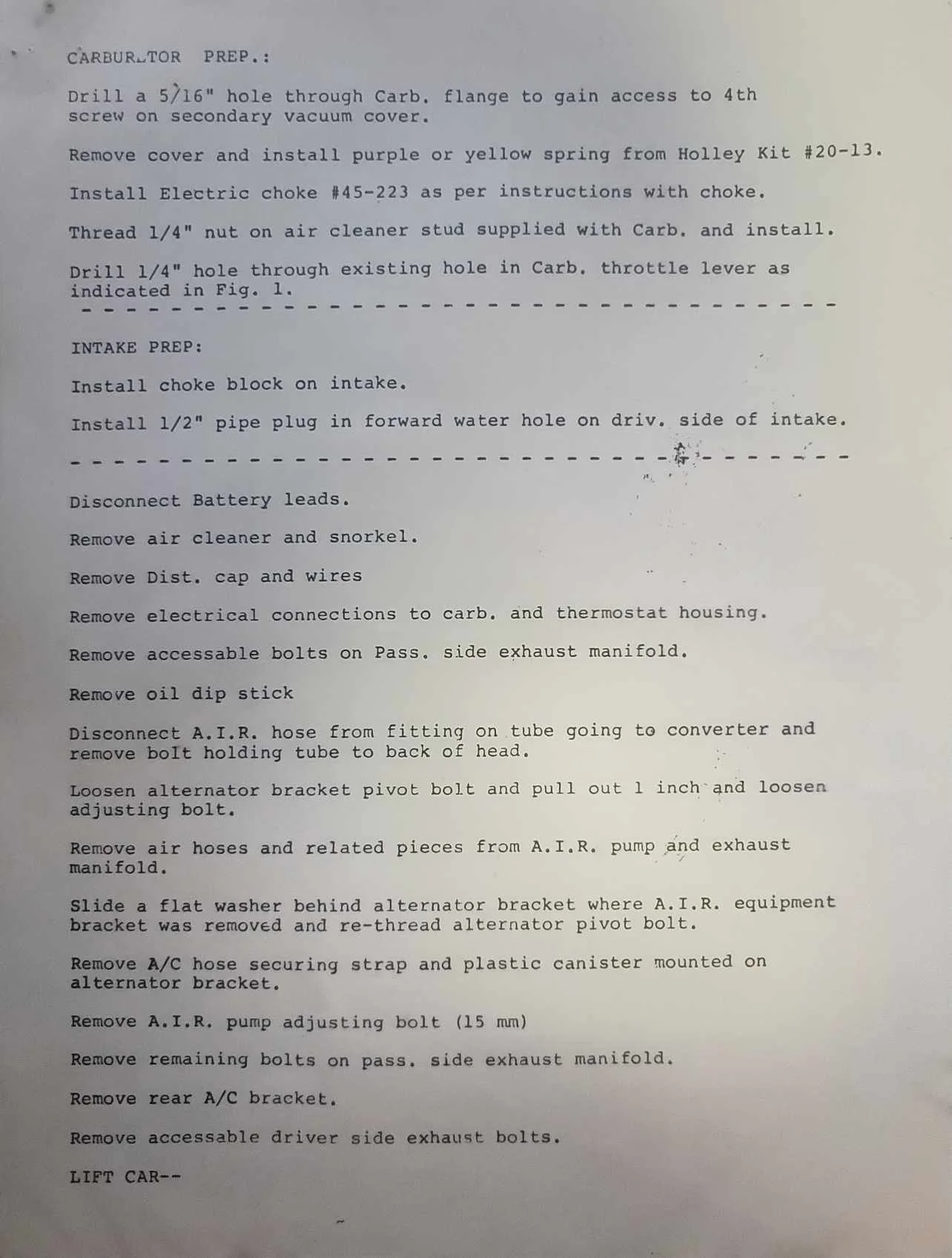
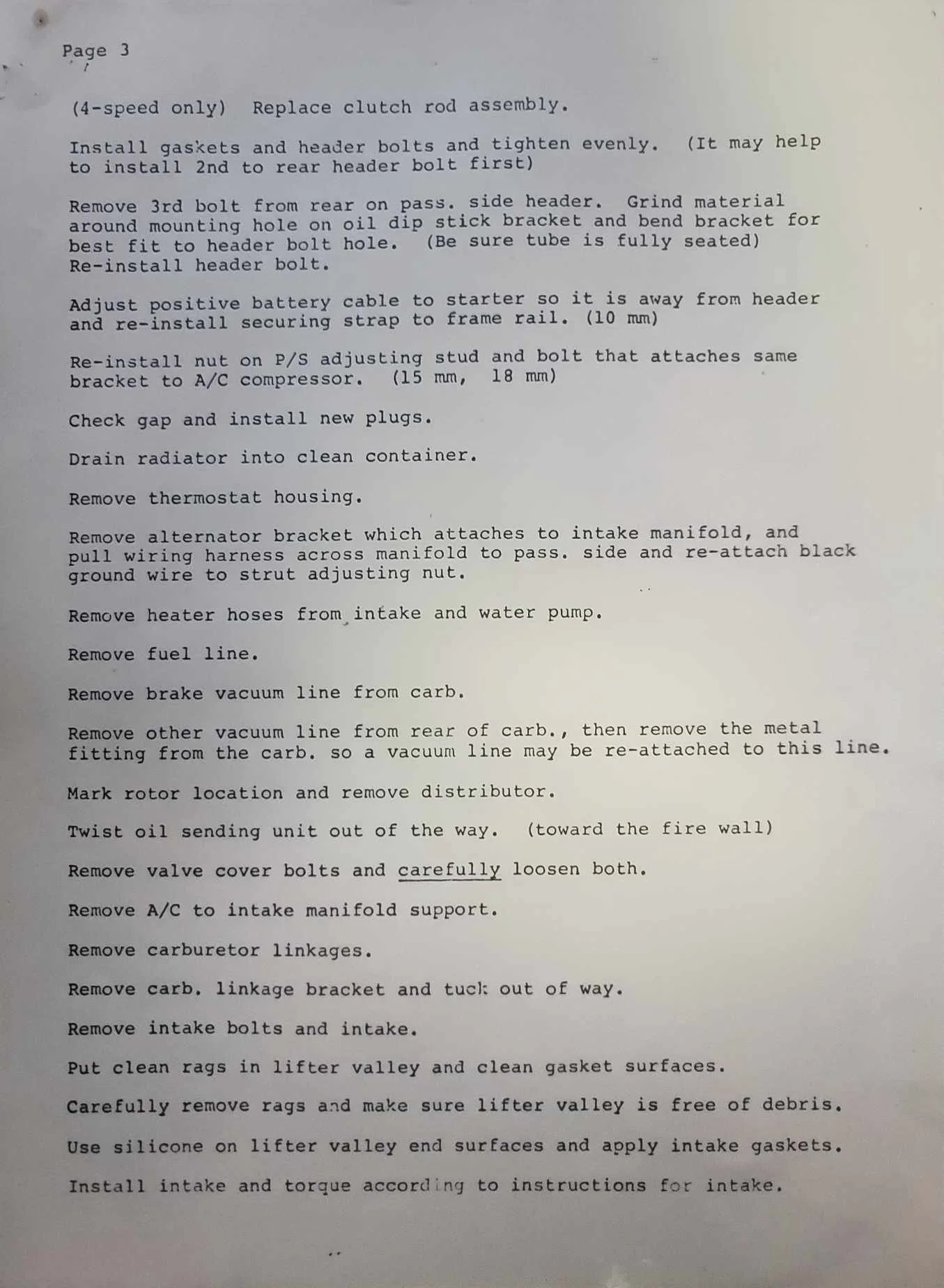
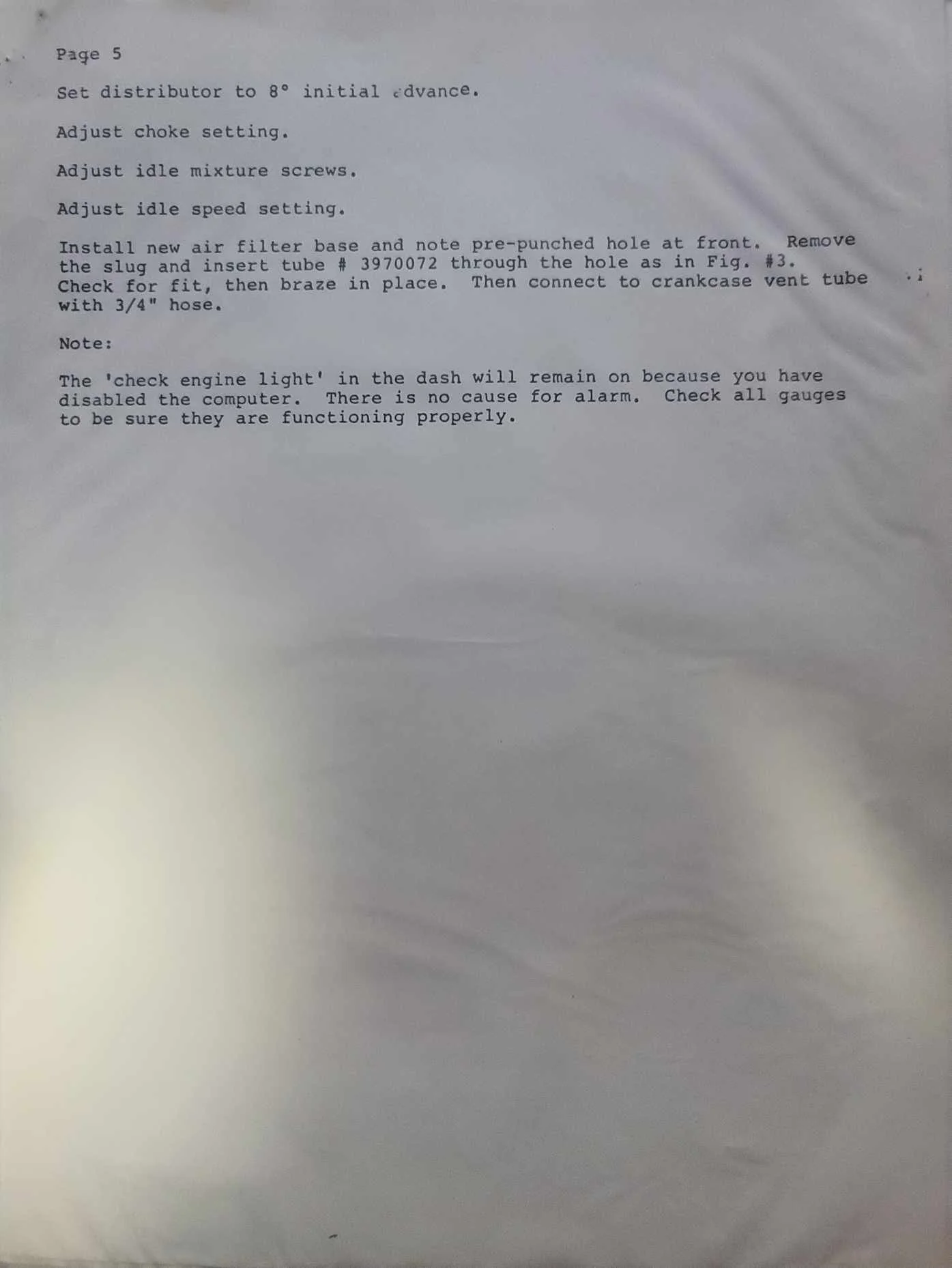
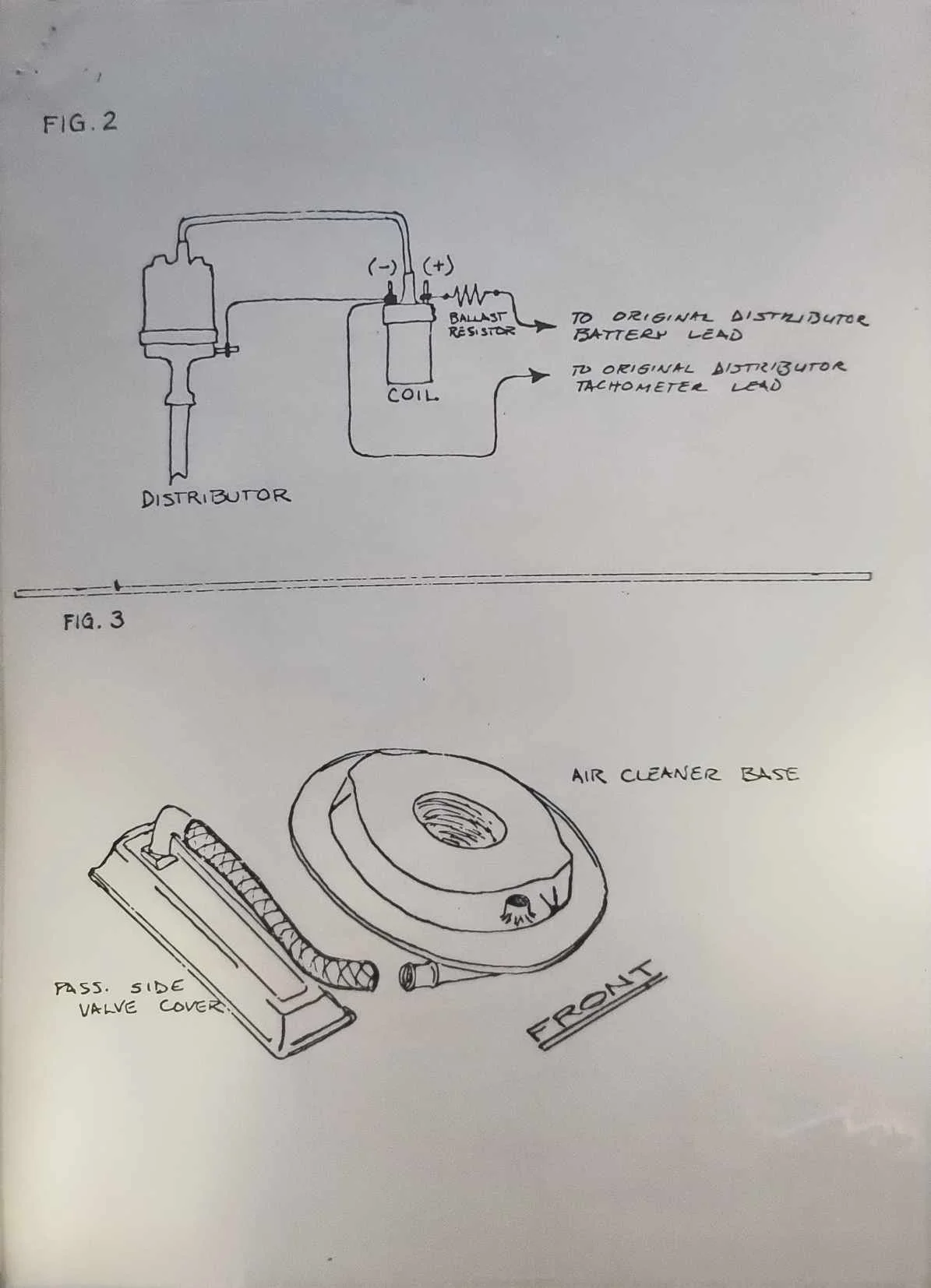
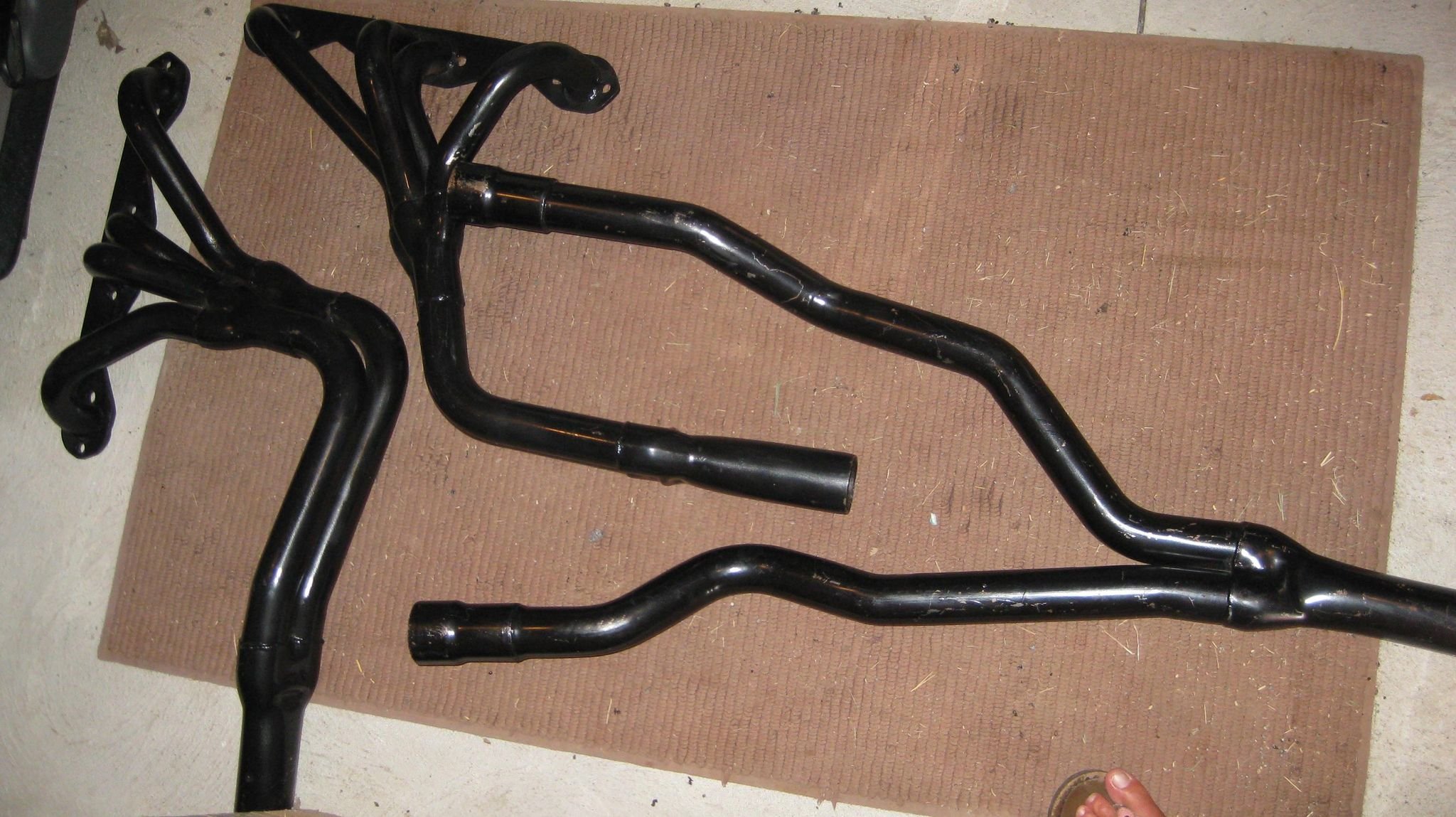
The “Git Kit” Tri-Y Headers, And Y Pipe
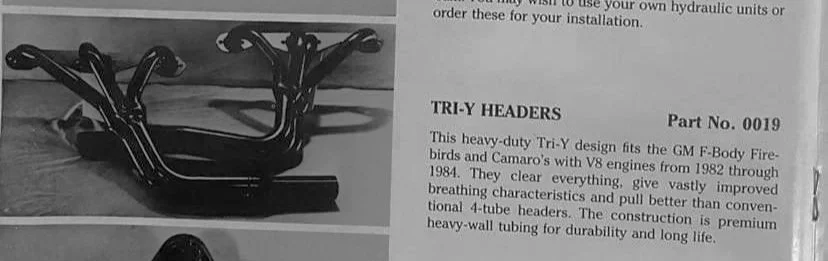
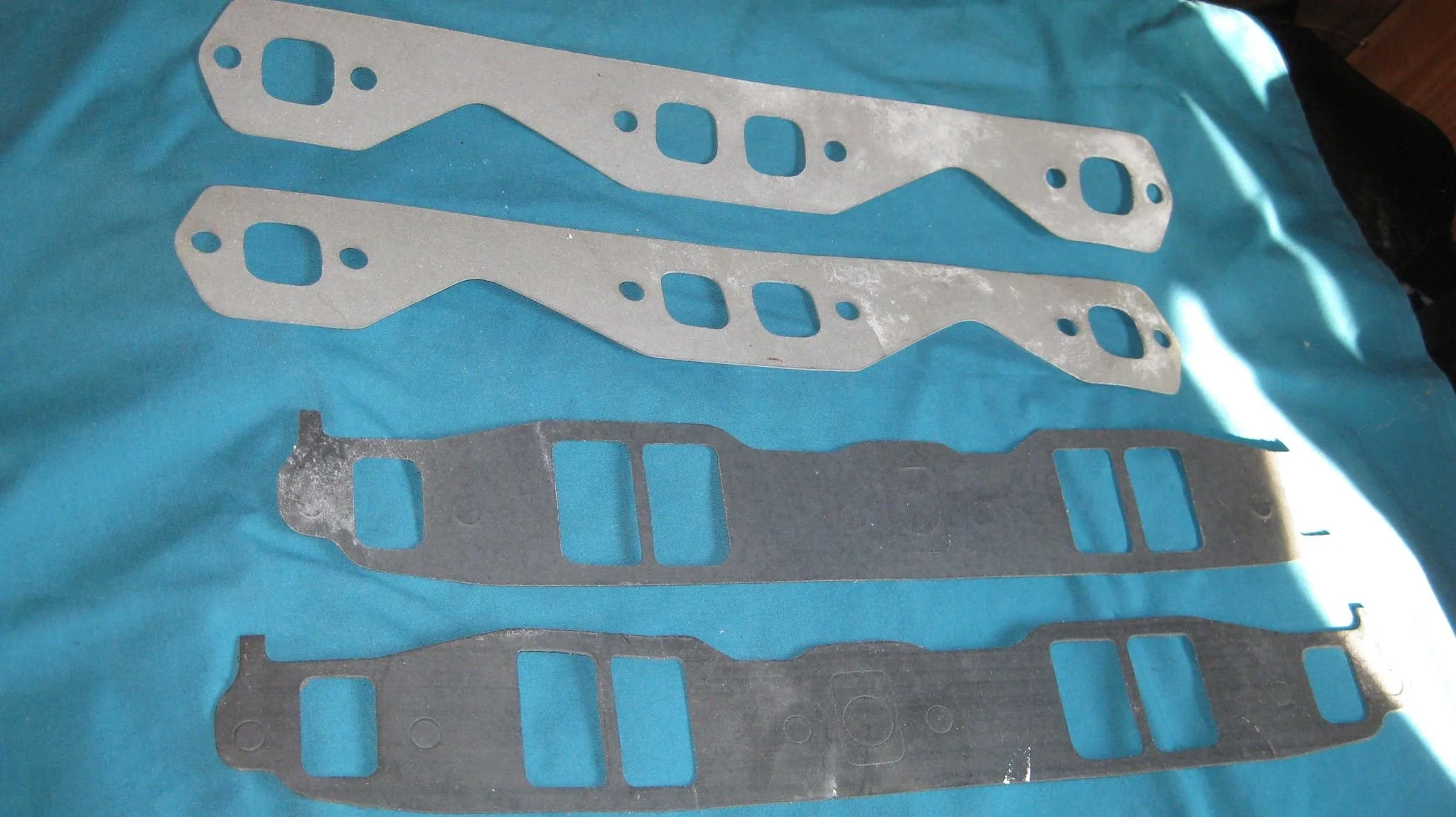
Here We Have The “Git Kit’ Tri-y Headers. These Came In 2 Styles. Y-Pipe (Git Kit Level #1), And Duel Exhaust (Git Kit Level #2). Mecham Racing Part Number #0019. Below Is A NOS Set With Gaskets Pictured As Well.
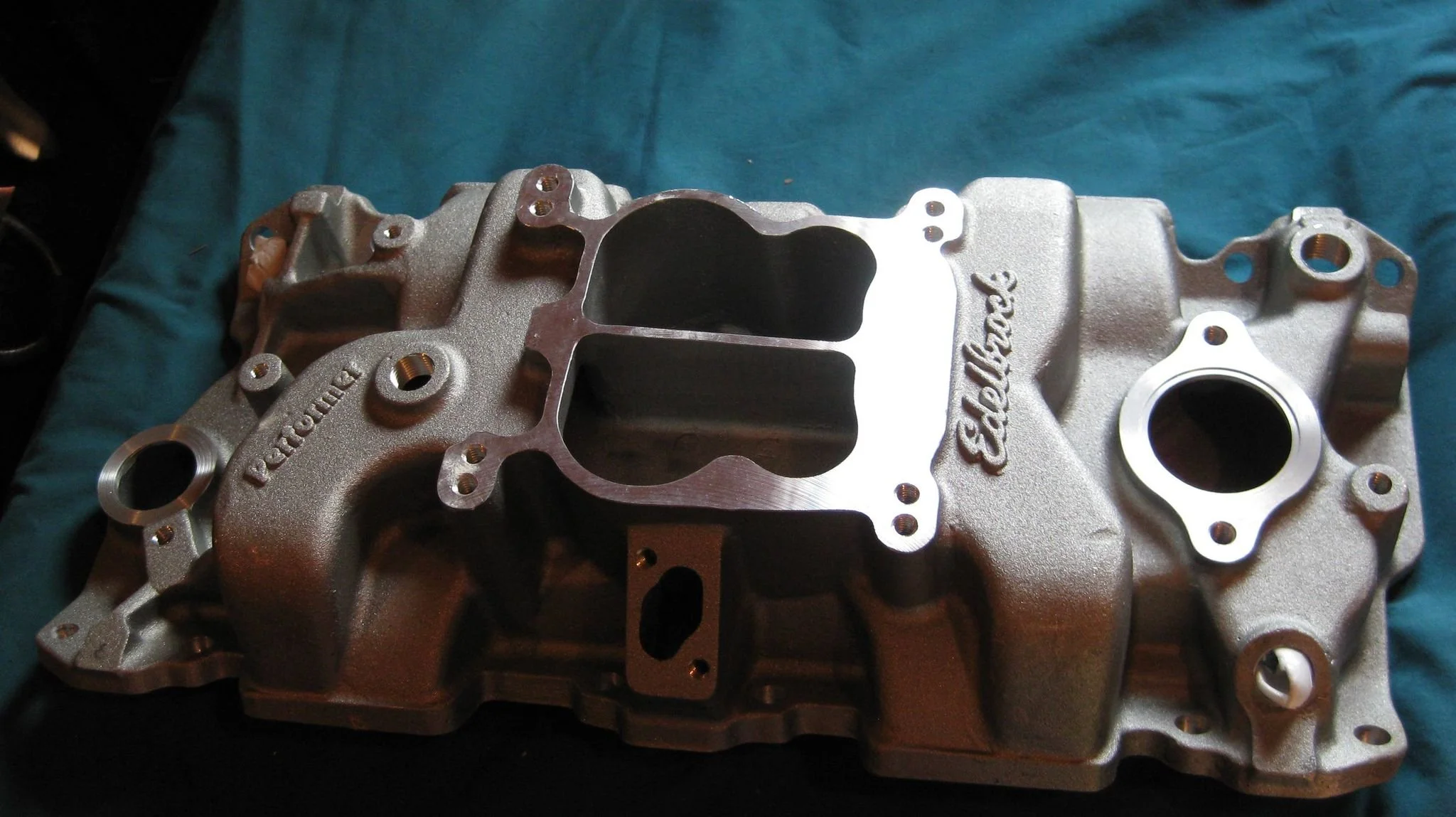
The “Git Kit” Edelbrock Intake Manifold
The “Git Kit” Intake Manifold Was A Edelbrock Performer 2101. This Intake Manifold Is Still Largely Available Today. However, Notice The Proper Markings, And Intake Design As Later 2101s Have Slight Differences. You Can Find These For Roughly $100 Used Today. No Mecham Racing Part Number Currently Available>
The “Git Kit” Ignition System
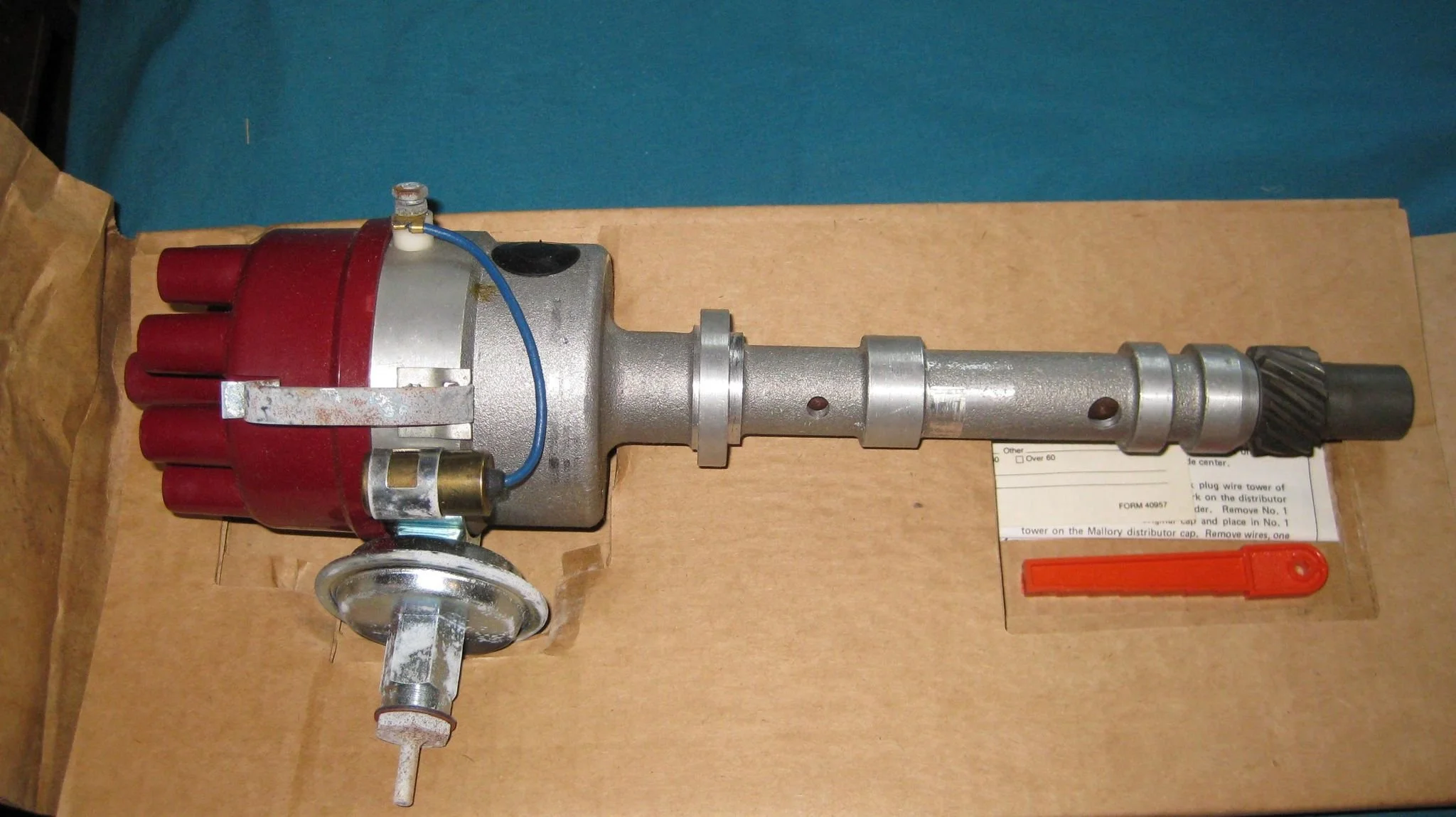
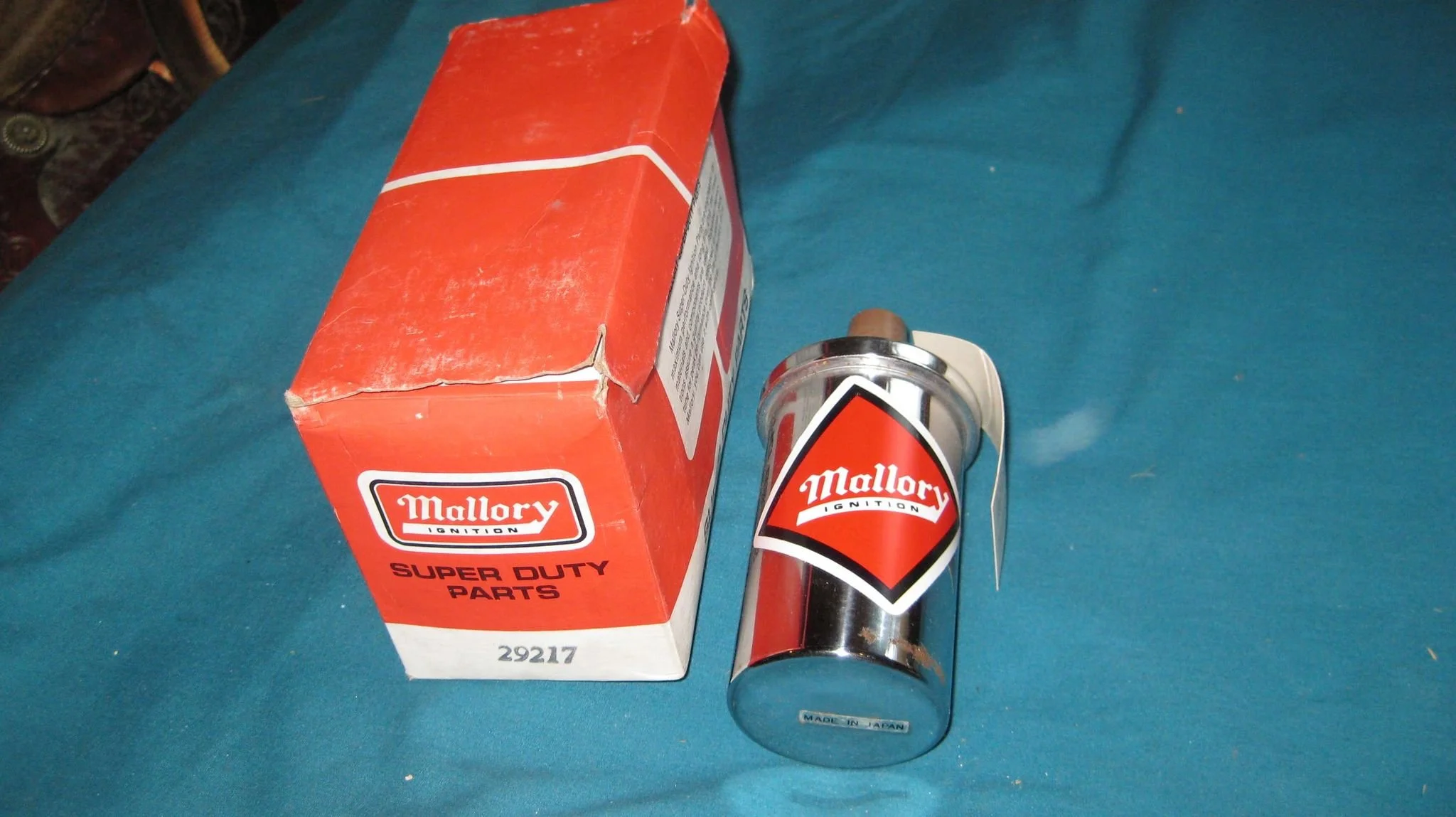
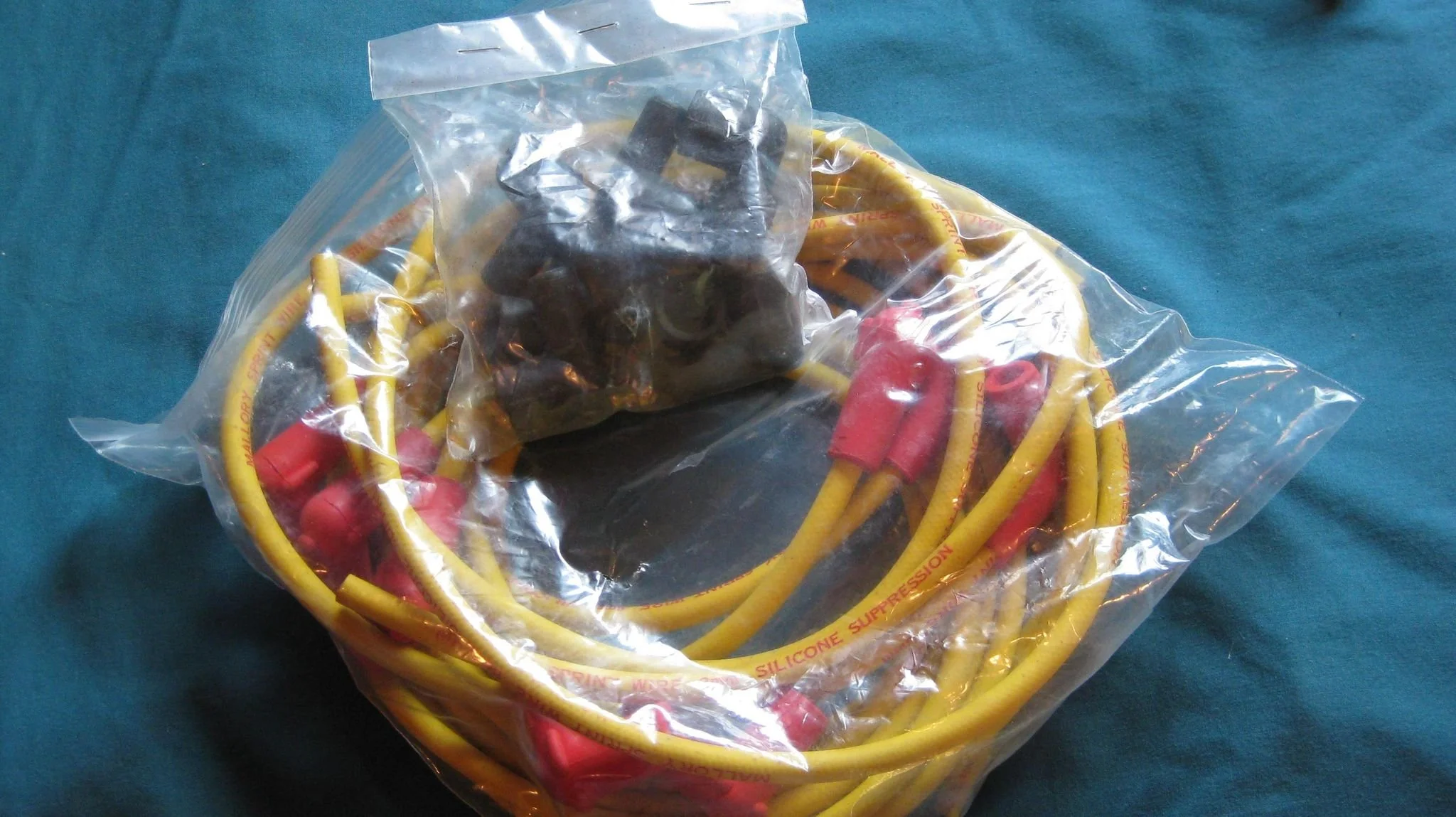
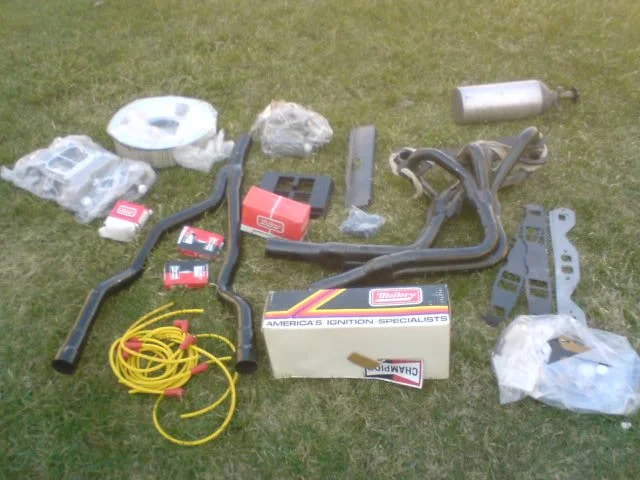
The “Git Kit” Ignition System Was A Complete Change From The OEM HEI Distributor System. The Stock Distributor Was Replaced With A Mallory Distributor. The Coil Was Also Replaced With Mallory Ignition Coil. As Previously Stated, The Git Kit Cars Received Champion Spark Plugs. They Were Mated To A Set Of 8MM Mallory Spark Plug Wires.
New Old Stock Examples Can Be Seen On The Left. No Mecham Racing Part Numbers Are Available.
The Plug Wires Are No Longer Available. However Accel Makes A Close Set.
The Mallory 29217 Coil Is No Longer Made. However 29219 Is.
The Mallory Distributor Is Also Out Of Production
Proper Interior, And Non-Mentioned/Listed Common Options
1982 Mecham Racing Trans Am Interior Identification
(Goal: Show Variation Between The Cars)
Mecham Racing 170 MPH Speedometer/Tachometer
The 170 MPH Speedometer In 1982 Was A True One Off Piece. Unlike In 1983-1985, Where It Just Was A Decal Inlay. The Last Tack On The Speedometer Is The 170 Mark. Mecham Part Number 0031F/C (Firebird/Camaro). One Way To Also Tell A 1982 Speedometer Apart From 1983-1985 Is The 7-Digit Odometer
The MR Tachometer, As In Regards To The 1982 Model, I Cannot Verify As A One Off Piece, As I Have Never Had A Loose Example. Mecham Part Number 0032F/C (Firebird/Camaro)
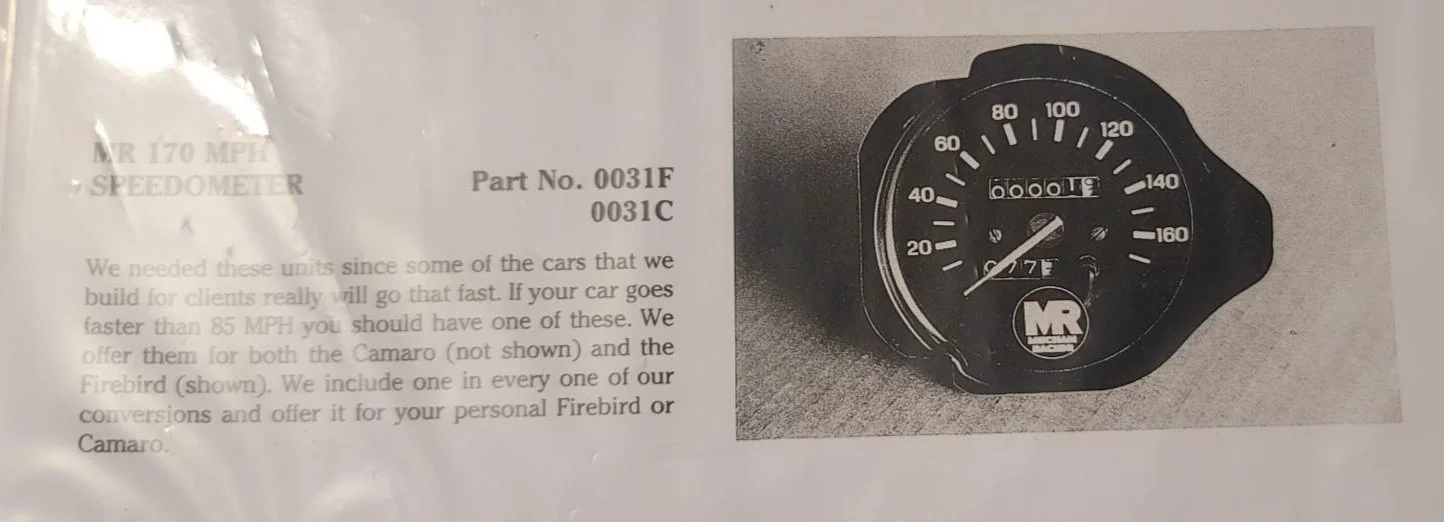
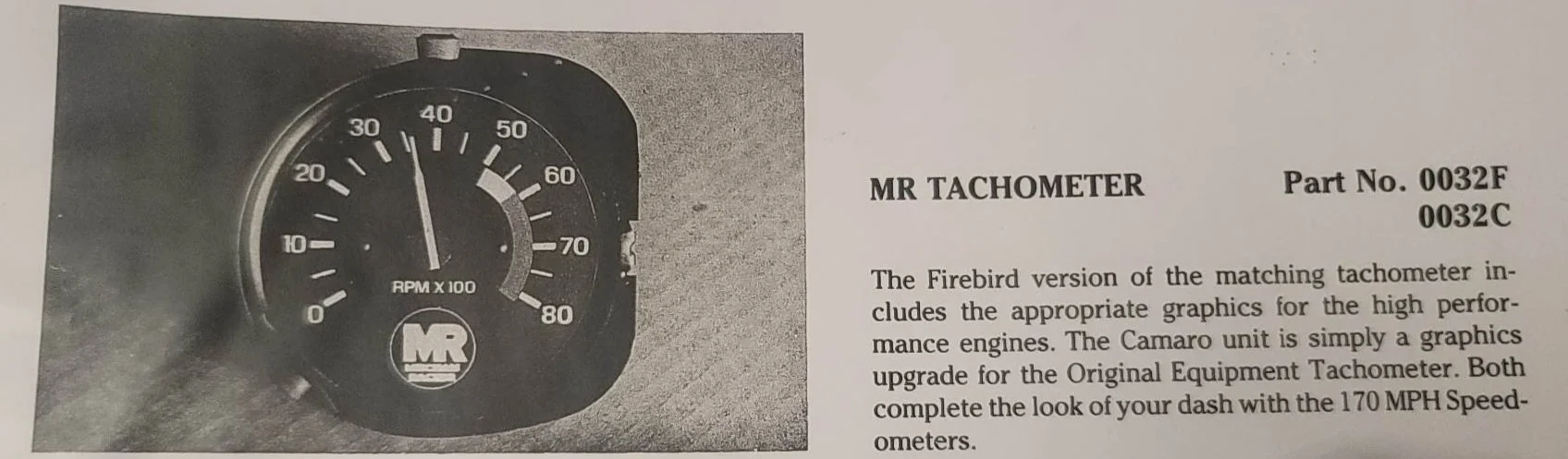
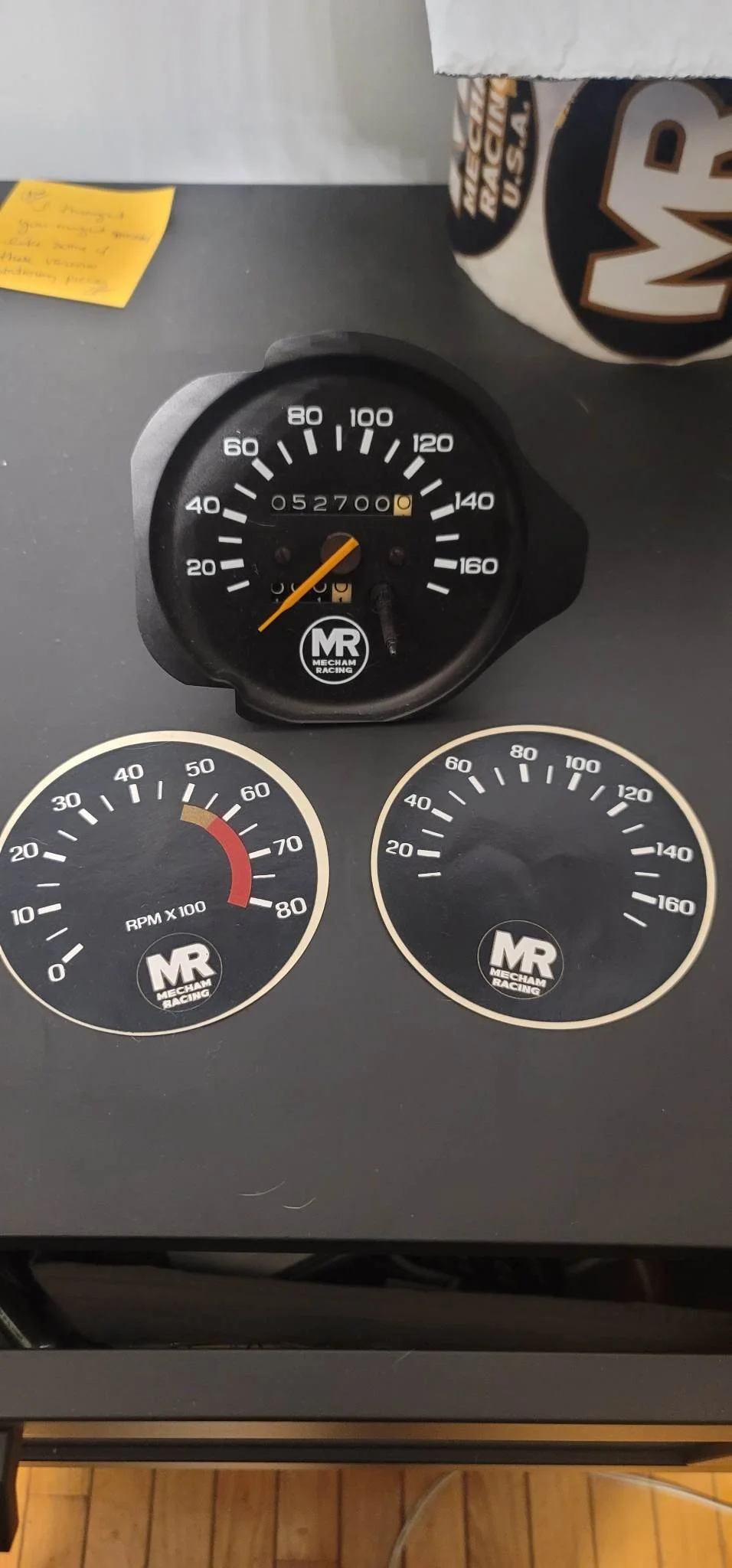
Here You Can See A Rebuilt 1982 Speedometer, Next To Some NOS MSE Inlays.
NOT Every MSE Had These.
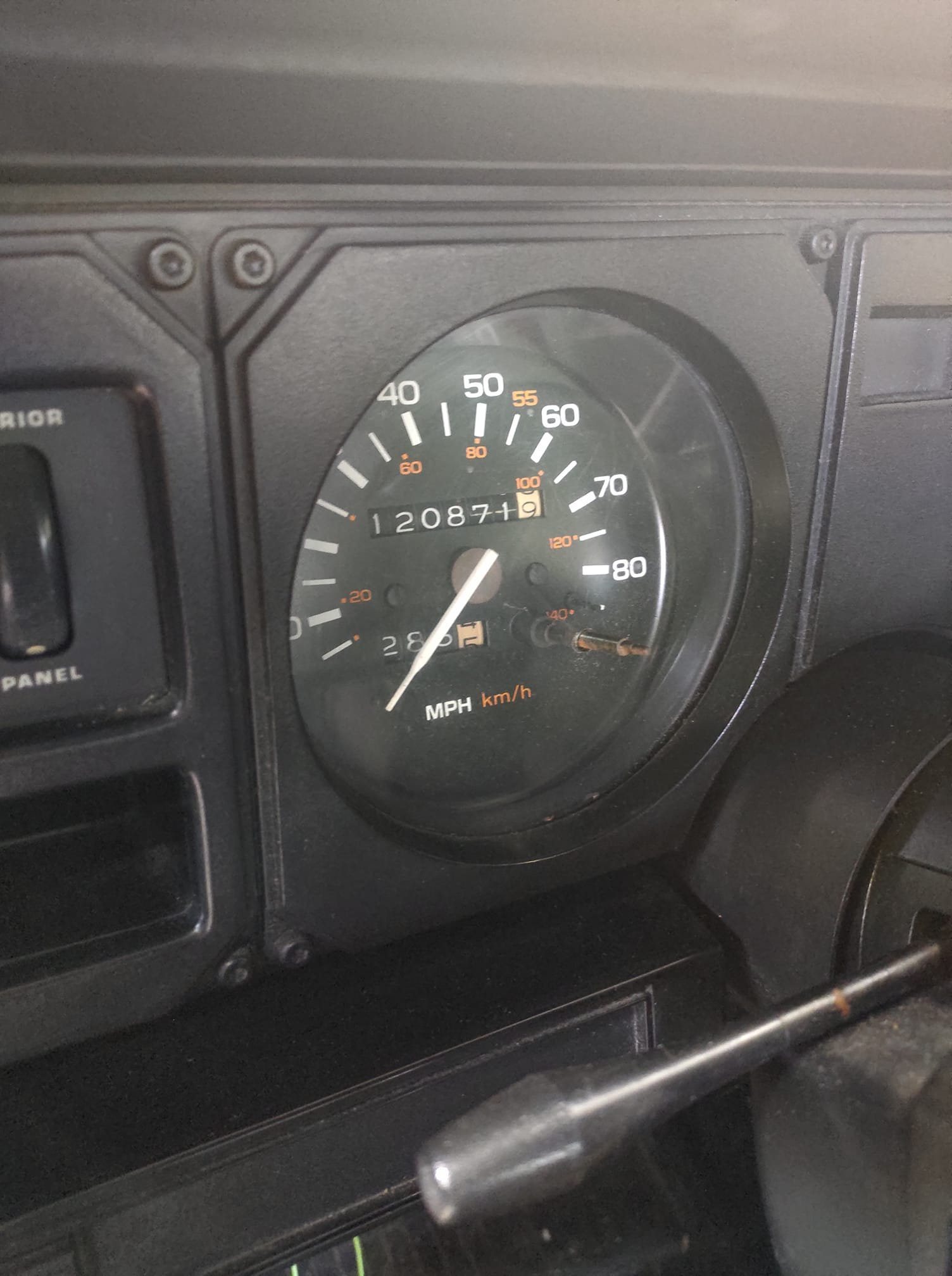
Below You Can See MSE 1982-#95 Without The Mecham Gauges. Also A Close Up Of The Standard 1982 Instrumentation.
Key Feature Shown As Not Being Included From MSE.
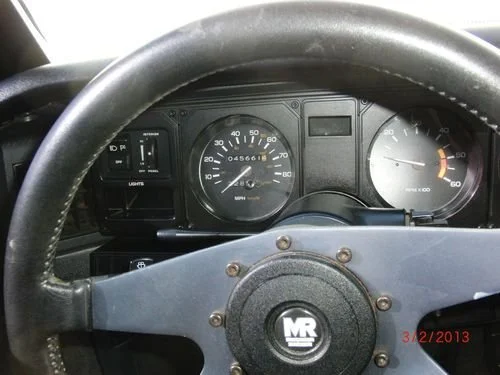
Mecham Racing 4-Spoke Steering Wheel
While Many 4 Spoke Steering Wheels Were Produced Then, And Even Now. The MSE Wheel Was Unique To MSE Production. (Used 1982-1986 Firebird And Camaro MSE Production). Mecham Part Number 0033
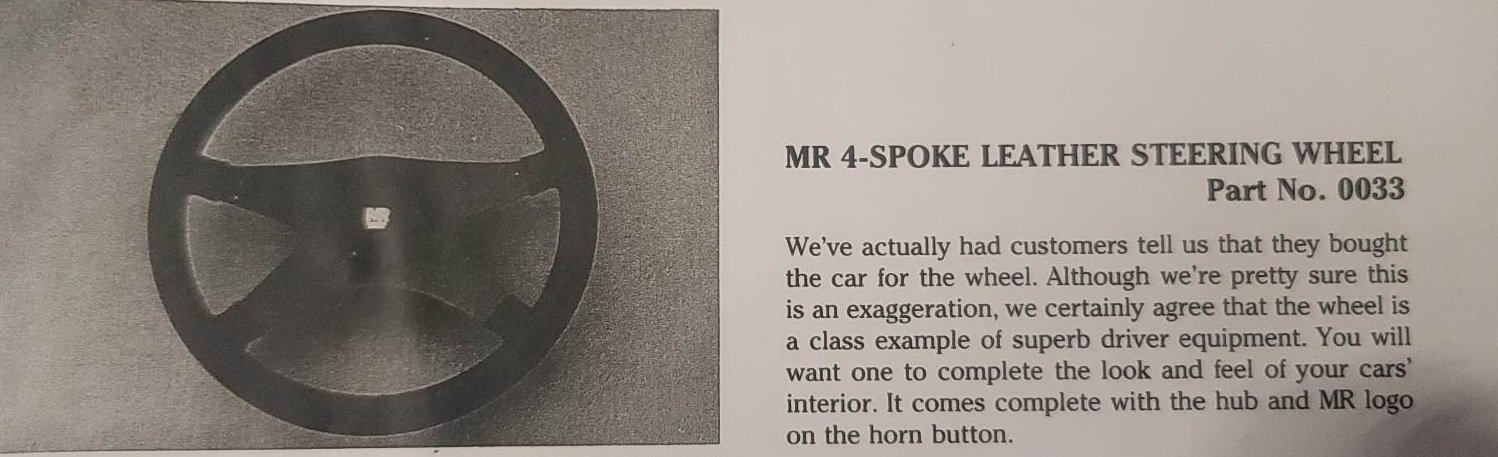
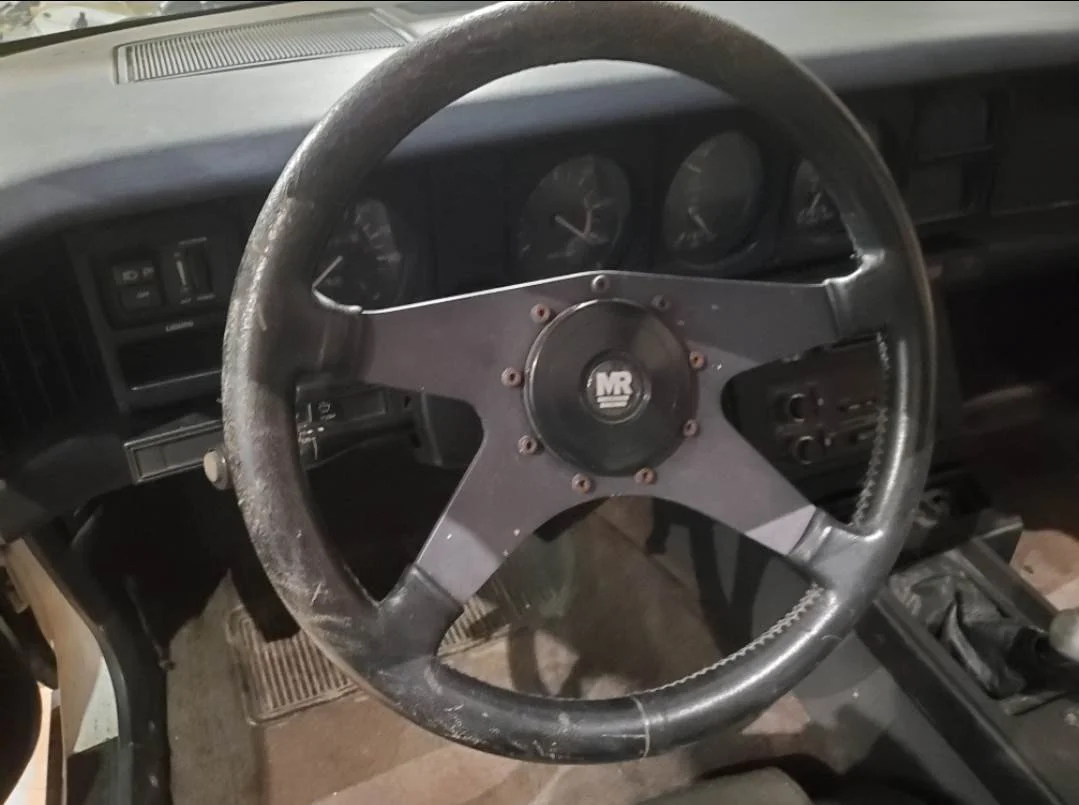
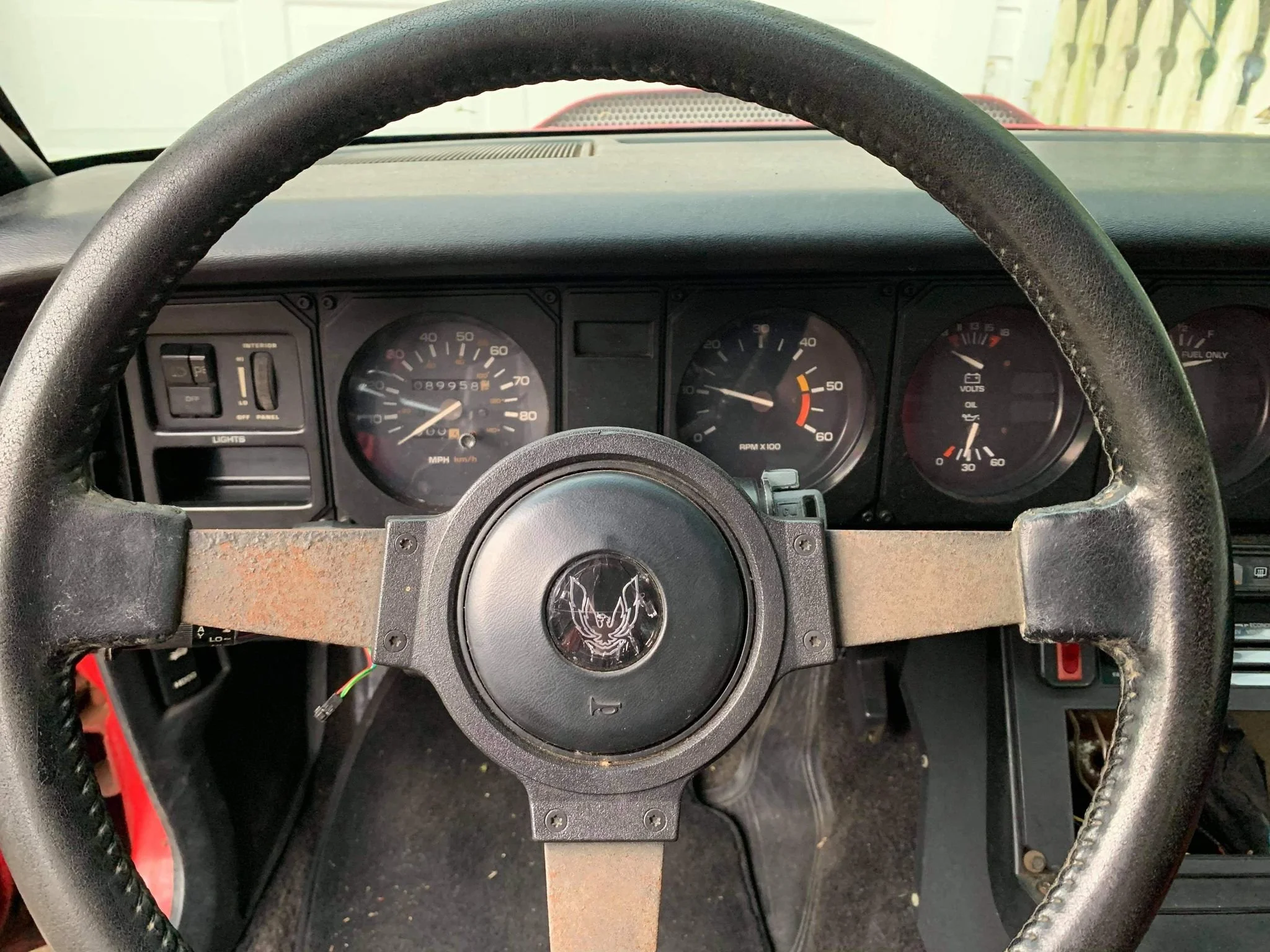
Again, Not Every MSE Car In 1982, Received Every Part Listed In The Mecham Catalog. Here You Can See 1982-#42 (Left), And 1982-#47 (Right).
Key Feature Shown As Not Being Included From MSE.
Motorola Sound System By ARA
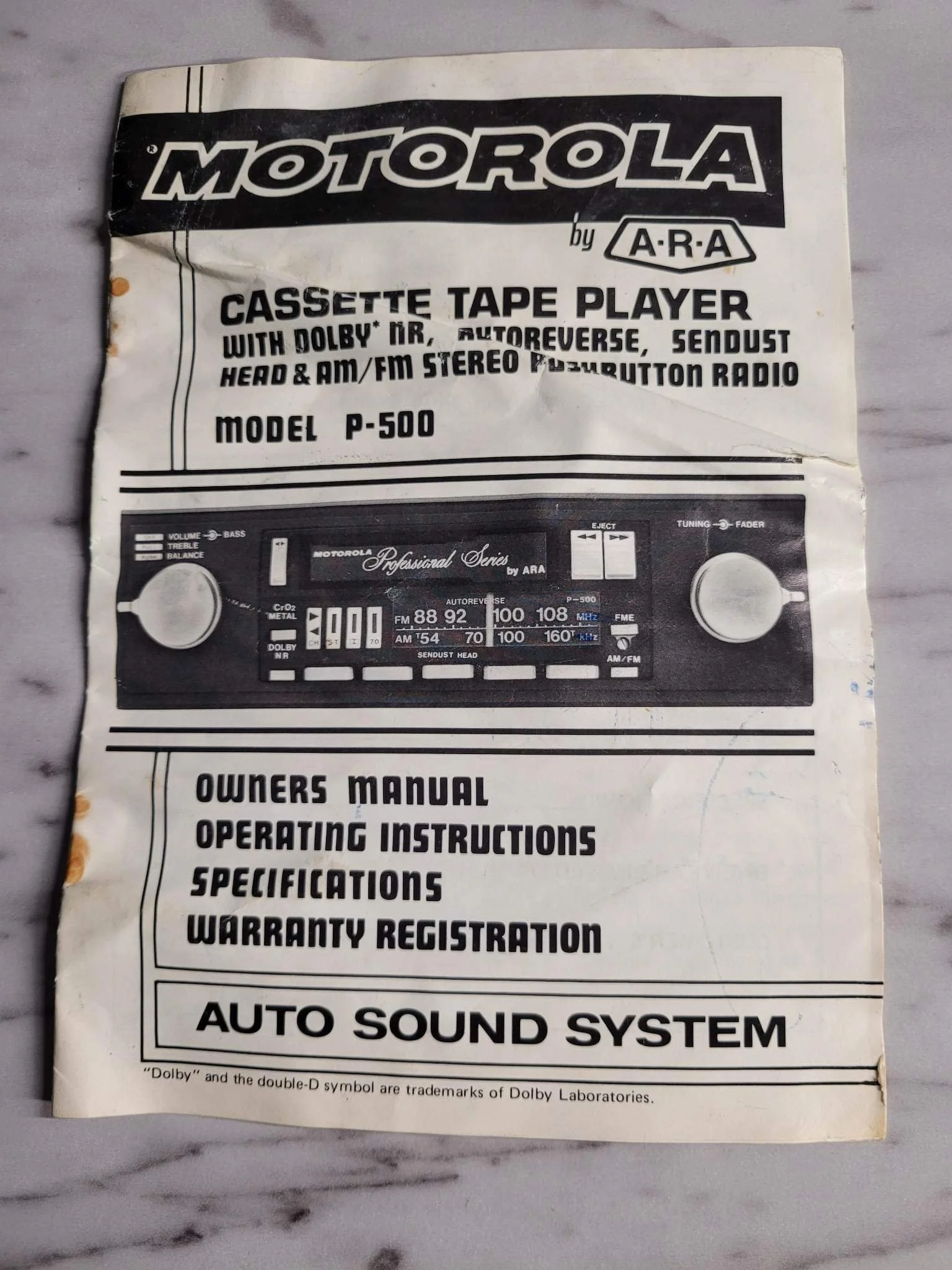
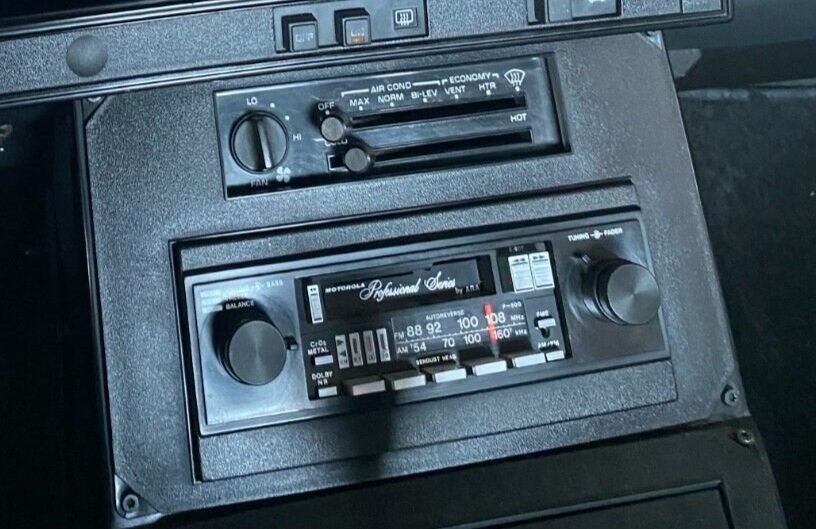
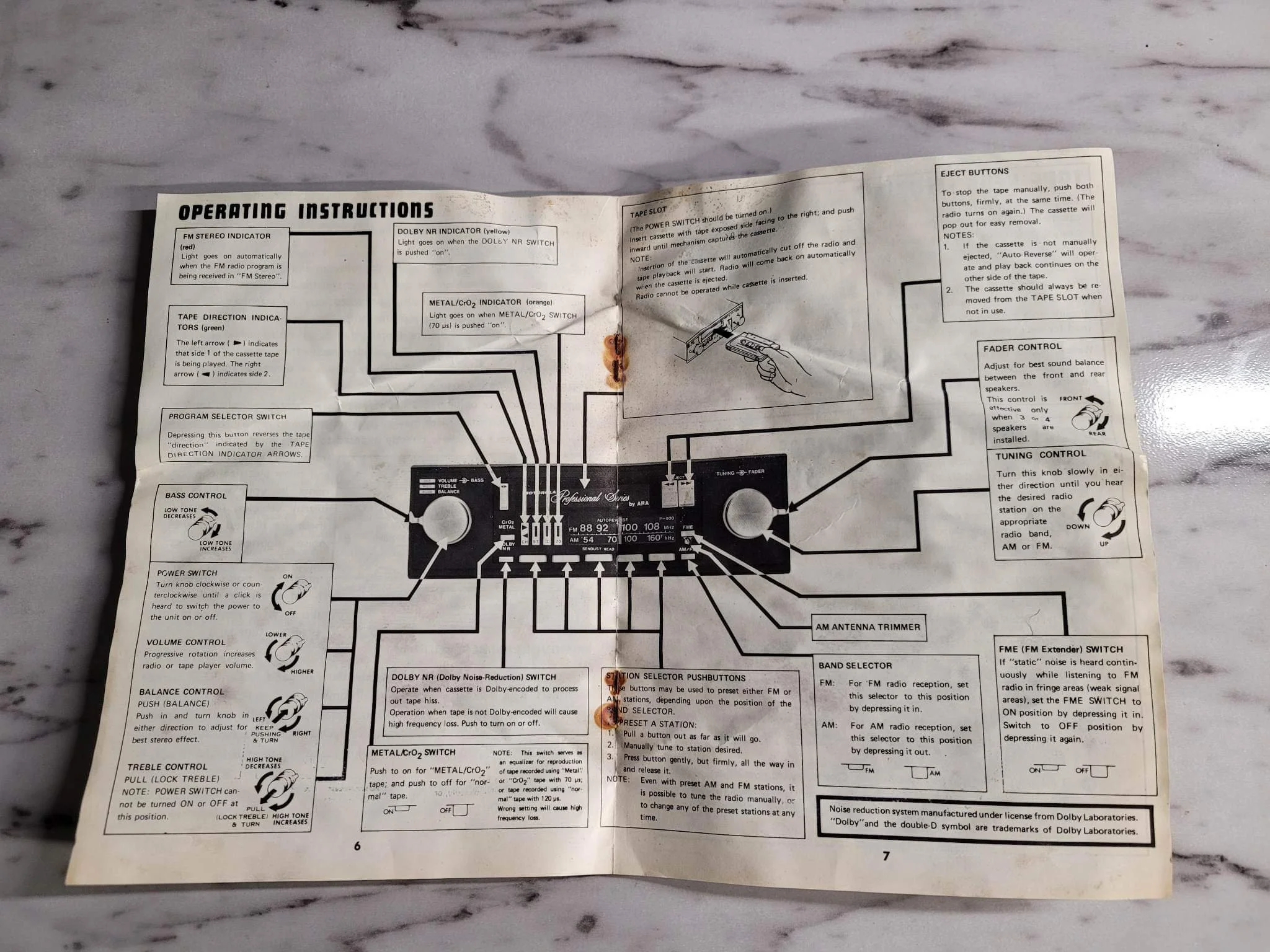
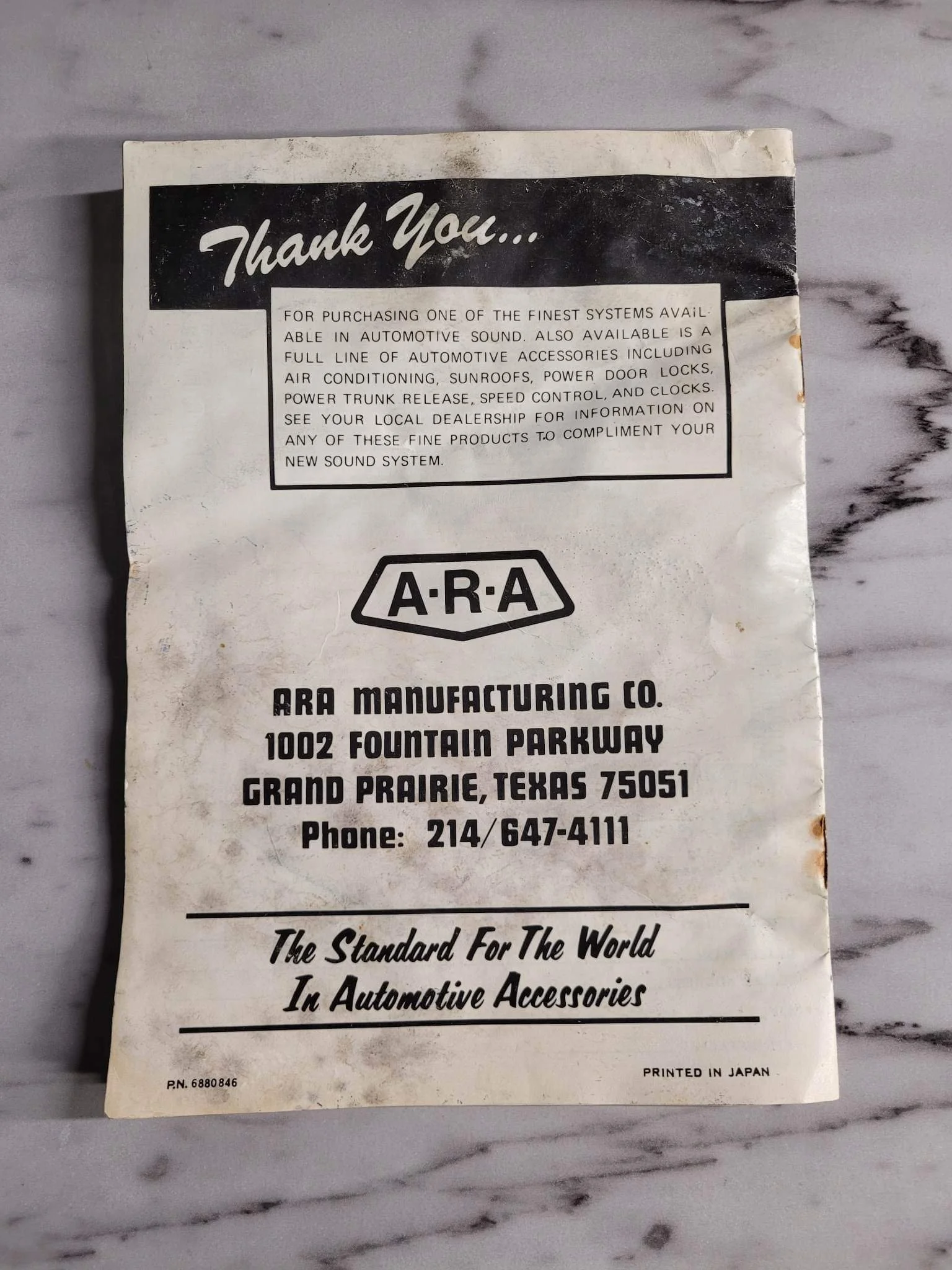
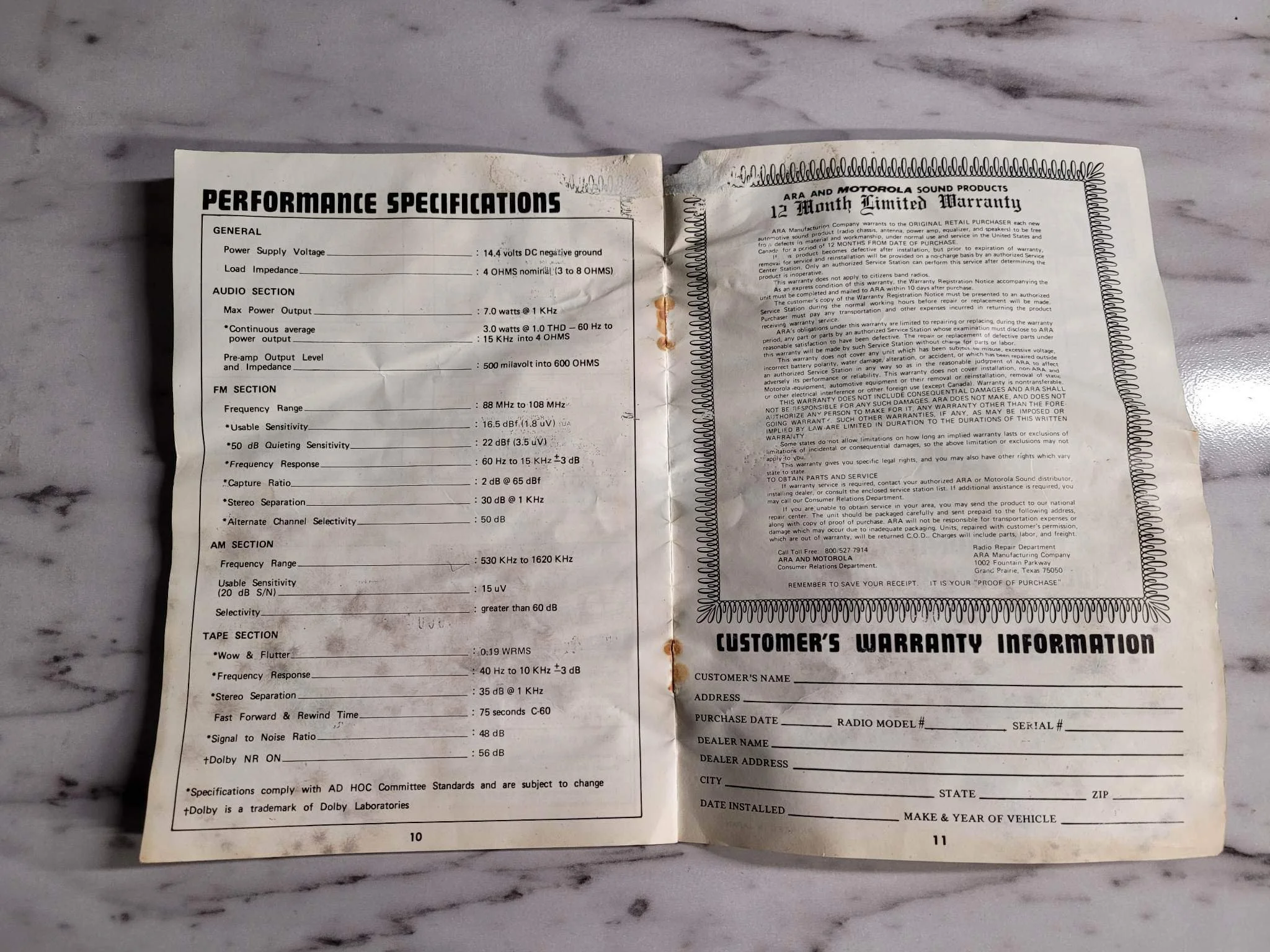
The Main Feature Of The Sound System Was A Motorola Head Unit Made By ARA. Above You Can See A Example Of Its Original Manual.
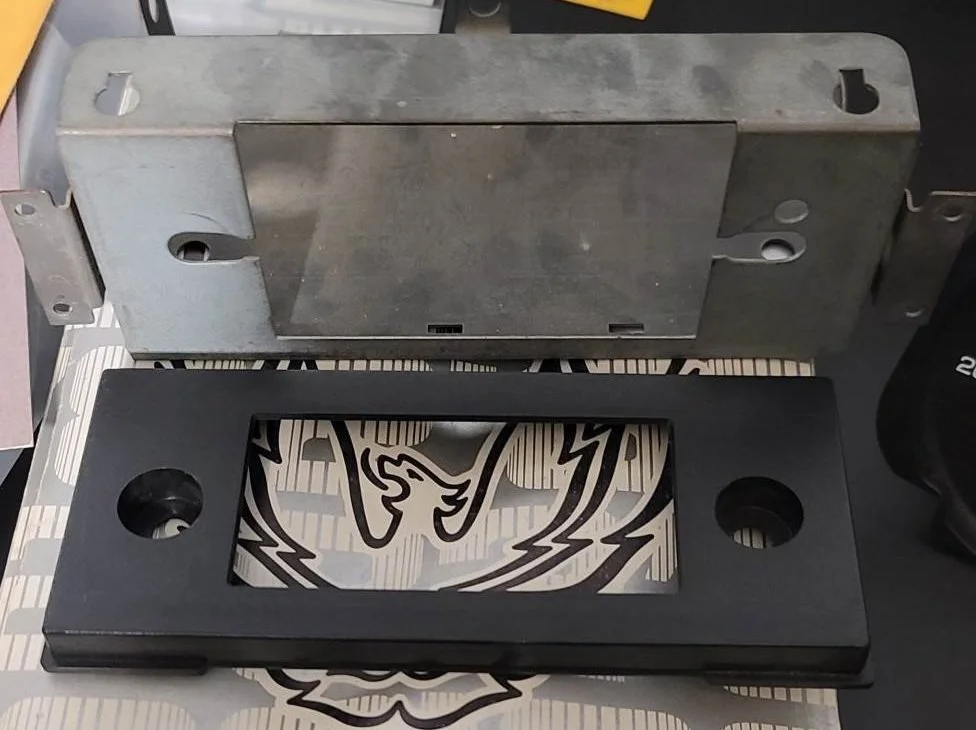
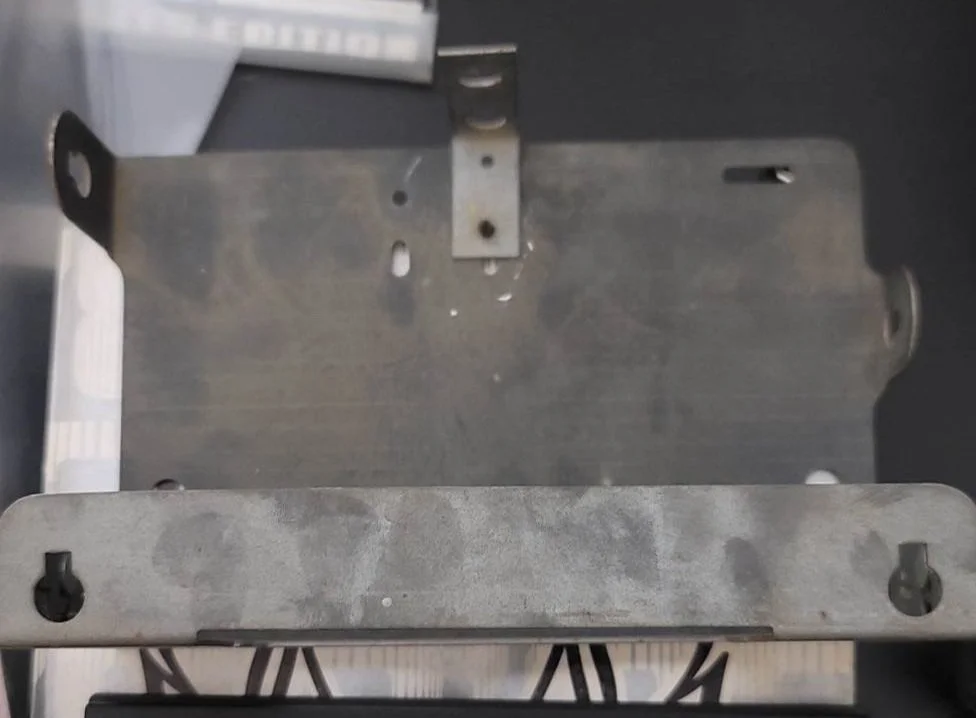
The Head Unit Pictured Is In Car 1982-#97. This Is The Adapter Used For The Single Din Deck. Off 1982-#167.
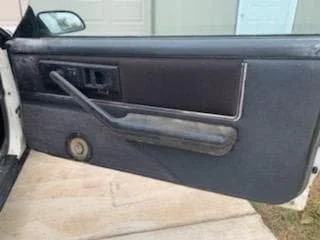
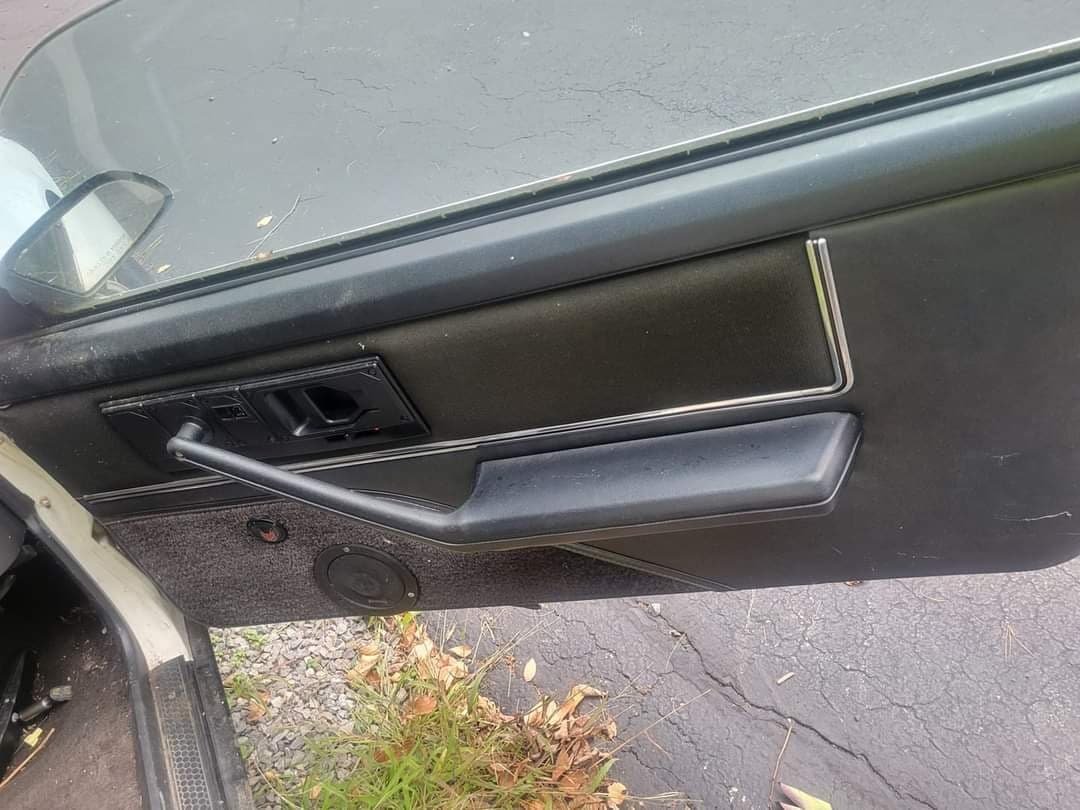

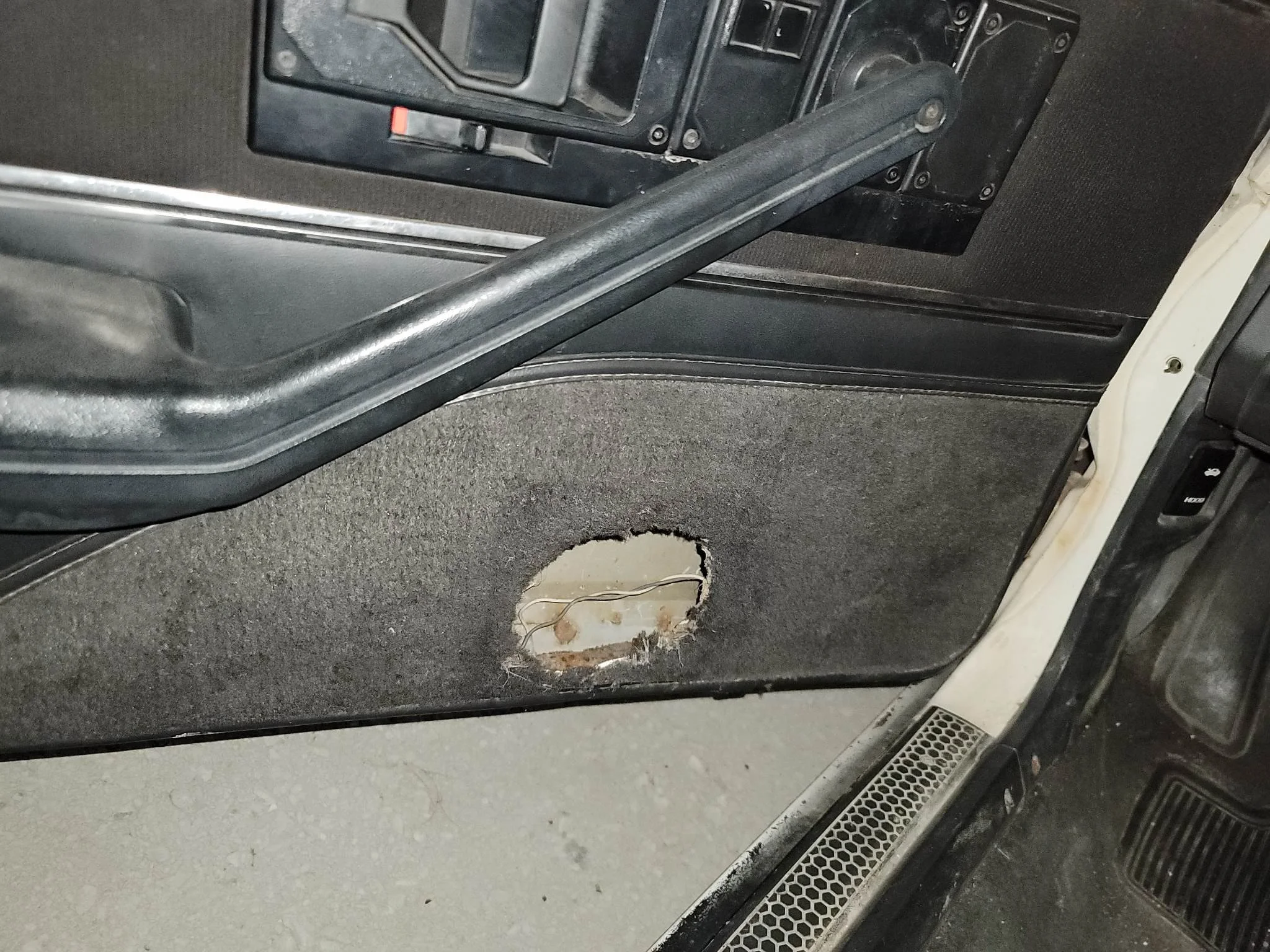
Shown Here Are The Added Door Speakers. The Top Pictures Are Car 1982-#207, The Bottom Left Is From Car 1982-#93, And The Bottom Right Is From 1982-#167.
Not A Standard MSE Feature, Purely Optional
I Unfortunately Do Not Have Pictures Of The Dash, Sail Panel Speakers, And Amp As of 3/2023
MSE Interior Badges
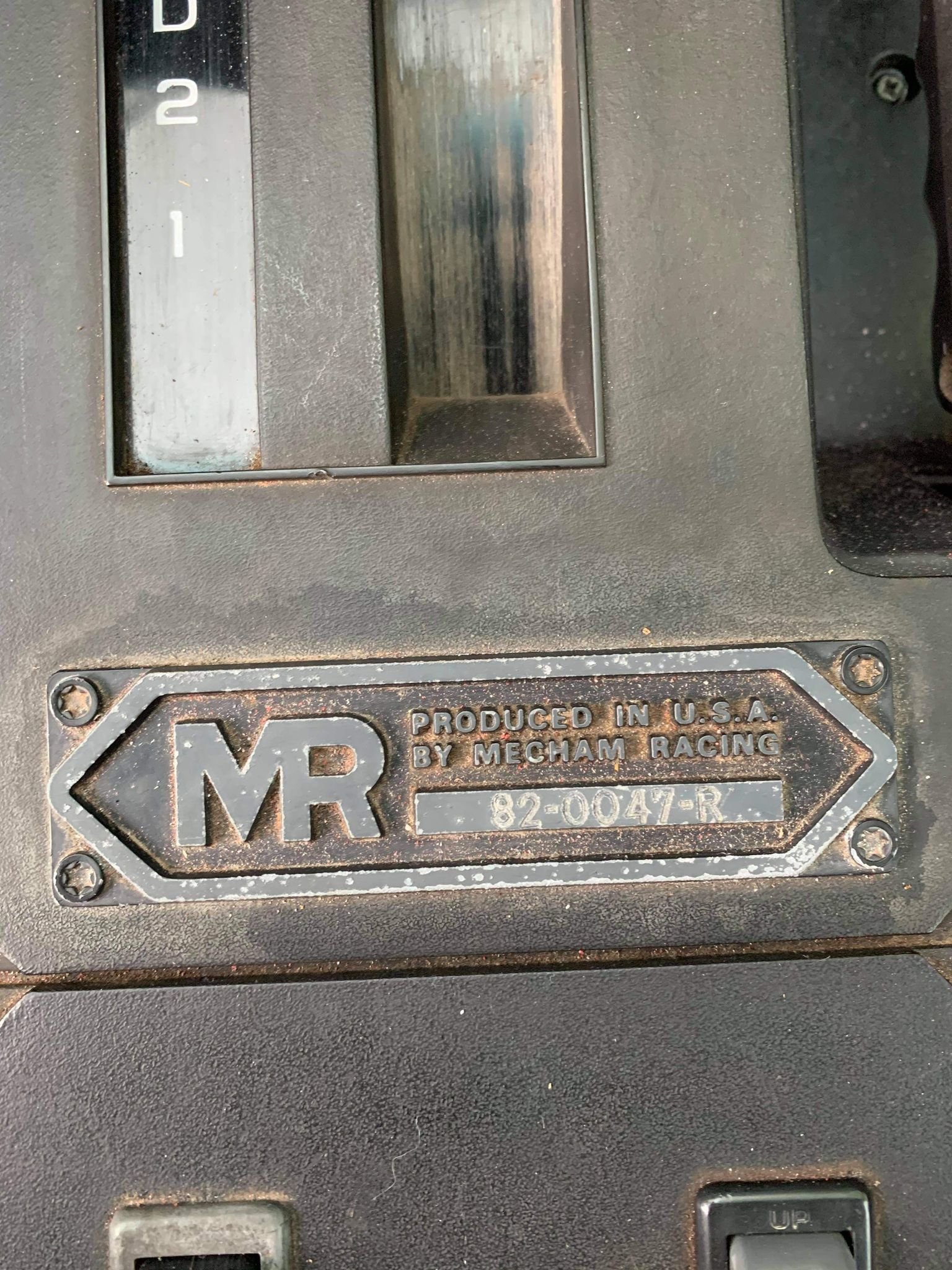

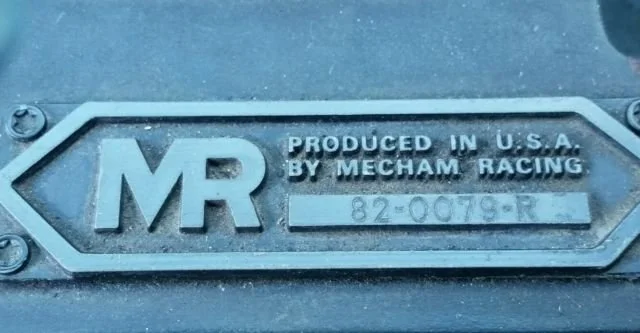
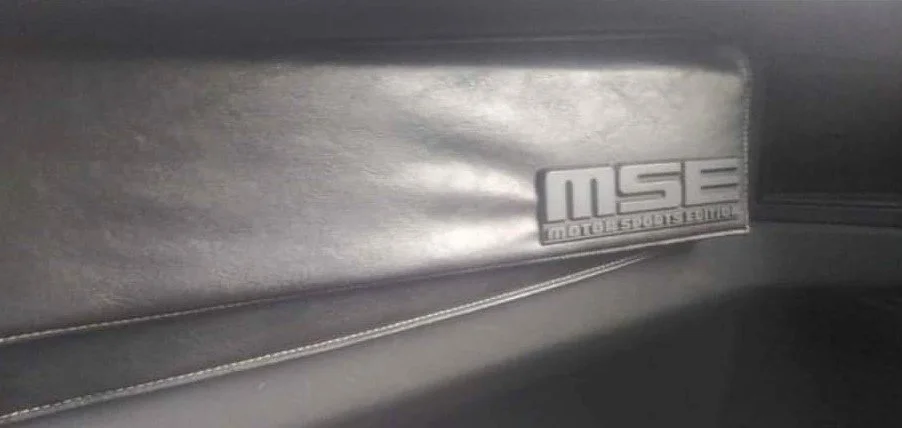
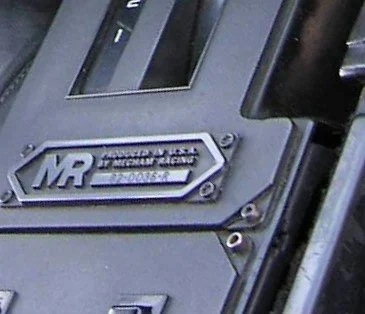
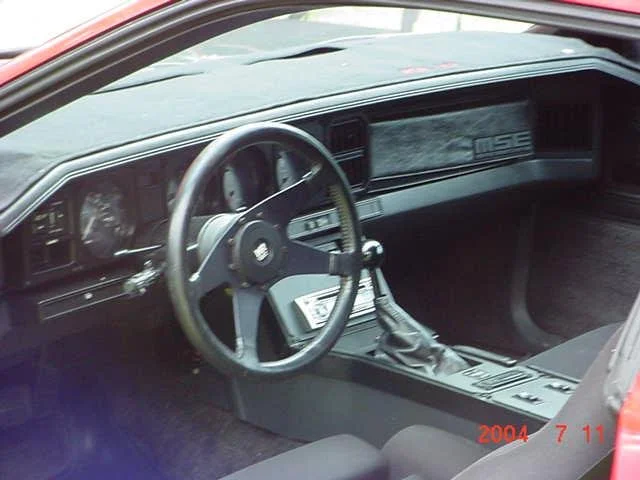
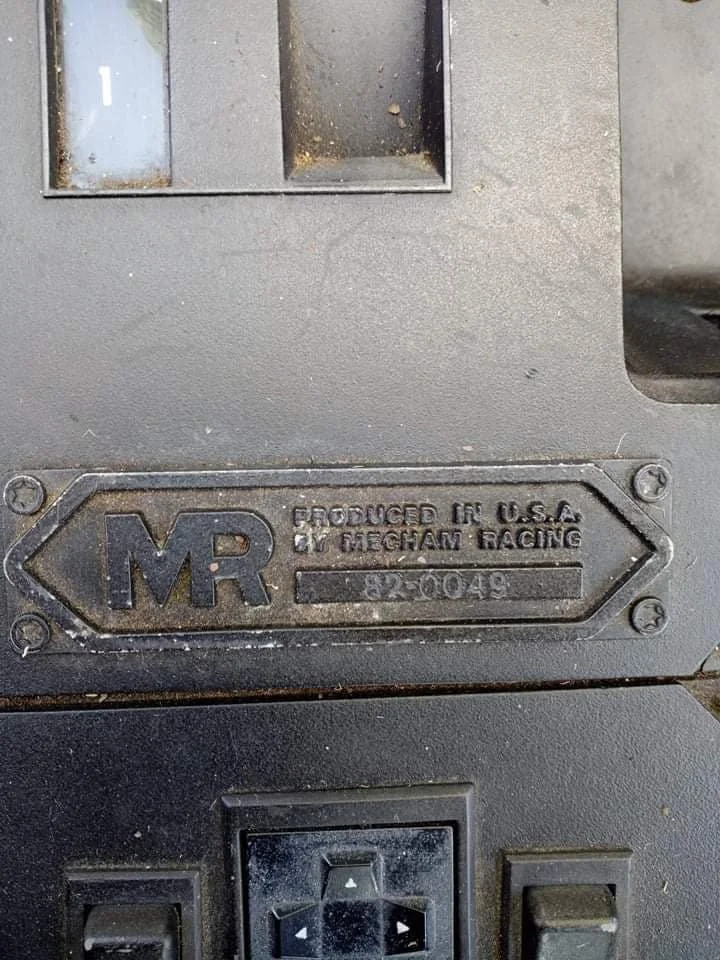
The 1982 MSE Center Console Badge Was Located Under The Shifter. 1982 Cars, As Stated Above, Had a “R” Logo For The Red Cars (1982 Only). 1982-1984 Cars Only
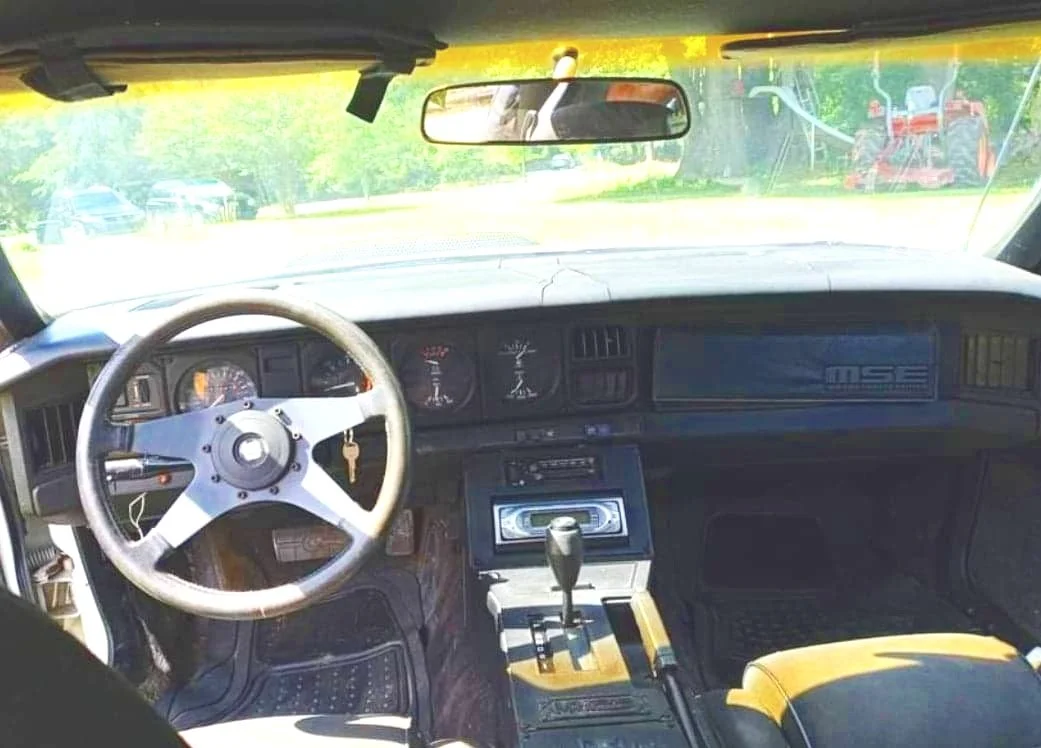
The 1982-1984 Cars Had This MSE Badge On The Map Pocket. They Were All The Same Style/Color.